Trigger Warning — this article includes mentions of:
Religion | Politics | Themes of Death | Goggins
It's Been a While
Three years and four months ago I gave birth to Kendall. I had a healthy pregnancy and birth, for which I was very grateful. At age 42 – and being more uptight than usual – I gave myself a year to decide what I wanted to do with triathlon. I had quit running much earlier in pregnancy than I wanted to and returned to running much later after giving birth than I predicted I would. But the priorities were in check; it was fine.
Many parents will explain how life got much harder after they had kids, yet they got better. I’ve so far experienced this phenomenon of the greatest, hardest life which is being a parent. Most especially this year, I learned what a gift it is to be alive and to have a family. I had to grow up, surrender, learn, and open wider than ever to faith. I grieved the loss of people as well as shared in the grief of others who lost their most precious person, feeling the worst kind of pain.
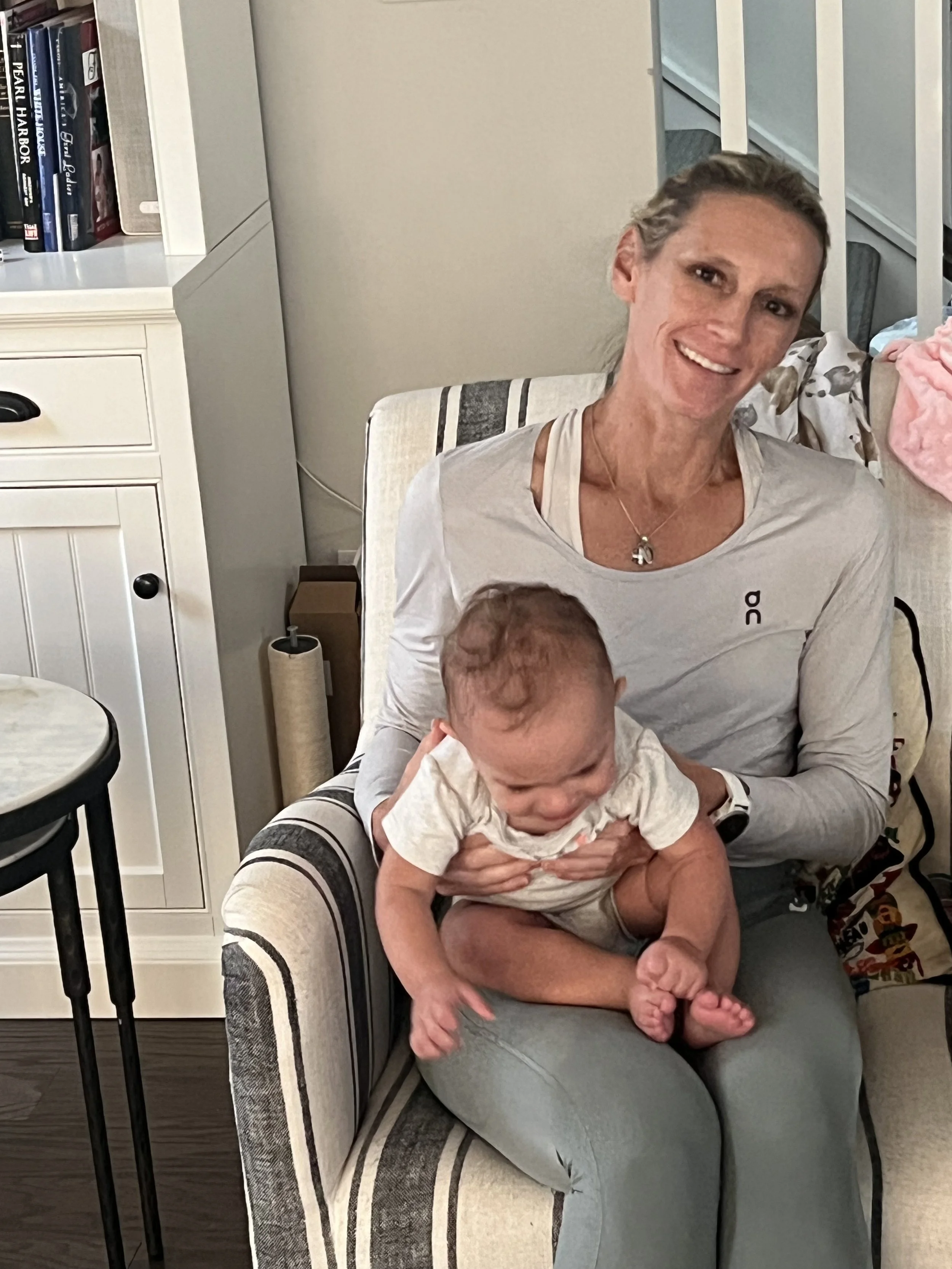
“Hey happy baby!”
We triathletes bring pain on ourselves by choice. We call rooms pain caves, we melt during training sets in the middle of summer, and we continuously sign up for races which bring a respectable risk of things going sideways. Plus, we all go through the pain and anguish of injury. The worst pain in this sport is the threat of it ending. For some of us, that's a problem. This sport used to mean one thing to me, and today it means something else. I have had to set myself up to embrace success in this sport by letting go of not only success but the sport entirely. God will hand us reality at seemingly inopportune times, but he is writing the book – we are not. What a chapter the 2025 season was (it took up most of the year). Below is my best attempt at conveying the impact of occurrences and personal experiences that took place this year, and how I think the journey may be relatable to other triathletes.
2024: Flex Year
When I did finally return to running in early 2024, I felt like I was starting at zero. I don’t think I have ever started training for anything that out of shape before. I relied on at-home strength training classes, balancing full time work and a very young baby, and did swim / bike / run training as much as I could. I decided to do a couple Olympic distance triathlons and see if I could get my body to give me cues of pre-pregnancy, some kind of recognition of the body I used to be able to push very hard. I had never involved that much strength training with cardio training, and now I sure wonder what the heck I was thinking just beating miles out of myself in my younger decades – patterns that I was convinced led to the bone spurs in my foot that put me out with chronic pain for nearly two years. I had a flare up on the 4th of July, but 9 days later, I completed my first triathlon since 2022. I figured I was in the clear and pressed on winging the rest of the summer.
If it's not on Strava…
When I ran a 7:05 / mi paced half marathon in December with little concerted training, I thought I had something left and the decision was made: I would make the 2025 season my last in which I really “tried”. Excitement turned into focus; focus turned into intensity. As I entered January, I had goals to place well here and clock fast times there. It was like I'd come out of hibernation with the energy to pack three seasons of work and performance into one final season. I thought about my workouts on Strava and indulged in conversations about competition. As I wrestled with the ups and downs of very busy work, home life, and my spousal relationship, I was determined to make this department the one I owned in the next year.
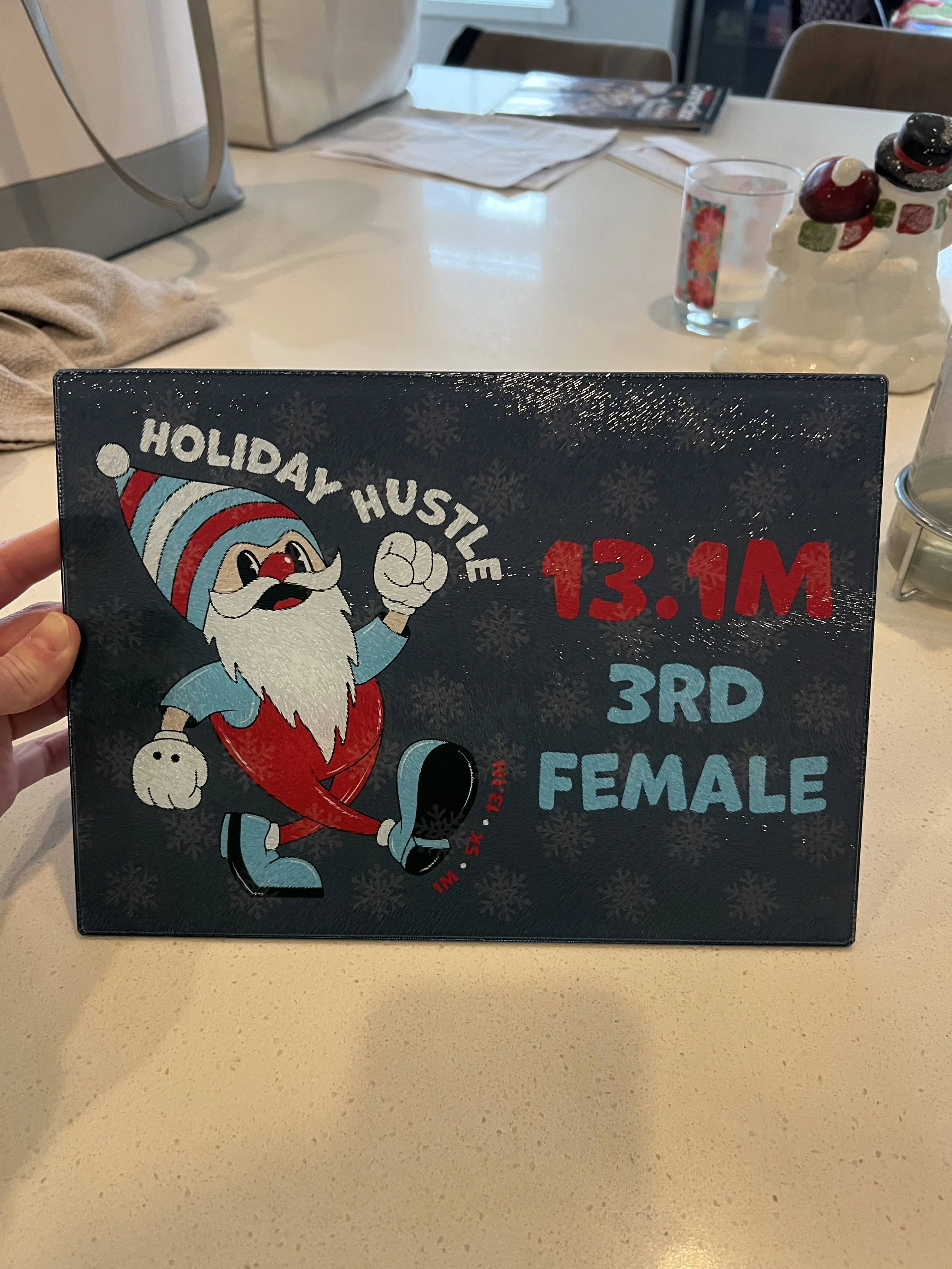
This cutting board is a kitchen staple
As I upped the volume especially running and my concern with race performance grew to obsession, my foot started to hurt.
Shortly after my 44th birthday, roughly the third week of January, I went out for a run knowing something was going on in the foot but thinking there was a chance I’d be fine. I’d healed from so much after birth, got my body back after months of battling with it. I’d built my muscle strength up right for the first time. Surely my body is not going to fail. It’s different now. As I ran down a slight decline around mile 4, I was shot in the brain with some of the worst memories of that last horrible injury. The feeling was identical – a seering pain around my right peroneal tendon. ‘No, no no, please no.’ I stretched my calf, my hamstring, I jogged a little more. I’d go 400m then it’d strike again. I stretched, I stretched, I stopped, I stretched whatever else, and I got myself back to my car. F*****k.
Then thoughts swirled: I had the surgery. I did the PT; I worked the musculature to keep everything strong. I magically made it go away 6 mo ago. There was never a tear. Can bone spurs grow back? The answer must be no, they cannot. My season was under threat, and I could not accept that.
Over the next week, I laid off running assuming the pain would die down, and I would put this little flare up behind me. I iced. I ice bathed. I stretched. I rolled. I limped. I did Zwift sessions here and there, got back into Bikram Yoga, and nothing made a difference. At least once a day, I’d feel that ice pick in my tendon. I thought I’d just been catapulted back into a chronic pain nightmare I gritted my teeth through for two years. I was balancing so much, and, in hindsight, I was not balancing the stress toll this uncertainty was taking on me. My body was different, but the obsessive athlete mind I had before Kendall was not.
Got to Give It Up
I was planning to do a half marathon with my sister and brother in law in Tampa on March 8, so I had to do something. I scheduled an appointment with the surgeon that I saw back in 2021 who did the cut-reattach surgery that October. During the next two weeks leading up to the February 14 appointment, I swam and Zwifted when I could. The pain would spike, then subside, in cycles. I moaned and groaned. The surgeon had very little to say. According to him, nothing looked off on the x-ray; based on that and my testimony, I can run through the pain and get a cortisone shot before my next race. He also recommended a PT that was almost 30 min away from my house. On the drive home, I started to question if I was really feeling any pain at all, or if I was making it up. Was the doctor making fun of me with his nurses right now? I had spent May 2020-May 2021 without a diagnosis and went through the same questioning of my own ability to feel or make up pain. I had passing thoughts that maybe all the doctors and therapists I went to thought I was a nutcase. I did finally get diagnosed when I saw that surgeon in 2021, but nothing about that diagnosis applied now, according to the expert. This was emotional deja vu. When I got home, I looked up things like “phantom pain” to see if that would explain why I had a pain I could not run through, that was tied to no ascertainable injury. I felt very alone as I grappled with cluelessness. I was supposed to have this great final season, kicking it off with a half marathon in Florida and quality family time, and now I had nothing and no one to help me, only foot pain that I might be inventing.
Over the next few days, I gave up trying to push for answers. Only God knew if I had an injury or not, and only He can direct the next steps. I’ve been a Christian my whole life, but in 2020, I started what can be called a faith journey. It was very mild at first, a curiosity, a steadier path vs the fits and starts of years past. I took the spiritual journey I had been on since 2011 to one focused on the Bible and Jesus. In the Spring of 2021, another couple invited us to their church, one of the few doing in-person services in the area, and we went. It is another story entirely, but suffice it to say, I started to feel better emotionally, and I emerged from a depression fueled by many things but primarily chronic pain in my foot; I got my diagnosis (May 2021) shortly after we started attending that church regularly. So I have been on this kind of path, along which I have developed foundational tools based on the teachings and sermons I consumed. I would forget and remind myself that it works, over and over. It takes time to chip away at a self-based mindset that’s been hardened over decades. But what in the past would eat at me for months or years, I can recognize in days or weeks. Here I was a month out from my first race, and I started doing the work again. I started praying regularly again and asking for help. I had prayed before that my foot get better, but at this point, I prayed for relief from thinking about triathlon. I didn’t want to be a slave to an obsessive mind, and I had to be better for my family. Once again, I started to feel better, even if the foot pain persisted.
The following week on my way home from work, Adams Sports popped into my head. My husband had gone there many years ago, before we met, and he had a good experience. I knew the owner, who is pretty involved in triathlon and cycling in Michigan. I called Chris and asked if he could see where there offices were. Great, there’s one on my route home from my office. He texted me the number, and I got an appointment. The rep described the PT, and his background resonated with me: former collegiate hockey player, passionate about athletes, working on his doctoral degree, young, motivated. I was looking forward to it.
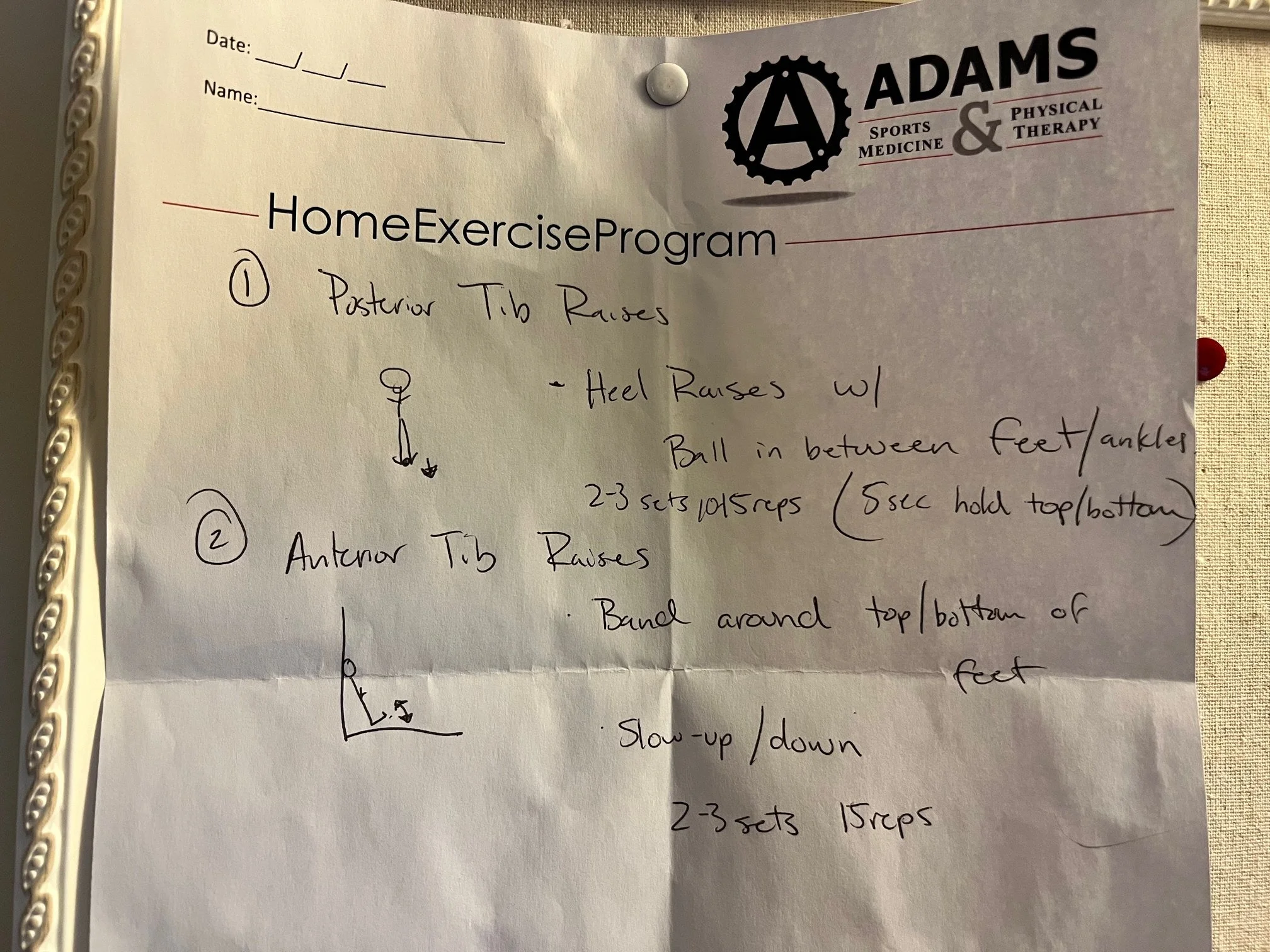
There’s a saying: “Move a muscle, change a thought.” When I went to my first session with Sean at Adams sports in late February, I felt like I was actually moving – moving forward, moving energy, who knows, it was a feeling. I had surrendered the outcome of the entire season, and I felt supported. Sean was not only good, he was different and I was open. Every session felt like things were moving, even if I still had pain and couldn't run. At some point after maybe two or three sessions at Adams Sports, I still had no idea if I’d run at all this year, but I got to a point of completely letting go of the sport. I figured, if God needs me to not race and do something else, be there for someone else, I will follow that lead without hesitation. I also got clear enough to realize how my relationship with triathlon training and performance was unhealthy, based on things of the world like the opinion of other people, based on desires that opposed this faith I’d been building. Of course, I still was aching to run again, but I wasn’t freaking out anymore. And I did indeed slowly get better. The exercises that the PT gave me were ones no one had ever prescribed. The therapy was working, and I was being more diligent on my own this time around. It was a slow process, but with every failed run, I still made progress, and my perspective was healthier. I no longer questioned if I was making up pain, or if I had a new kind of injury, because it didn’t matter. I was moving. I got an MRI just before I flew down to Florida with Kendall, already knowing I would not be racing this half marathon and instead would support my sister and brother in law and focus on the kids and grandparents. The surgeon received the data, and I waited for his phone call. In the waiting for his call, a little of the old pattern crept in. I was building up expectations of what Dr. “Run through it and get a steroid injection” would say. Maybe I would be vindicated in all my complaints of pain. He would call me that Friday, the day before the race I wasn't doing anymore. I missed the call. And that threw me off. I got irritated. The unraveling was beginning again. So I listened to the voicemail: according to him, I had arthritis in the navicular cuneiform, a joint in the mid region of my foot. I didn’t think that made any sense and figured he was wrong. I didn’t get the answer I wanted, and once again… I lost it. Very quickly, the faith-based response to life I had been trying to build over the last month took a backseat to an emotional one. I tried to keep it together and remember the progress I’d already made, but clearly I needed a jolt of perspective. That night, my sister and brother-in-law returned from an annual memorial event for a friend of my brother in law's who committed suicide. As soon as they started telling me about it, my arthritis pity party ended. Imagine losing your child to suicide. I quietly put myself in my place and let God take my thoughts. Over the course of the rest of the weekend, I thought about what the family and friends of that person had gone through, what they’ll go through for the rest of their lives. I prayed for them, and I felt grateful to be alive and have to deal with just foot pain. I tried to let go of everything triathlon once again.
After I got home I kept at the PT and re-upped a daily practice of spending time in the Word. I kept testing running, even if I didn’t know if I would have anything to show for it. I went to work, I took care of my baby, I cleaned my house, I exercised, and I tried to stay positive. As the pain lessened, the miles returned. I had another family trip, this time in the mountains, and, while I couldn't ski for the same reason I couldn’t run, I did a lot of snow shoeing to work on my cardio fitness. I watched my daughter have the best time playing with my nephews, and as I enjoyed these moments as well as the steady improvement in my physical body, knowing running was around the corner, I thought “ok so how am I going to do this better this time?”, especially if I were to gain some race success again. While I have been doing triathlon on and off since childhood, I began long distance training and racing only in 2017 and actually accomplished anything that year because of one person. The answer to the question came with the memory of my first coach, Michael, someone who would love to be watching his kids play but sadly was taken far too soon.
Michael Parker (1978-2024)
Michael Patrick Parker was a staple in the local triathlon and endurance sports population. He was an exceptional athlete and driven entrepreneur. Amongst running a training company, with a studio before COVID hit, working at U of M, parenting, and his own training, he picked up photography and turned that into another business. He had a drive and a sense of commitment many people lack. I didn’t know him outside of triathlon, but you can get a sense of someone on a personal level, even if the relationship is all business.
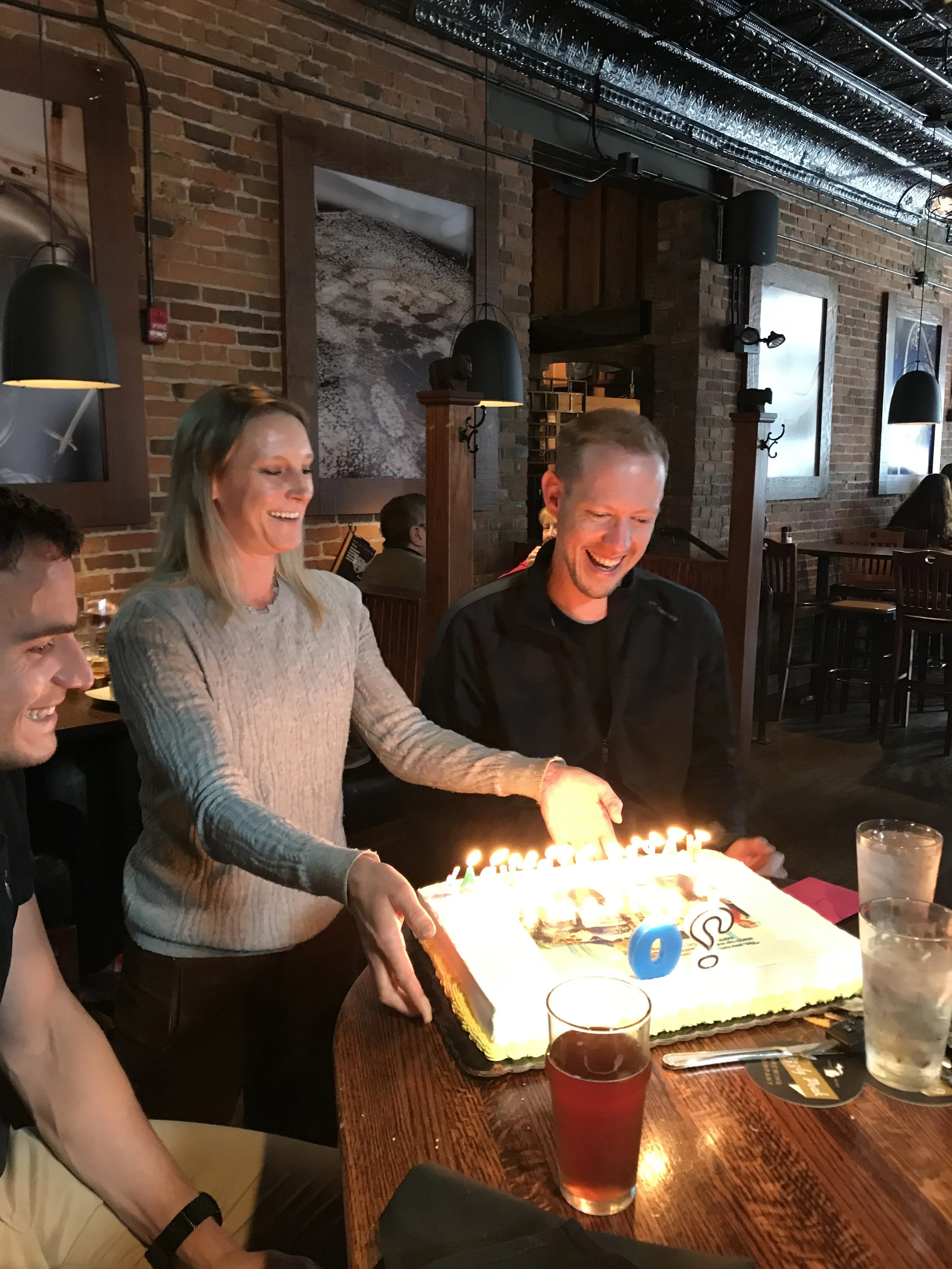
Michael Parker’s 40th birthday | May 2018
I threw Michael a small 40th birthday party in May 2018 at a local brewery and got a custom cake made from Kroger. They could do photos on cakes, so I got one with a picture of him and his wife at a triathlon “printed” on the top. I invited everyone I could think of that was friends with him that I knew which – given the latter category – wasn't many people, but we did it. A few years later I'd celebrate my 40th similarly, a low key dinner with family in Tampa. It seemed like Michael enjoyed the same kind of chill evening with a small group. Shortly after that he'd face his first cancer battle.
He would recover and even get back into endurance sports including ultra marathons. But by April 2024, the cancer returned. This time it was chemo-resistant and ravaging his body to the point that he began experimental treatments, driving two hours north to Grand Rapids for these therapies. He would post updates on Facebook occasionally, and while he wrote with optimism, we didn’t know how he was really feeling, what hell he was really going through. His photography was beautiful though, and he shared it freely.
The last time I saw him was July 13, 2024, while I was on the bike in a local Olympic triathlon. I had just had the flare up in my foot and managed to recover in time for this race. He was the photographer. I wondered if he was wishing he was racing with us or had made peace with everything. But I bet he was just in the moment enjoying the weather, the trees, and the spirit of the race and its athletes. He died 6 weeks later.
I stopped working with Michael in Fall 2018, because I was going through a divorce and was in the worst financial state I'd ever been in. I told him in person at a running store, where he was leading training runs weekly. I wanted to talk to him in person about it. I really valued him as a person in my triathlon circle, an example for so many, and quietly admired how he managed to fit in all this service to these locals so often. What a person.
“After a good run and a piece of chocolate, there must be no tragedy in this world. For this moment.” Michael wrote on February 20, 2024. I was thinking about all of this in the middle of this nice family trip, with the next triathlon season ahead and pressure to improve how I dealt with stress, pain, life. What if I can be more like Michael.
While I continued PT, doing Sean’s prescribed at-home work, my rides got longer and more intense. I could run short distances though still fought off the fear of a single painful step that would set me back again. If you’ve gone through that slow slog of injury recovery, you know that fear; you flinch at the slightest provocation of the spot of the injury. You don’t want to go back. But the successful runs and a work-childcare routine that had settled in helped, along with an improved perspective on the season. I knew Michael’s memorial was coming up in May, and despite uncertainty around racing, I dedicated my season to him. I was on the 80/20 Level 3 plan (sort of), but occasionally I would do his old workouts, saved in my Zwift account. I broke down a couple times during those sessions, as the sadness of that whole situation swept in.
When I went to his memorial, I lasted only ten minutes, five of which were spent writing a note on a photo card. I wrote about my first half Ironman distance race, Michigan Titanium, which he coached me through in 2017, and I pledged to get back there this August.
I wouldn’t run any longer than 35 minutes until May 3, when I finally had a breakthrough with a 60 min run off a 2 hr 40 min training ride. Michael’s memorial took place a week later, and from there I was on the build to the Grand Rapids Tri half on June 8. Kendall was so active, and I tried working in stroller runs, even though I can’t ever really get a good run in with the stroller, because I stop to check on her frequently. But we moms and dads do it anyway.
I was experiencing better training, better mental health, better balance. On May 31 after a run-swim double, I drove to Saline to buy some potty training gear from someone on Facebook Marketplace. As I was waiting at the meet-up spot, I pulled up Facebook to double check the price of everything. When the app opened, I saw a post that looked serious. As I read it, I lost my breath.
Roseann (1987-2025)
I had met Roseann in Toledo after an attempt to beat her in the Sylvania Triathlon, my hometown race, the one that would be my first triathlon ever when I did the kids version in the early 90s. In fact, the Sylvania Triathlon is as old as I am. I know a lot of people down there from my swimming days, but Roseann and I didn’t cross paths until sometime around 2016. She was a gifted athlete, and, thanks to social media, I kept up with her racing and saw her post after she gave birth to her daughter in 2022. She was a very “smiley” person, at least that’s what I thought of when I thought of her. When I got pregnant, I reached out to her as I was struggling with running, not able to do it comfortably in the second trimester. We connected and started messaging a lot. She was so smart, so encouraging, so kind, and she helped me during that pregnancy period and after Kendall was born when I was trying to get active again. What a blessing to have connected with a person like Roseann. She was someone I could aspire to be like. There’s a saying I have heard in places far away from the sports world: "stick with the winners”. It means different things to each individual, but to me, it refers to the people who maintain a healthy practice of taking care of their mind, body, and spirit and keep worldly success in check while nonetheless experiencing it. Roseann was one of the winners.
On May 31, at age 38, she was killed while riding her bike down in Ohio on a road with a couple other cyclists. The details are tough to pour through, and I can’t find any updates on the investigation, but, generally, it was an accident, and it easily could have been prevented. She left behind her 3 year old daughter, husband, parents and family, and a community that loved her. When I read the initial Facebook post about Roseann’s death on the Team Toledo page, I had some kind of mild shock response and couldn’t get a breath for a second or two. Death punches so much harder when the person that dies is someone just like you. I ride my bike on the road all the time. We’re close in age. I have a young daughter. I thought, ‘she is me’; the only difference is I’m alive. Over the next week, as the reality of her death and the event sank in, I welled up with sadness and gratitude to be alive, to see my daughter every day. You want to do something, but feel so helpless. So I had to honor Roseann in some way.
GR Tri, June 8
That Sunday, I had my first triathlon of the season, the Grand Rapids Tri, doing the 70.3 distance. I had not done a half since, well, the race that was the subject of my last article here: MiTi in August 2022. I was in decent shape but clearly hadn’t been able to stick to the 80/20 plan for more than a month leading into the race. I wasn’t ideally fit, but I got here and I was doing the race, which I dedicated to Roseann. I do most of my training and racing solo, and there were times I wished I had training partners or people to go to races with on a consistent basis, but when you do the solo mission, you have a lot more room to connect with God and keep yourself in check. In the case of this weekend, I wanted to be alone. I wanted to feel the gravity of what happened to Roseann and wash myself mentally in gratitude for my life and my family, my presence on Earth with them. I didn’t sleep that well, but I went into race morning in what felt like a neutral state – not too nervous but not nonchalant, not worried but not overly confident either. Knowing that just merely being at the start line and being able to go home to my baby after I finished was my primary thought. I simplified the race down to just giving it everything I had.
I was leading after the bike but I spent way too long in T2 and a girl got out on the run ahead of me. I had her in my sight for roughly five miles and caught her briefly when she used the porto potties, but she surpassed me again. I pushed myself as hard as I could for the last mile just for time, and I ended up with second and about 3 minutes off my PR:
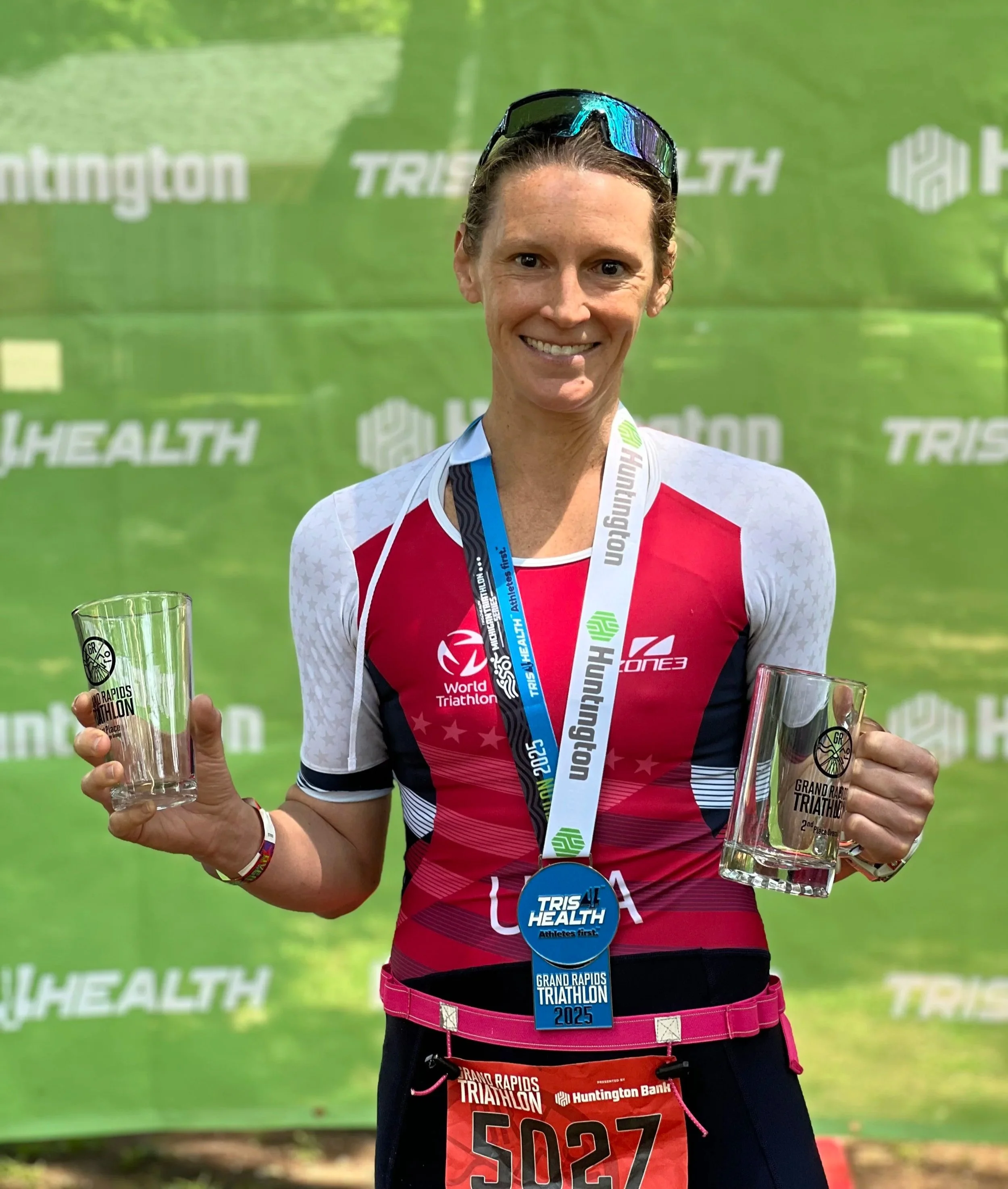
Got some solid beer glasses
Swim: 29:39 | 1:27 / 100 yd avg | 2,055 yd
T1: 6:53 | 0.76 mi (it was insanely long and I took too long)
Bike: 2:40:11 | 20.9 mph avg | 55.8 mi
T2: 3.31 | 0.16 mi
Run: 1:36:06 | 7:22 / mi avg | 13.1 mi
TOTAL: 4:56:20 | 70.94 mi
I had a great return to the 70.3 distance and my foot felt like there had never been an injury let alone surgery. I love running so much, and that morning I somehow put out a PR run off the bike. Only God knows how my body was able to do it. I still wished I’d had more in me to keep up with the 30 year old (I mean…gotta mention it) that beat me, because I’m competitive. Turns out, she was going to Kona and popped over from Wisconsin for a training race. HA. Well done.
My body worked again, and, provided everything stayed in tact, I would no longer have to constantly revise and rearrange my training plan and fit in PT appointments and process that stress every day. We age group triathletes are so busy, that working around an injury while doing everything else can be more of a figurative pain in the a** than a pain in the literal location of the injury. To be free of that alone was such a gift, and I felt the relief in the hours after the race. I could resume 80/20 and start working toward Michigan Titanium and just do the rest of the things in my life without this variable. I wanted to be in balance – not get too up on feeling good again, not get too down when I stumble. One of the great things about a training plan is that you trust in it instead of your fleeting whims. A good training plan is a promoter of balance, and then it is up to us to figure out how to take it on amidst busy work, family, and other real obligations like a mold infestation in your basement (gotta love homeownership). I could never balance the volume of 80/20 Level 3 without God’s help and His grace. I kept that concept fresh as I got back to the grind. I was still learning, still remembering Michael and Roseann, and still hoping I could finish out the season. I'd just tacked on one more half in Michigan 70.3, taking place on September 14. There was a lot of season left and a lot to handle over the next 3 months.
“Are you a doubting Thomas?”
A week after GR Tri, I watched the U.S. Open and one of my favorite golfers, J.J. Spaun, battle for the lead. J.J. had lost in a playoff at THE PLAYERS to Rory McElroy on St. Patrick's Day, and by the time round four of the U.S. Open rolled around, I was nervous. I wanted him to win so badly. I’ve met him and know a bit about him. I wanted this for him. I get like this with Michigan football too. Any spirited sports fan knows all about the rollercoaster of watching your team or favorite athlete compete. You get involved.
J.J. had three great days but started round four seemingly off his game, carding five bogeys in the first six holes on the front nine. There were bad breaks too: the Oakmont course was brutal, too brutal by some experts’ opinions. Add a storm, and there was carnage. Knee high rough and swamp conditions gobbled balls hit by the best in the world. No one was safe. I had my doubts that J.J. could catch back up to the lead at this point, with this unpredictable course especially, so I went to the grocery store. ‘Maybe if I don’t watch, he’ll do better’ – which is about as logical as thinking shirts and seats in your house are good luck charms because your team scored a goal once under those circumstances.
A few minutes after I got home, as I was unloading, I started getting text messages. Somehow my sister knew I wasn’t watching, and she called me out. I called her, admitted it, and got the latest: J.J. was in the lead. He'd come out after the rain delay and surged. I tried to explain why I stopped watching, and then she said something very out of the blue: “Are you a doubting Thomas?” Despite all the Bible verses I was trying to read and learn from this summer, I had no idea what she was talking about. She proceeded to tell me that the kids learned about “doubting Thomas” in Sunday school that morning. I turned on the tournament, and I looked up John 20:24. The story of Doubting Thomas is all about faith:
“Jesus said to him, ‘Have you believed because you have seen me? Blessed are those who have not seen and yet have believed.’”
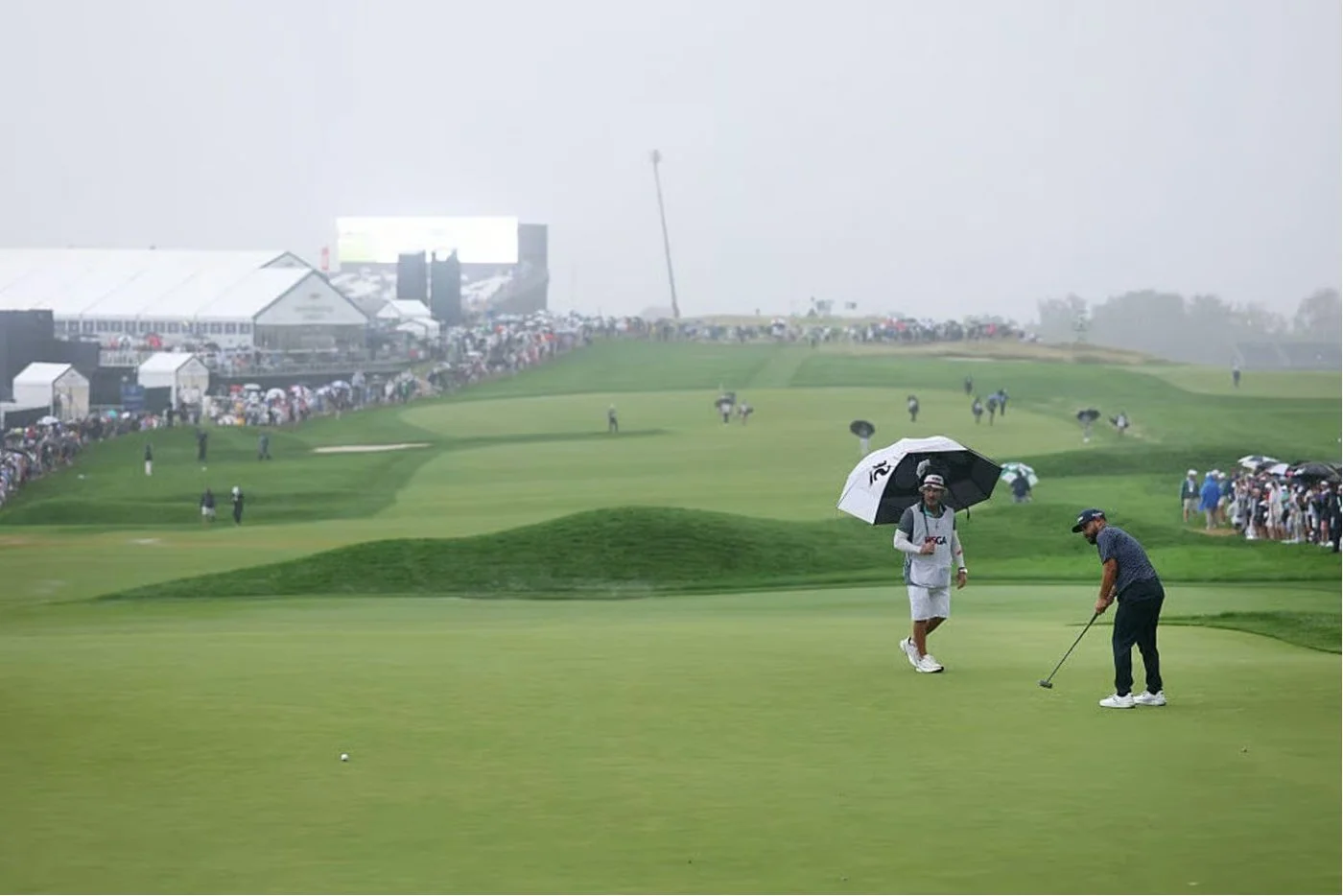
J.J. Spaun, final putt to win the 125th U.S. Open | June 15 (Getty)
I thought about all the nerves I'd had for this golfer to win PGA tournaments, but this Bible passage reminded me that not only was I not in control, my nerves couldn't affect the outcome, whatever happens is part of God's plan. I prayed then thought, “He doesn't have to win”. I’ve read a lot of stories about prayer working quickly, but that hasn’t been the experience with me generally. On this day it was: I felt at peace. I've never watched J.J. on TV in a mental space like this, just ok with whatever happens. I'd always been too invested. From a position of God-given neutrality I watched history unfold. Though play had resumed, rain hammered the course but it didn't bother J.J. He was up by one stroke heading into the close; his tee shot split the fairway. As his caddie held an umbrella over him, he walked up the fairway like there was no rain, no water, no pressure, patient and laser focused. Shot two got him on the green. He had a 2-stroke cushion. “Do it,” I thought. The final minutes of that tournament were supernatural. While he was on the green, the rain picked up, and the sun had almost set. He stood on the fringe and set up his shot. Dan Hicks said “two putts”, but J.J. wasn't going for a setup shot. Carpe f-ing diem. He hit, and for what seemed like 10 minutes we watched the ball roll and roll and continue at this magical pace until it would near the flag, slow down, carry a little water, then slip into the cup.
Not only did he sink it, but he birdied the hole with a 64.5” putt in the pouring rain to win by two, finishing the only player that day under par. Whatever I wanted to happen that day was far surpassed. My favorite golfer won the U.S. Open in a fashion that one could not stress or cheer into existence. Thank God.
The Heat Is…Fine
I’ve had many experiences where things didn’t turn out the way I wanted them to, but then later I would understand why. Thus commenced the bulk of my season. I knew what I wanted, but I worked on not clinging to it, and I knew there was a lot of hard work ahead.
In order to train for success at MiTi, which is always in August, I had to go hard on the heat training. 80/20 Level 3 gives you ample opportunities to test your melting abilities, so I went out and tested. But in those six weeks or so leading into my second 70.3 of the season, I found it really hard to fulfill the plan 100% due to time and childcare constraints. The highest volume weeks demand 15 hours of training, and that’s just the swim, bike, run training; that does not include recovery like rolling, stretching, icing, Normatecs, nor strength training, even a little at-home PT, which I continued throughout the season. Needless to say, it was impossible to do the plan to the letter, so every week I would decide what would get cut. I almost always skipped the long Z1 ride on Wednesday night. Some weeks the plan had a 2-hour brick on a Tuesday or Thursday, which I never did. I had to split it up between before-work and after-work slots. Sometimes I would cut swims short, but I tried to make up for it with longer-than-plan swims when I had the time on the weekend. I turned into a sort of weekend warrior I might in the past have equated that to people that did Spinning and Body Pump classes at the gym (did I mention I’m a 90s girl?). I tried to ignore the yellow and red I’d see in my Training Peaks, but it was there.
The longest sessions were typically 4-5 hour bricks, usually on Sunday. It was those sessions I tried to do in the heat of the day. I found that if I did multiple loops along the river road, I would (a) be able to make quick pit stops at my car for new water / fuel bottles, and (b) be in a safer area as far as auto traffic. I would do out and backs until I met the plan bike time (~3 hours), then I’d take a bottle out on the run and drop it somewhere so I could get another swig on the way back. But I never once got the full run in. I was just too damn hot. Yet I persisted in this pattern every weekend figuring, in my non-expert, non-coach brain, that heat acclimation trumped all else, especially if I was cutting 1-2 workouts per week anyway. I spent a lot of hours out there on my own just grinding and dying of heat. I used it to process stress too, sort of a substitute for dealing with some personal strife that was more complicated than working out. Extreme, prolonged physical stress will make you think about your life. Of course anyone that knows me, knows I’m a jokester; I wasn’t always a morose Daria every time I trained. I joked in my mind about the absurdity of trying to make myself as hot as possible. There were lots of memes made up (shared a few here). I thought I was doing everything I could under my schedule circumstances. Well, the true test was around the corner.
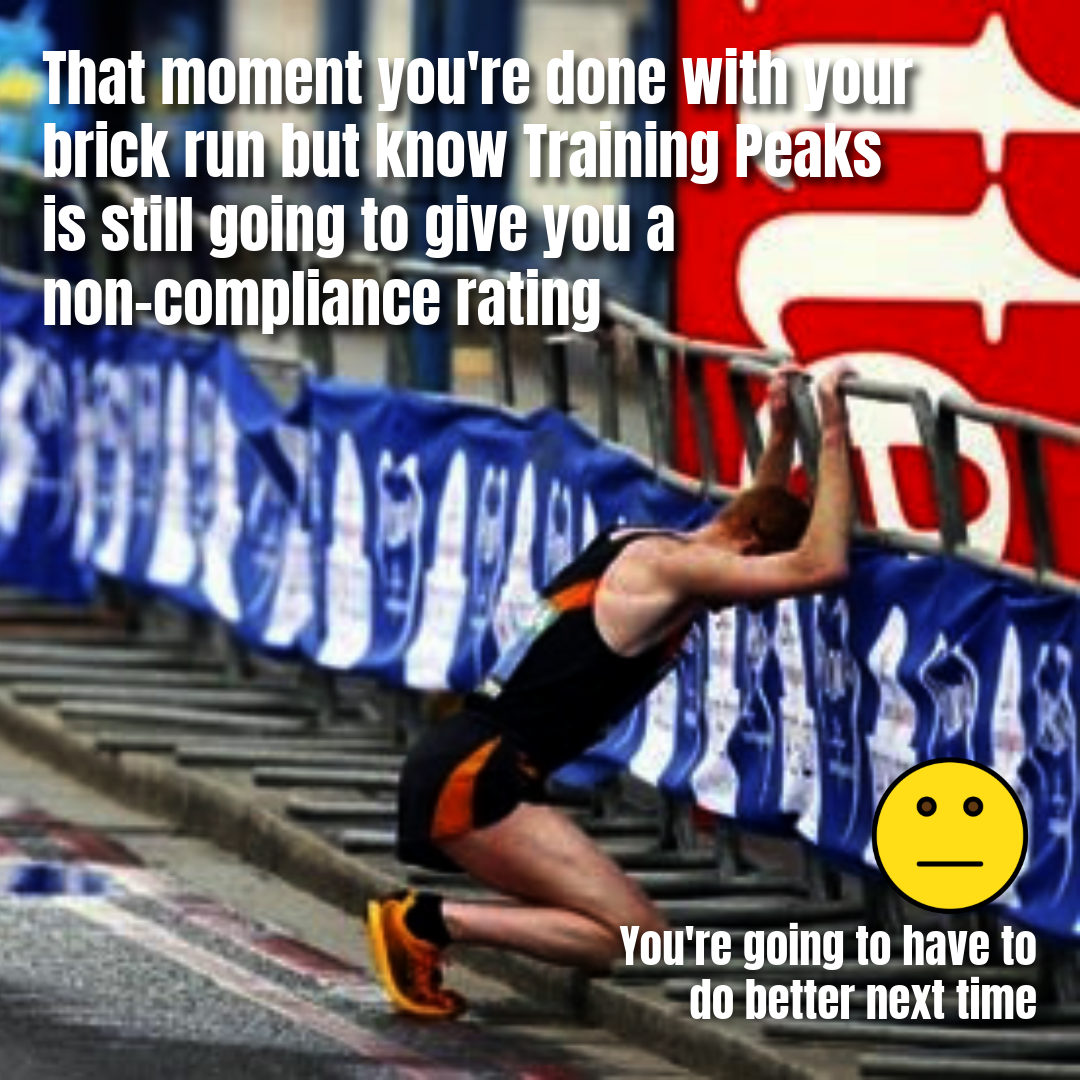
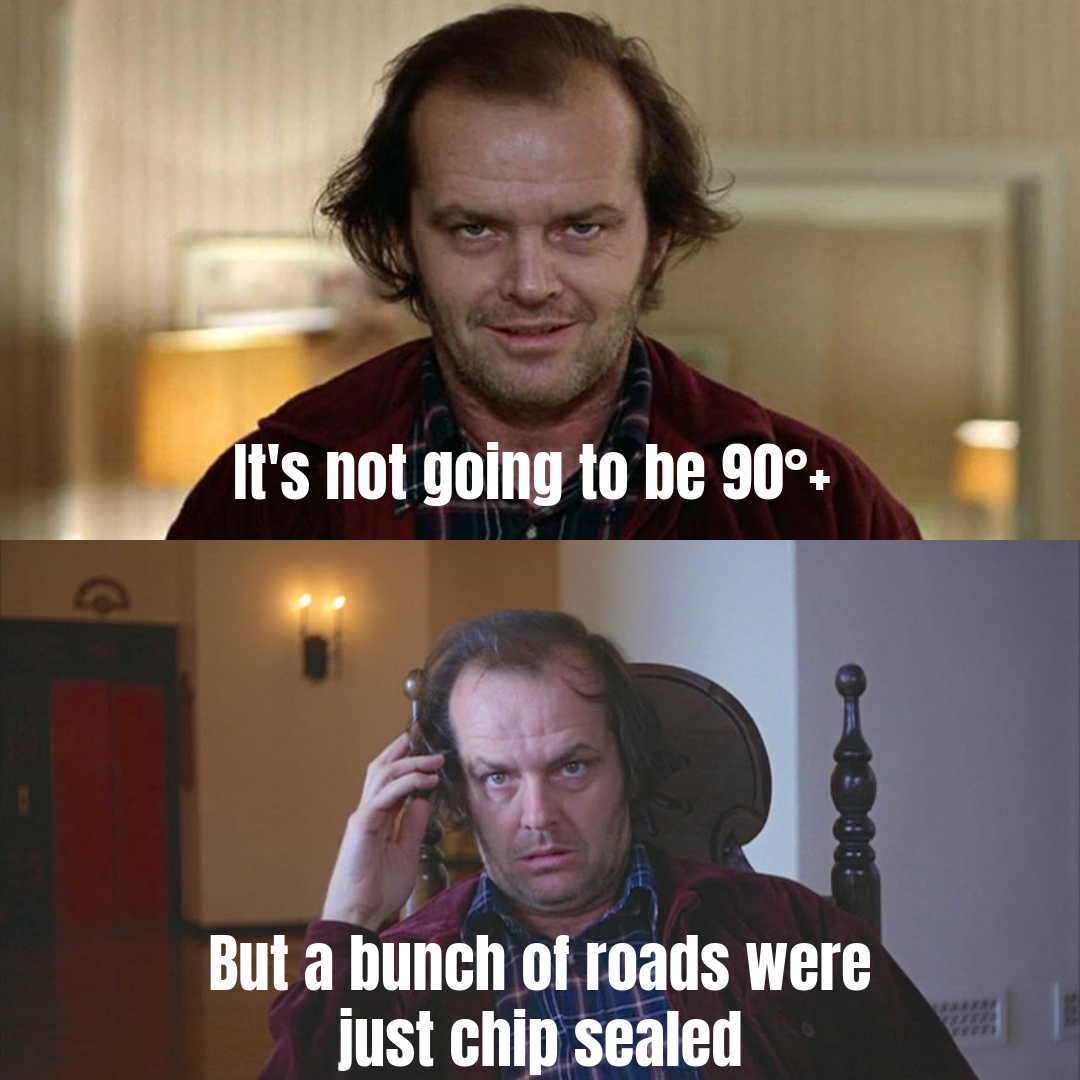
As the weeks went on and race day approached, I found myself thinking of alternatives to racing well that have nothing to do with training. I thought about how well GR Tri went and if I could just wing it on raw talent. Maybe it’s in God’s plan that I win the race… that silly thought was short-lived. I was getting nervous, but I was working at staying close to God. I had been blessed with a chance to start my season over, and it was really important that I worked that routine as well as I could the training. Every day, with my prayer routine, I would get a reprieve. It was the session I didn’t miss. I think of how much harder it would have been to juggle every piece of my schedule, every department of my life, without God’s help, without growing my relationship with Him. Even if my training wasn’t perfect, I could still have a good race and an experience that would benefit me, grow my character in some way. Every race gives us something good, we just have to see it.
Michigan Titanium, August 10
Of course I wanted to win like I did three years ago. But no race can be replicated and no race success can be explained entirely. There’s always an X factor in triathlon racing. I had trained a lot. I had a decent attitude. And I knew this race really well. I still hoped I would win, though.
Another solo mission was underway, and race weekend started less than ideally, when a stomach bug that my husband had hit me. Frequent bathroom visits were met with desperate indulgences of extra electrolytes. If only it was a math equation like that, not to sound too vulgar or anything. But if you’ve been at mid to long distance triathlon for a while, you know what I’m talking about. You do what you can for impending hot conditions. We’d also just squeaked by another Canadian wildfire smoke session, which supposedly left the Grand Rapids area earlier that week. Nevertheless, the heat was coming for race day. A little panic set in, so I tried to distract myself with important things, including a Rich Roll episode on the way up that seemed timely. Eight years ago I did my first half Ironman here, under the tutelage of Michael Parker. I’d been at this event every possible year since, including the full distance aquabike in 2021 when I couldn’t run. I, of course, thought of Roseann and wondered how her family was holding up. From my hotel room, I watched hours of the first of the FedEx Cup playoff tournaments and J.J. playing some outstanding golf through round three. Nothing really helped my stomach, and I was up and down most of the night. At least I had AC!
The morning was buggy and muggy. I tried to not even think about how I was feeling physically, because there was nothing that could be done or changed at this point. Plus, I was well trained, even with the compromised plan I wound up doing. There’s this song called Bakerman that I made my summer anthem (yeah I still do that “summer song” thing), and my favorite line is: Relax. It’s too late to worry. So true on race morning.
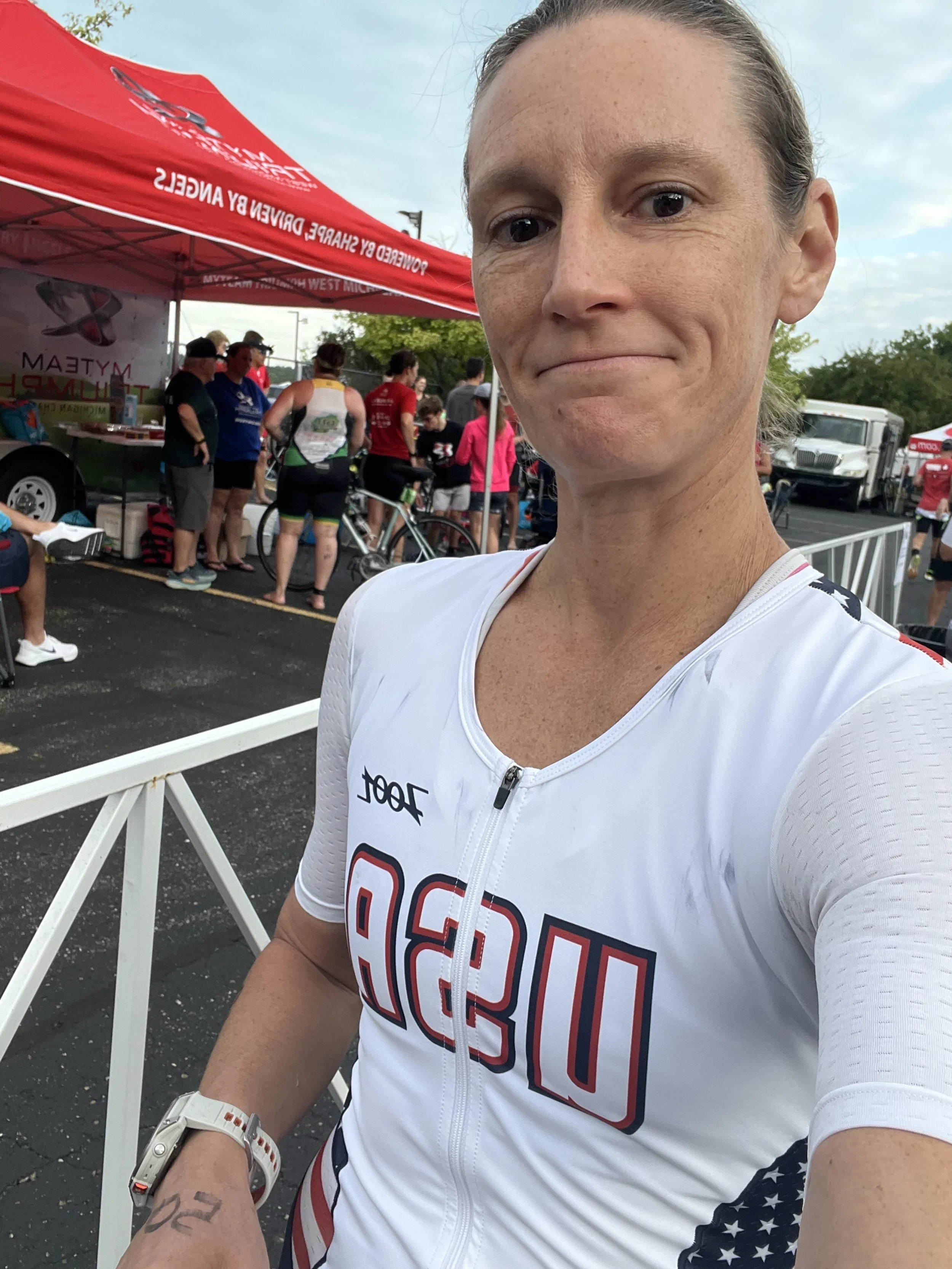
Just before the start. Feeling…meh
I lined up in the first row for the swim, then suddenly I saw a friend waving to me with a phone in one hand about to take a picture. I’d met Molly a couple times in the pre COVID years. She had worked with Michael too, but over this summer we had reconnected on social media. She had seen I was headed up to MiTi, and it turned out she was in Grand Rapids that weekend as well, so she reached out to see if I wanted support on race day. I said, “Are you sure? It's going to be like 100° tomorrow.” But she said absolutely, and I thanked her. There was no tracker at this race, so she offered to send my husband updates while I was out there. It was great to see her the moments before I dove in the water, and I would need that support later in the race.
The swim was the best part of my race. I came out fourth total – men and women – first for the women. But the jog to my bike was rough. I was toasted already. Within the first couple miles of the bike, my glutes, quads, and hamstrings cramped so badly I had to go 5 MPH and then I had to stop. I stretched for about 30 seconds, got back on my bike, but my legs wouldn’t go. “Come ON!”, I said to myself out loud. The seizing wasn't easing. I’ve had this problem multiple times, never this bad. The last extreme level of cramping in this muscle group was GR Tri half 2019, when I then also had to stop and stretch. But I recovered more quickly. If you've ever seen Matthew Marquardt cramp in T1 which he's known to do, it's just like that. I mean, he can still win a race even if that happens, but last I checked, he had no explanation for the habitual cramping. It’s debilitating and becomes a waiting game.
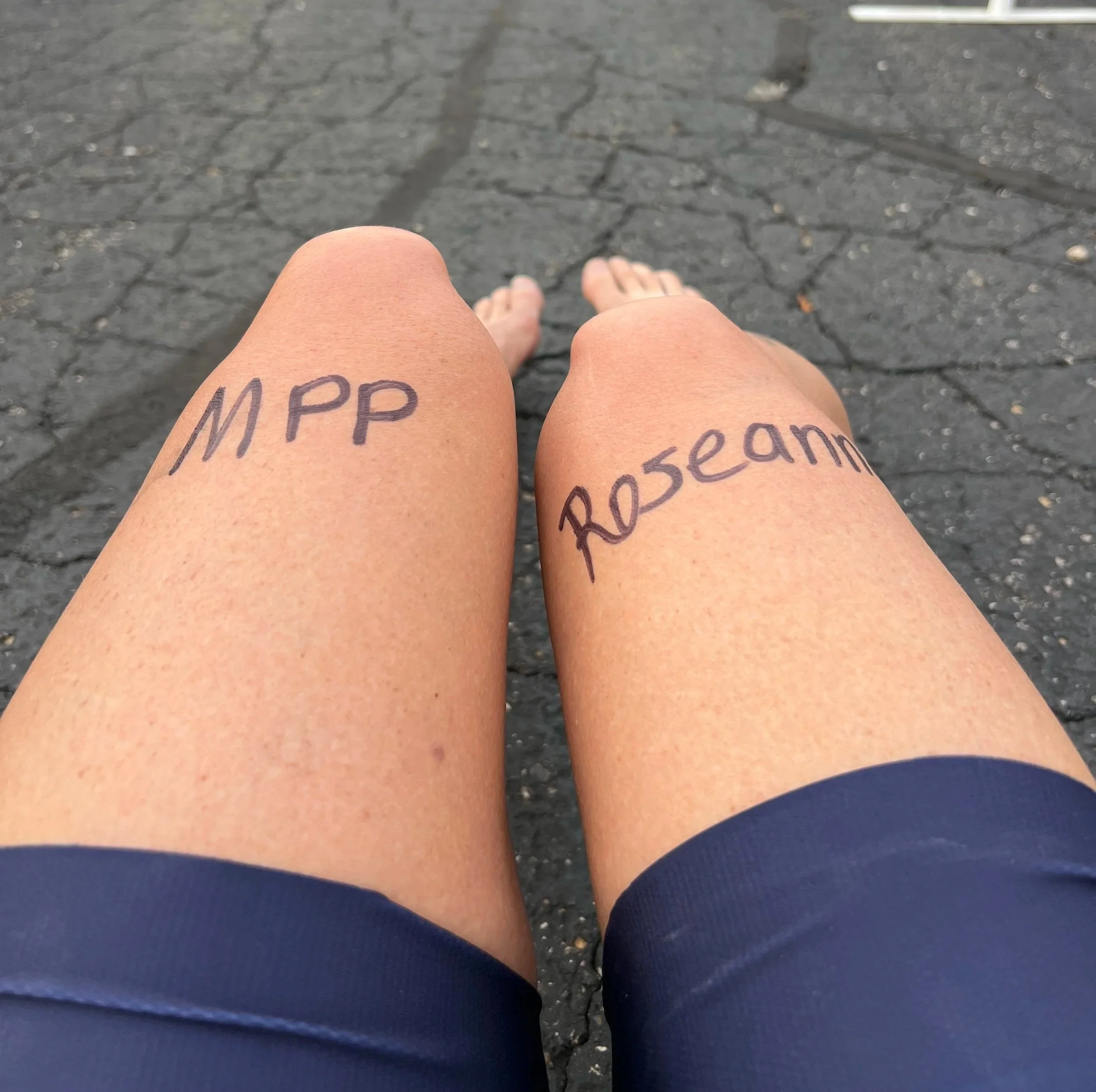
Cramping is no reason to drop out, though. This race was over, and a new race was on my hands. I had to get my nutrition in and just slog through the bike waiting for it to kick in. I went quiet and rode on my dead legs. I watched the second place woman pass me then stopped paying attention. “Keep it going” popped into my head. That was a Michael Parker saying. I looked at the letters marked on my thighs and tried to work on my mindset, keep the bike going, look on the bright side as Roseann would have done, and just not worry about any outcome. I bounced back a little, started to feel a little more normal, but I never got any real speed back. And as I pushed through the back half, the heat rose, and I felt every fraction of a degree. There was a younger version of myself that would've had a fit by now, as bad off as I was. I'm not sure if it's because I've been through childbirth or because I'd found a new gratitude and perspective, but I processed the pain and complete competitive letdown way better than I would have in the past. I got through an awful bike and began an awful run.
As I started, I felt a little kick in my stride, but it was short-lived. The leg muscle seizing was holding on and had inflicted some damage, and now I was entering an oven. The heat index was near 100°, I found out later. Molly rode by and gave me some encouragement as I told her I was cooked. I managed to spout some positive words about how lucky I was just to be racing. I mentioned that in January I could barely walk. I doubt I would've reminded myself of that had I not had a friend to voice it to in that moment.
Probably around mile 5 or so, I surpassed that “point of no return” level of dehydration and high core body temperature. Whatever stomach bug I had had gotten a head start on taking me down in this race, and those sessions missed were… really missed.
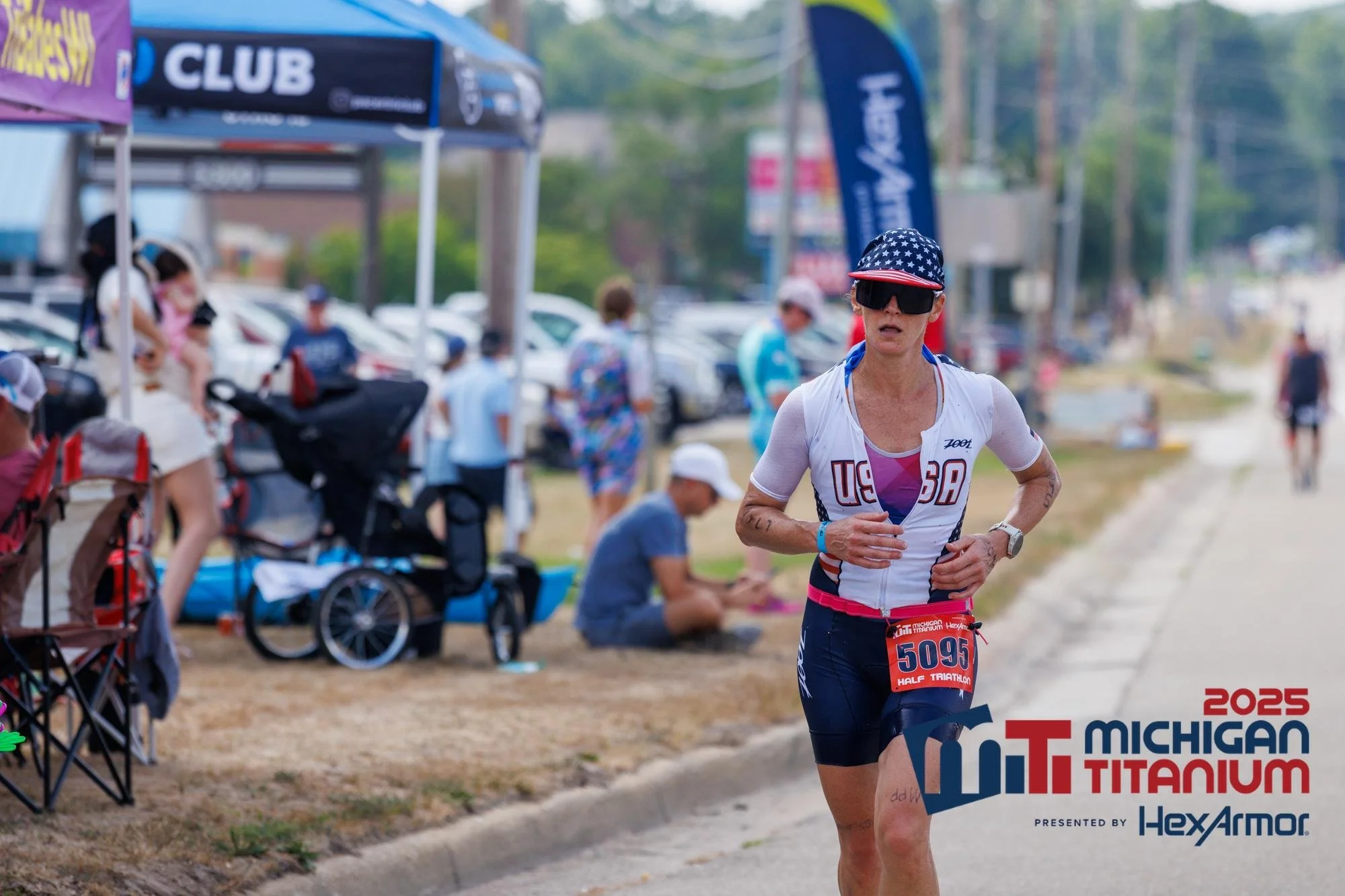
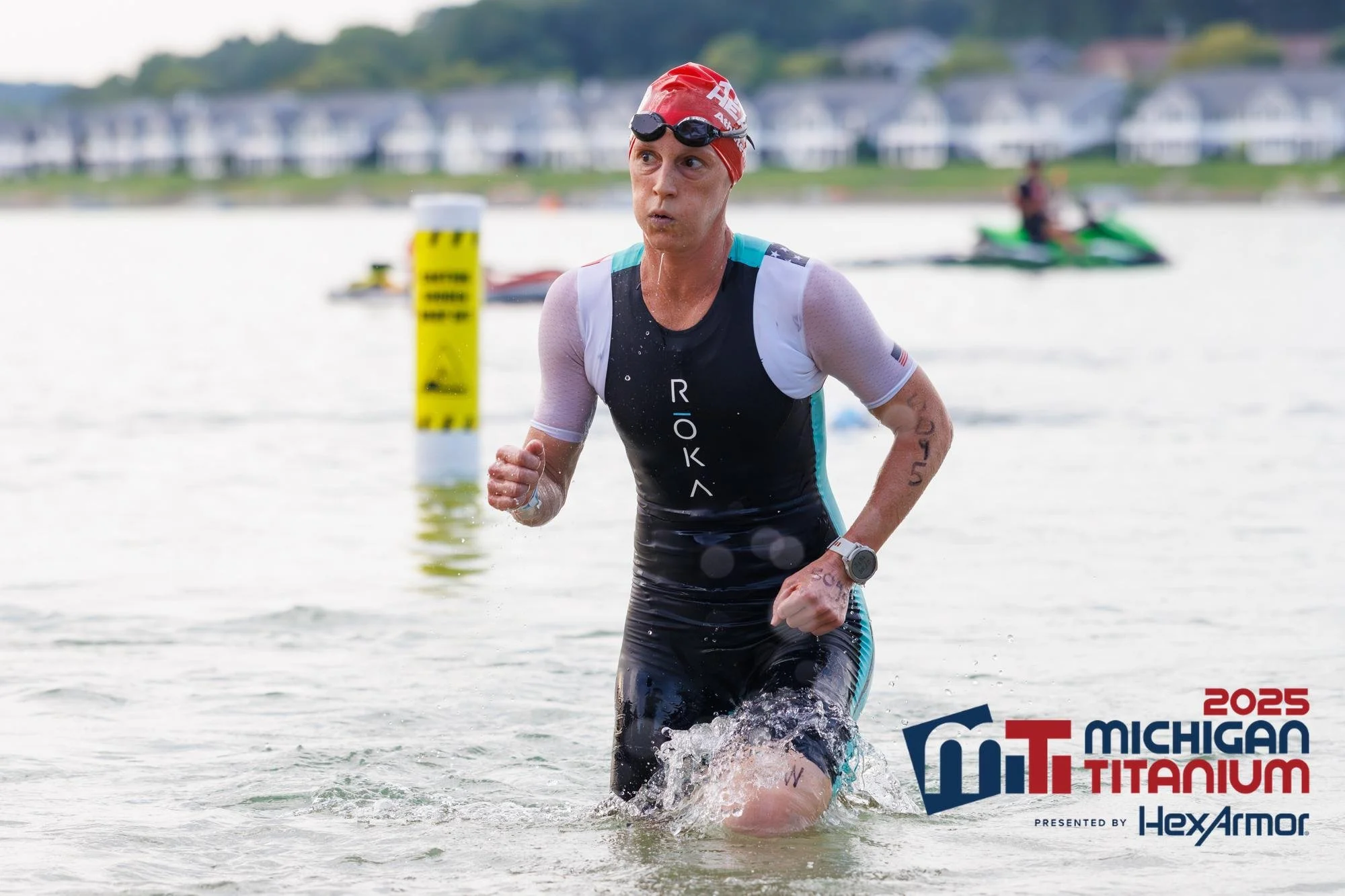
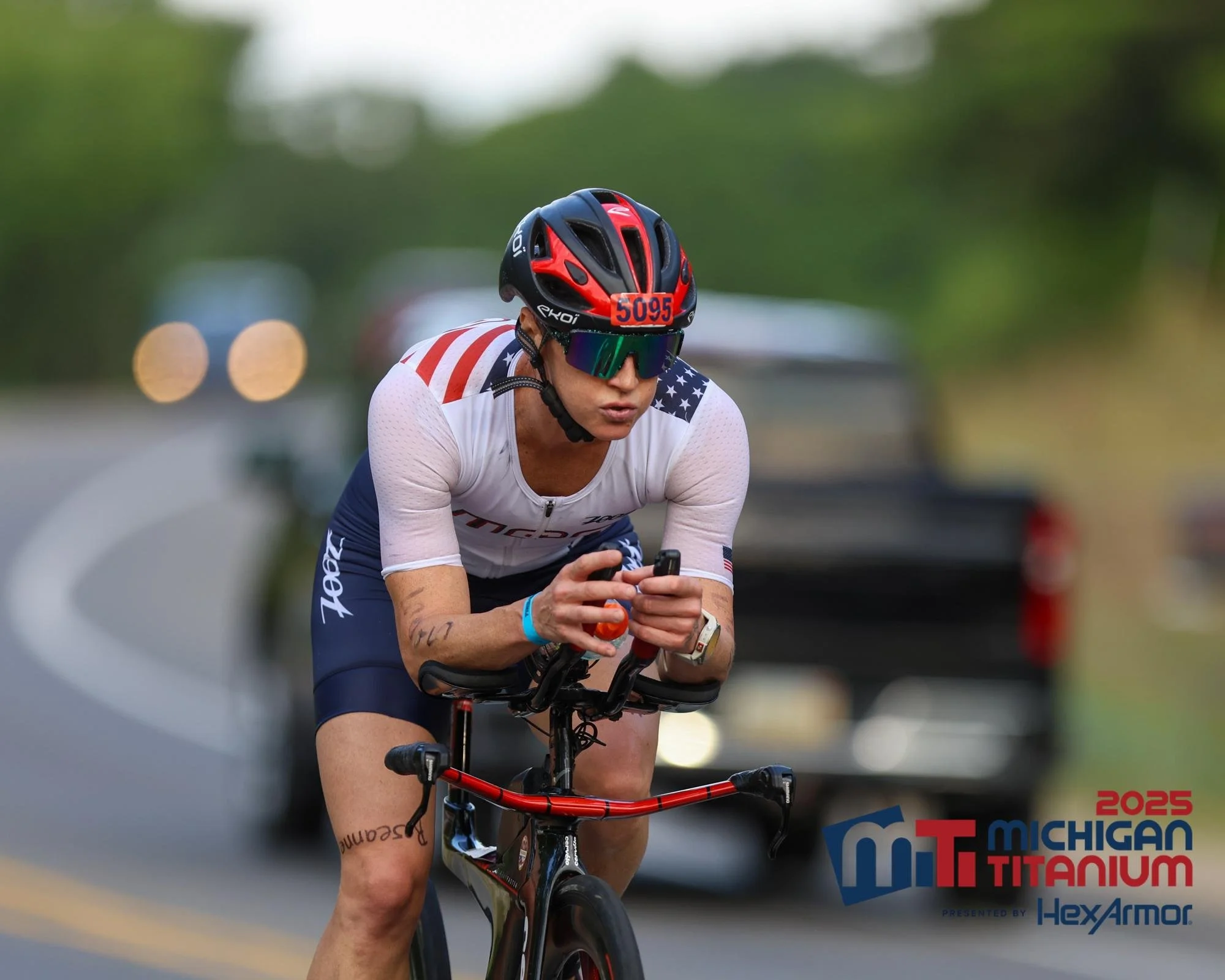
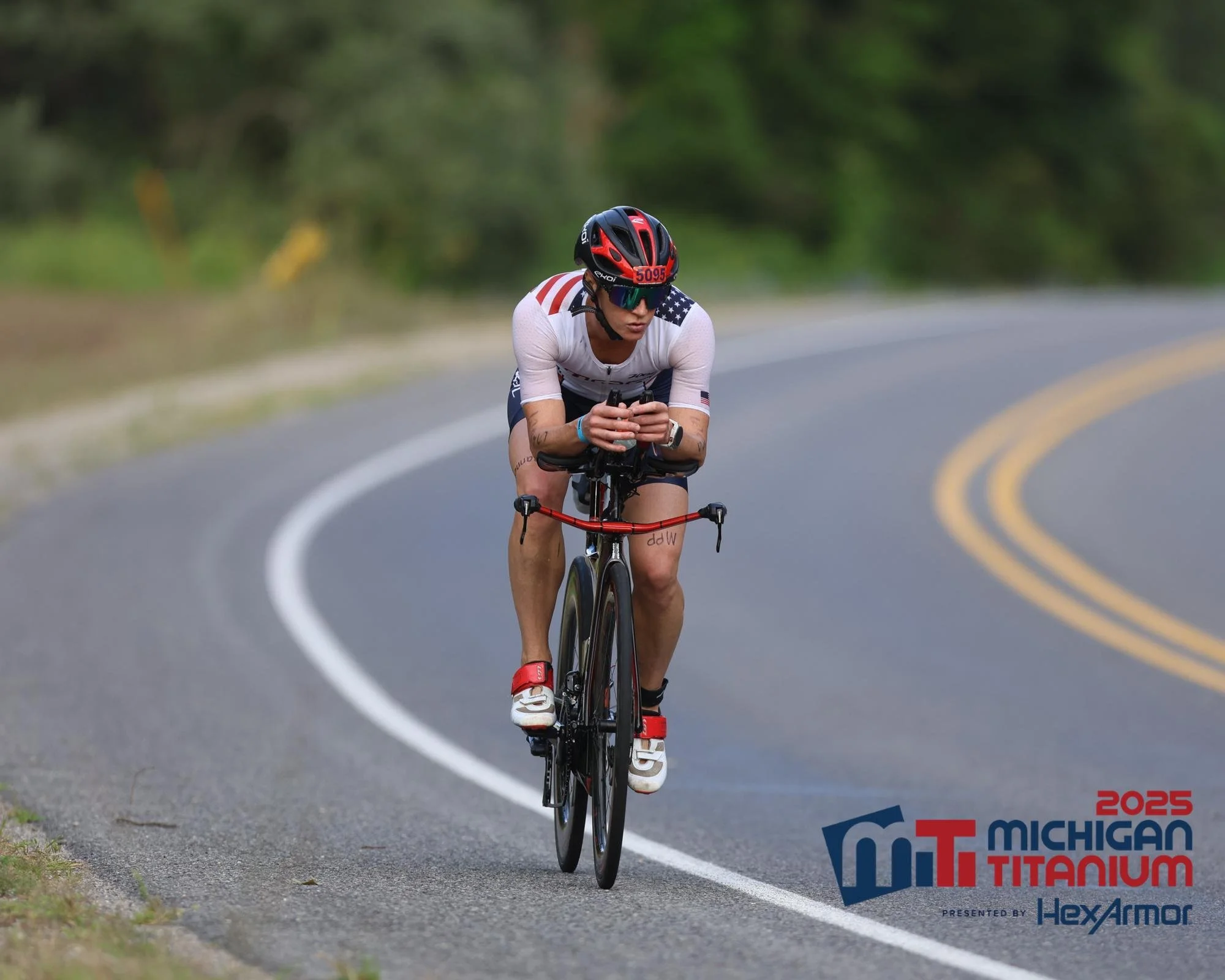
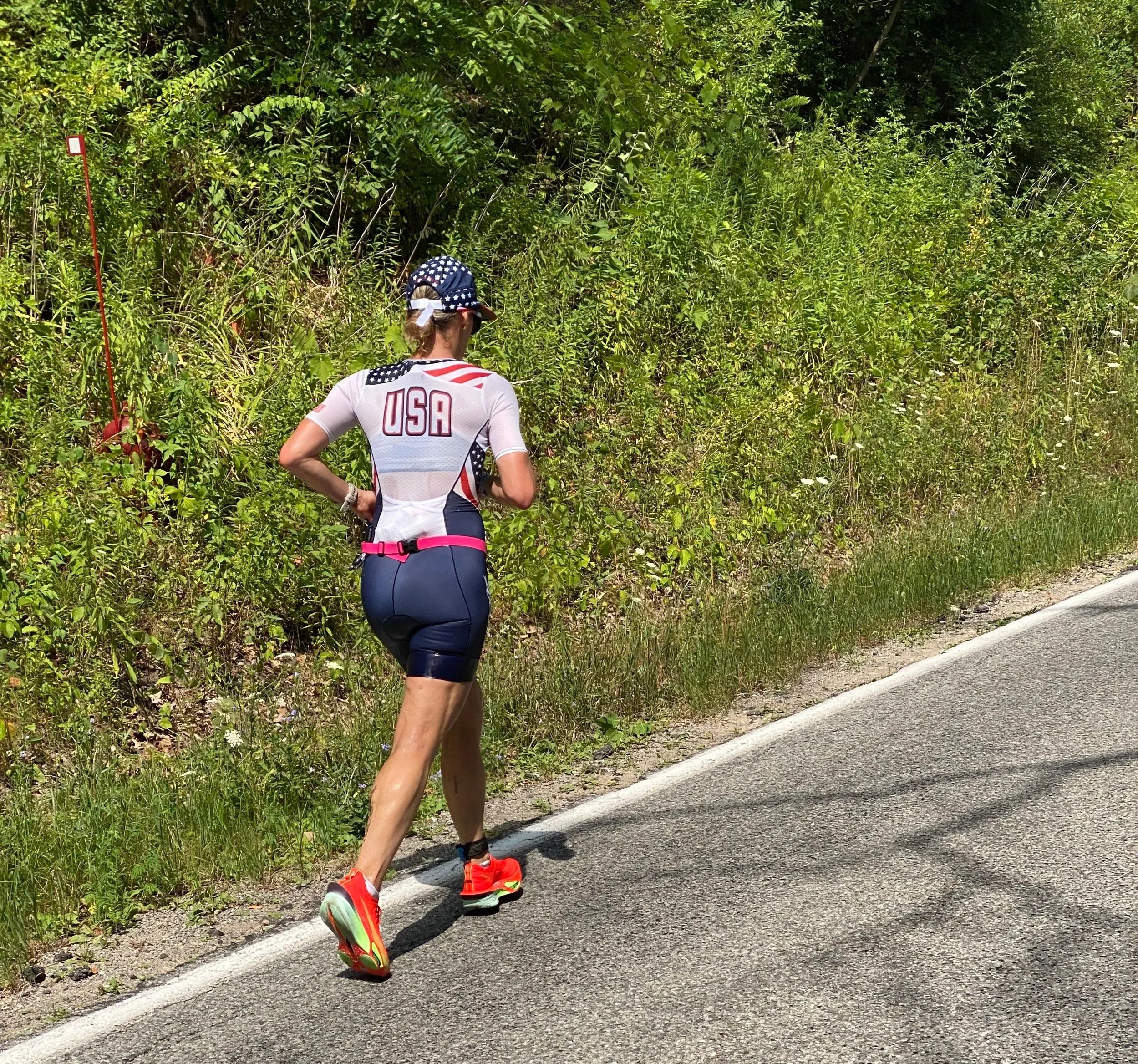
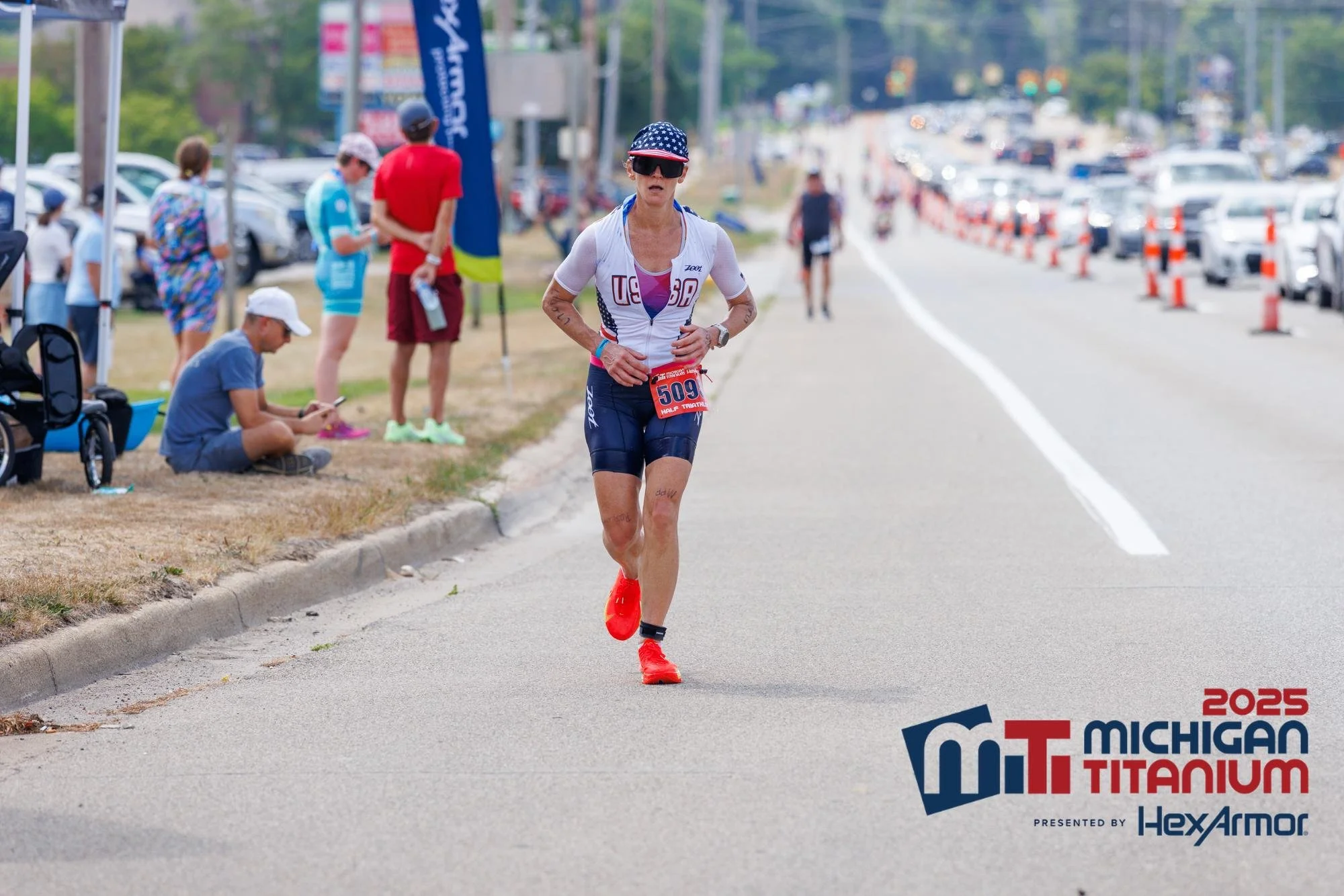
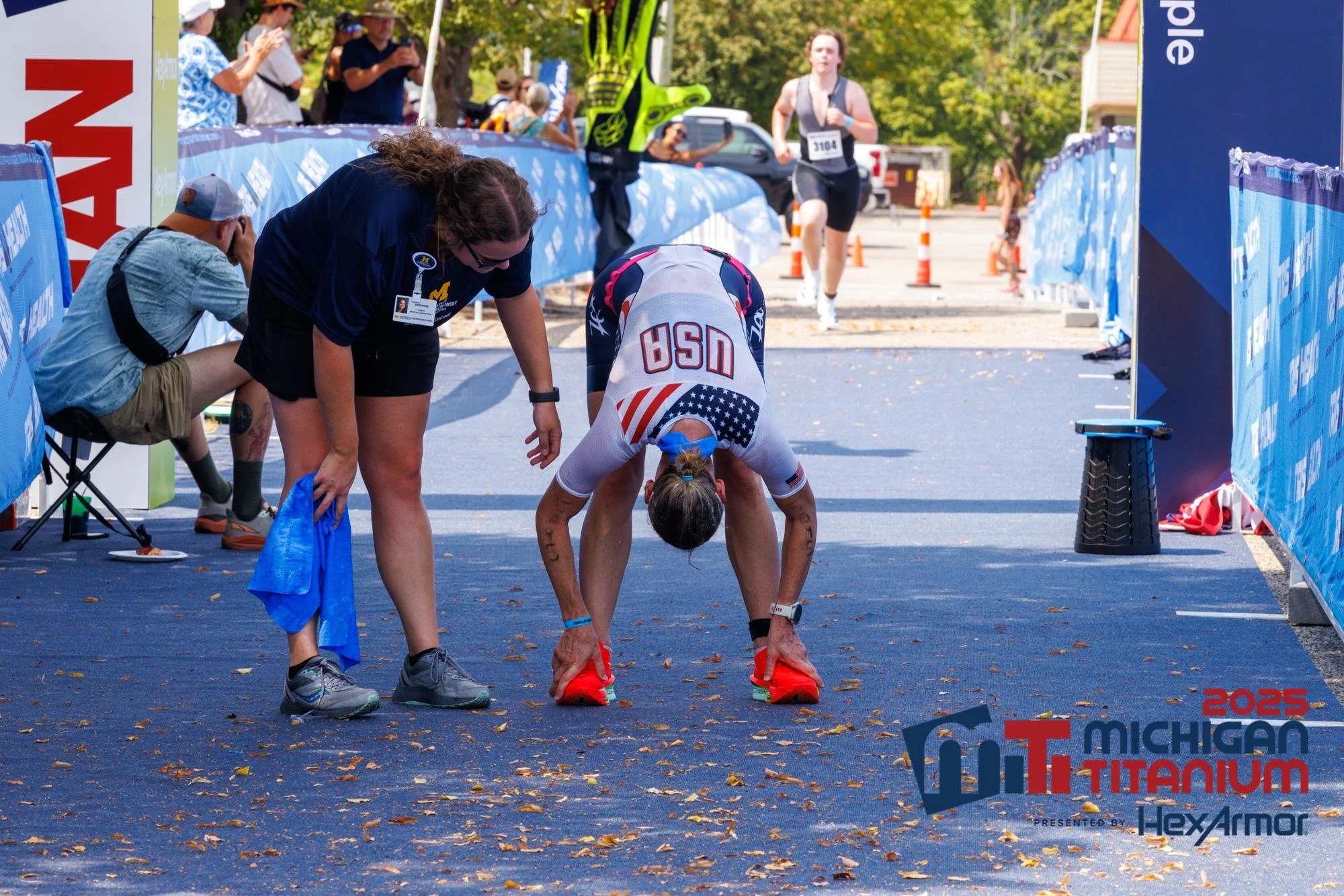
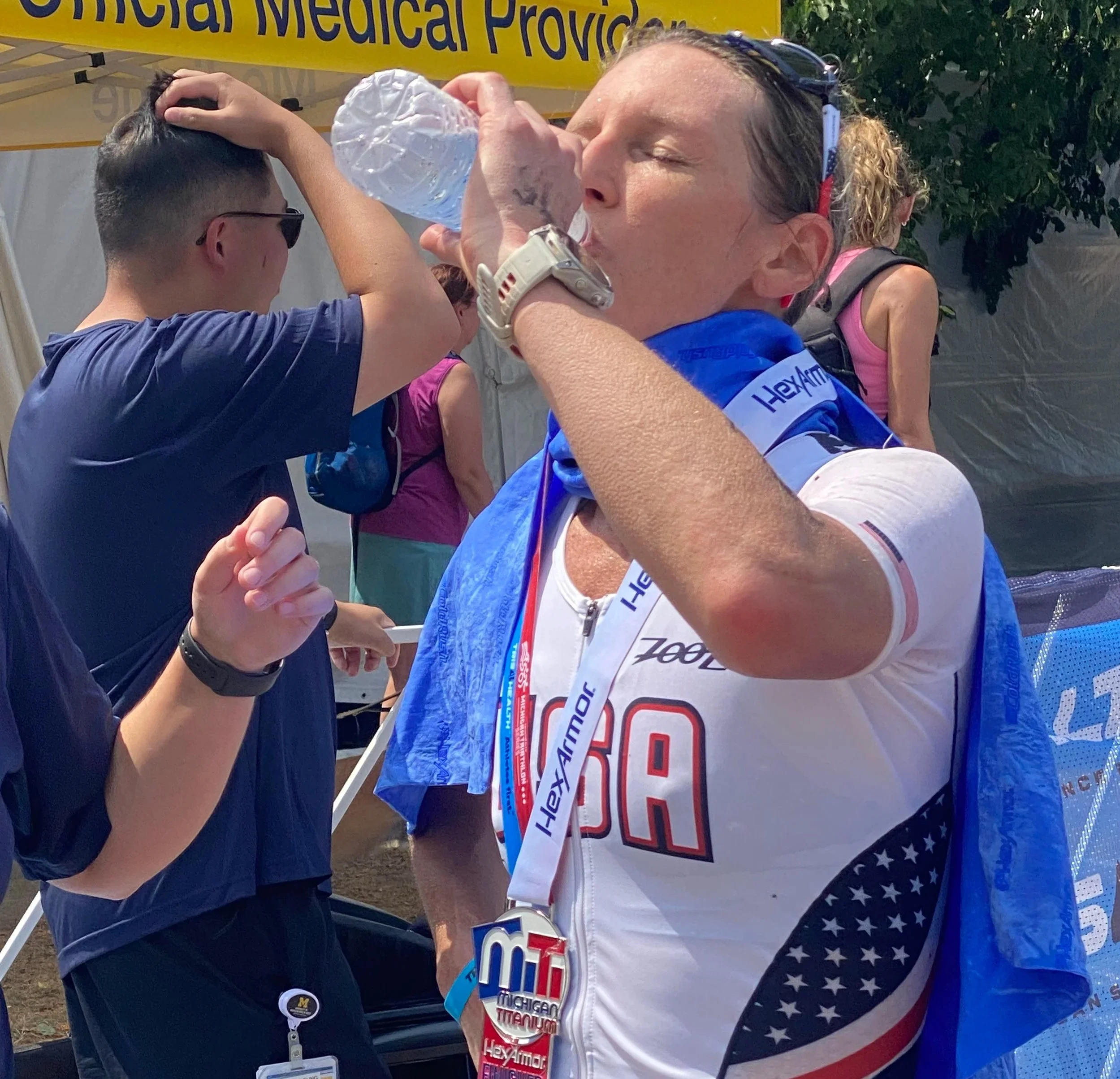
There was nothing I could do until the race was over. At the aid station just after I started the second lap I took a ton of water and ice and kept going a few steps, then turned back to the aid station for more. I had to do something mentally so I thought about my attitude and what kind of attitude Roseann would have. Maybe she'd crack a smile even if her body felt like this. I had to be strong and not mentally weak, forget my pace. I got passed for second place at mile 9. I was numb to it. With a few miles to go, Molly rolled up again, and I couldn't talk. Eventually I gave her my hat, which I said I would do at some point toward the end. I like not wearing my big running hat and wearing just sunglasses or the glasses on my head for the finish line. Then I was on the last stretch before the finish chute. I was glad it was almost done. I picked up the pace, one last dagger. Then it was over.
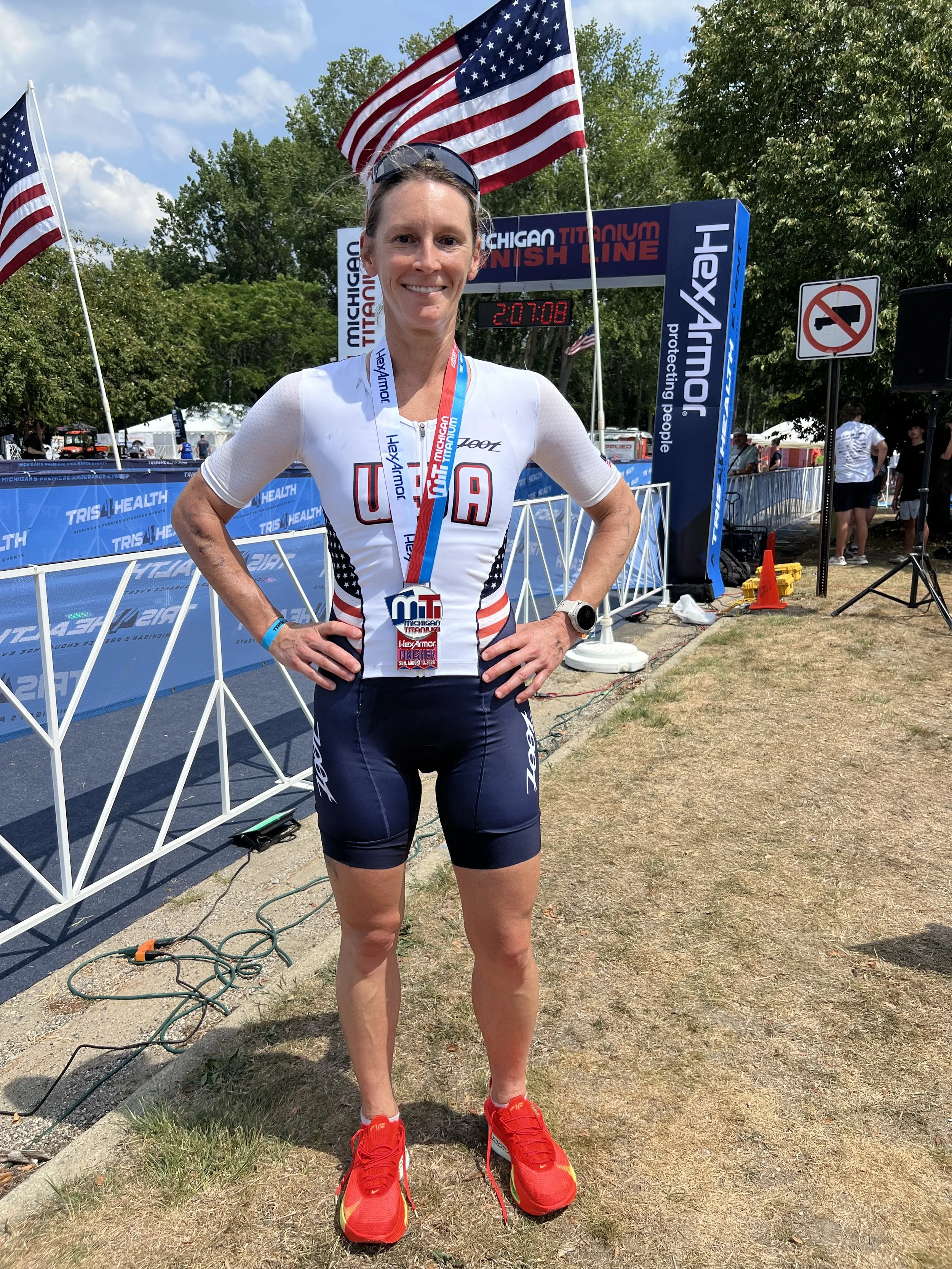
Back together in one piece. ‘Merica!
Swim: 27:47 | 1:27 / 100 yd avg | 1,922 yd
T1: 3:04 | 0.21 mi
Bike: 2:51:52 | 19.6 mph avg | 56.08 mi
T2: 3.21 | 0.24 mi
Run: 1:49:06 | 8:18 / mi avg | 13.15 mi
TOTAL: 5:15:10 | 70.77 mi
I drank water, sat in an ice kiddie pool, talked to Molly and decompressed. I finally cooled down and went for the free massage.
The man giving the massage didn't remember me, but I remembered him from this same race in 2019. I had plantar fasciitis so bad I stopped multiple times during the run and had to take my shoe off to get at my foot fascia. Afterwards his clinic was giving massages, and I went and described to this PT my symptoms during the run. So he dug. He dug harder into the bottom of my foot than I or anyone had ever done before.
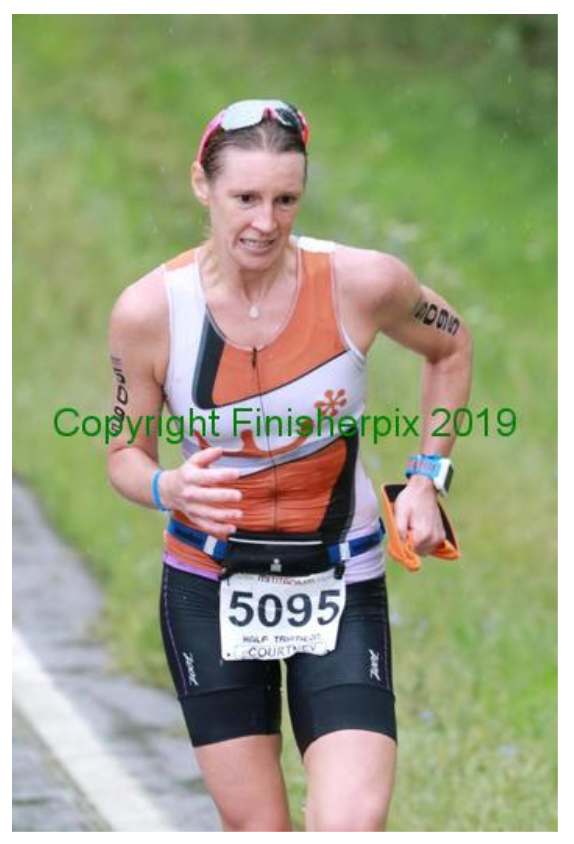
Foot pain at MiTi 2019, one month before Ironman 70.3 WCs. Note the same bib # as this year.
That strip from the big tow to the heel bone was like a tight violin string, and it had to be forced to slack. It hurt but he did it, he broke the chronic tightness. I had been freaking out about it, because I was going to the 70.3 World Championship in Nice FR in less than a month and had invested a ton of time, money, and resources into that trip, and I thought the race was in jeopardy because the PF was just unrelenting. But this guy saved my foot and saved that race. Sounds dramatic, but it's the facts. He dug in and then there was relief. So six years later here I was to recount what he did for me and thank him. I also thanked Molly for the support. Few people would give up their Sunday at the last minute to roast in the sun for a friend, but she did and she definitely helped me through that tough run.
Back at the hotel I watched J.J. battle in yet another playoff for a huge win. He and Justin Rose went three rounds of sudden death play at the FedEx St. Jude Championship before it was over, and J.J. unfortunately came up short. That's some pressure, and that's sports. That evening I went back to the race site to help clean up. I got going on clipping off and organizing all the sponsor signage on the fencing and transition areas. I gathered and stacked chairs and discarded all the trash I could. I'd never stayed around this race to volunteer, but the gesture was overdue. Yes I wanted to be home with my daughter, but I had to give back to this race this year. It was also a positive distraction from the disappointing race performance. I went back to the hotel around 9:30 PM, slept, then I got up at 4:45 AM and drove home in time to wake up my daughter, get her breakfast going, and see her off to school. A welcome return to reality.
Mindset Matters
As for training and racing, there was a reality around my training that warranted root-level adjustments. There was also the consideration of these two races. One went well and I was relieved to run pain free again. My life is different from the last season I raced competitively (2022), and I was humbled by the memory of two great people. But this last race touched a core of my nature that I often forget about when I'm racing for a time or position. MiTi was a me vs me experience; it exposed weaknesses, training deficiencies, while also proving maturity and growth in the way of suffering through numerous and severe physical and mental obstacles. It was possibly the most painful race I'd ever done (my first marathon is up there). A lot of people quit when shit is not going their way in a long, miserable race, and a version of myself in the past may actually have on that day.
Two elements of my nature were at odds for months: one part that's self focused, weak, driven by a delusion of identity and fitting in; and another that chooses painful physical fetes in order to suffer, seek, and ultimately find out who I am and who I am not. One side needs God, the other is feeling God in those suffering moments. I had to face that I may never PR in 70.3 again, I may never win this local race again. I may, in fact, get slower soon and never faster with whatever training I do. I used to be driven by the showings of this sport, but I literally couldn't care like that anymore. I'm 44, and my life is just different now. I had nothing to show for MiTi and after some days of physical recovery I did not care. I realized which race, or which kind of race, actually meant more and why. I wanted more of that. I shed the last remnants of this sport the way I used to approach it. Races can be mental tests, and they don't need to be about the numbers. Same with training: the compliant days, the skimmed sessions, the wasted days, the days I just nail it – no one knows about them but me, and the days I could have done more but didn’t were eating at me. Exercising the discipline required to train and race at the level I want to can’t be a 2-3x / week thing, it’s got to be daily. There is the hard work, then there is the hard work combined with the hard work habits. I was either going to train per the plan, do the sessions I didn’t want to do at compliance, get over fear of the effort and how much it sucks, and balance everything else with a smile on my face, or I was robbing myself of an opportunity to have better days.
Goggins & The Built Belief
When it comes to physical work and sports, I've always been a hard worker, a grinder. In high school I typically added sessions to practice whether that was reps on the field hockey cage or extra miles. In fact it was for exactly this that I was bullied my freshman year. Apparently this senior track dude couldn't stand that I was outworking all of them, and he chose to humiliate me at every practice. I didn't have the mental maturity to deal with that, and I suffered a lot through those years, but much later in adult life I figured out how to use that pain to look very critically at myself and see my role in how I was feeling. This is why I resonate with Goggins; he had every reason to blame others for his failures in life – his abusers, bullies, a broken family, poverty – and he did for a long time, but then he made a few critical decisions and started building his mind through physical suffering and took accountability for everything in his life.
“Life will hijack your mind if you let it.”
His story, which continues, has inspired a lot of people to shed a victim mentality, quit obsessing about what other people think of them, and become strong through what he calls the “built belief”, a confidence that grows only by putting oneself through daunting physical tasks and suffering through that over and over and over, thereby taking the place of thoughts and thought patterns that used hold one back. If you’re not familiar with Goggins, the former overweight bug spray sprayer who went through three Navy SEAL Hell Weeks, Army Ranger School, got the world record for most pullups, ran 205 miles in 39 hours, has run dozens more hundred and two hundred mile races, and has has multiple heart surgeries among other health tribulations, then check out the multiple Rogan, Chris Williamson, and Rich Roll episodes with him. He founded the lab of mental hardening and his messages, through these interviews and the notorious self made videos in which he's running and cursing on the road, have spoken to me for years (since March 2018, specifically). So this August, I reminded myself how much sense it all makes to me.
For a year around age 30, I worked out twice a day with no race coming up. I was living in NYC and getting over a rough chapter of life. I got up at 5 every day and ran; it was just who I was. When I first came back to the midwest, I didn't have much going on, and I was alone most of the time, so instead of going for a run, I'd pile textbooks in an old backpack, tighten that thing as tight as I could and run that way. I just wanted to make it harder. Maybe I was trying to beat back that part of me that was scared and stagnating, the person that quit swimming in 8th grade or quit D1 field hockey halfway through college. I've have had bouts of that savage discipline throughout my life, a want to push physically, and it suited me. But at those times, I didn’t have the wisdom, the spiritual development, and the tools to use that for something and put it into a balance the way I can now, with God’s help. If I wanted to win a race I didn’t really work for, and I completely blew up yet still gleaned many bright spots based on everything that happened – there was a message in that. Goggins said during the Moab 240 this year: “The knowledge comes from the experience, not the race. The highs and lows you experience in a race like this gives you a lifetime of knowledge.” I probably gained a chapter of such knowledge at MiTi 2025.
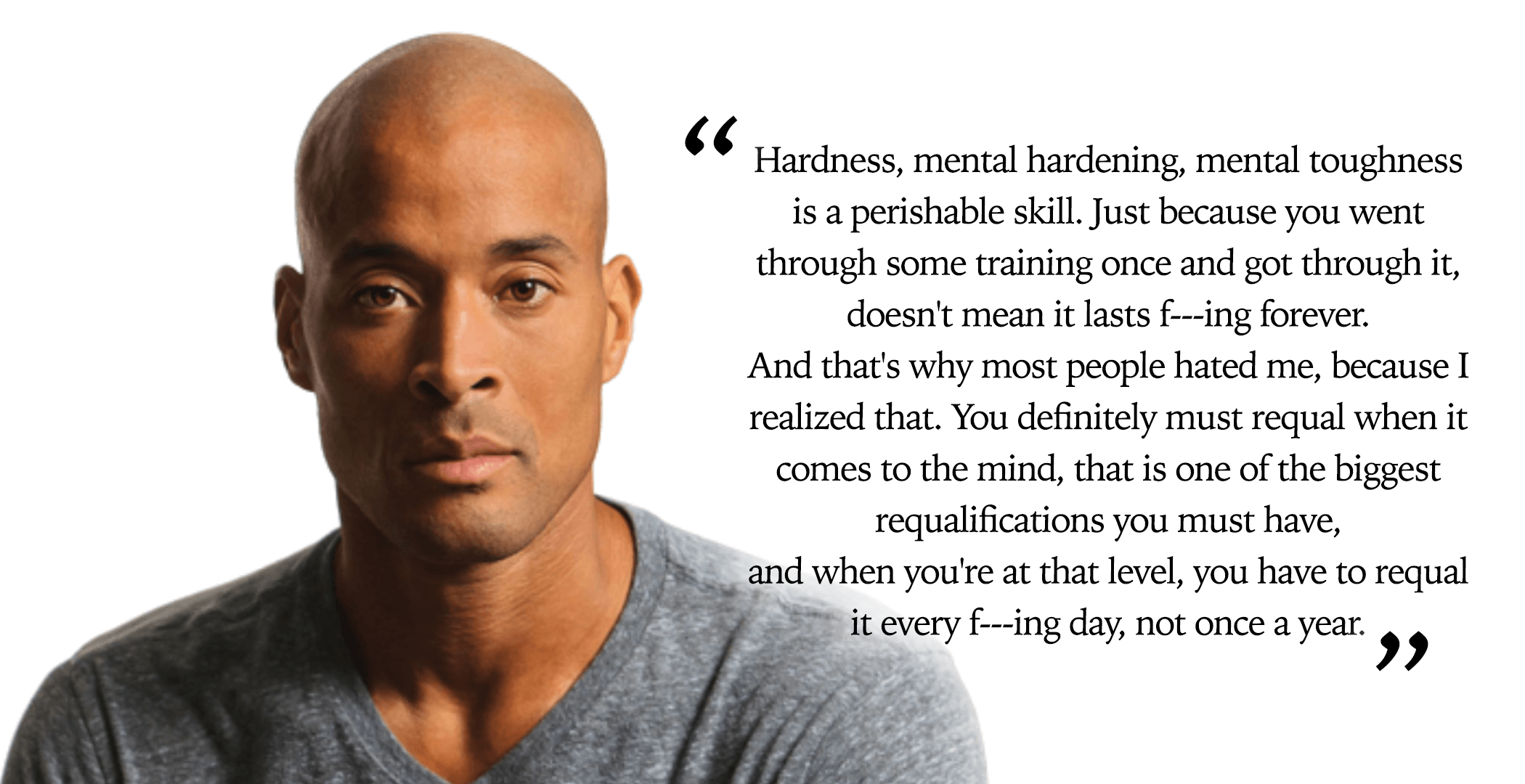
At this point in the season, I had one more 70.3 and some shorter races to go. I had to make incremental changes to shed some habits and manage my time and my energy the way I have done in the past but this time on a stronger emotional footing. I know that nothing changes instantly, so I just started to build. It took David Goggins years to build Goggins, and only God knows what step we're on along that lonely road. Goggins talks about the daily stuff, much like the daily renewing of our mind covered in Romans 12. It is a routine that fuels a person, pushes him or her to do work day in and day out – exercise, work the job, be a good, present parent, support the family, put God first, etc. – to the point that they never need motivation. Luckily I'm a morning person, but these days, I have to try really hard to avoid media and other distractions in the morning. The message about morning, the first waking minutes or hours of the day, is where I see an obvious convergence of Goggins and God's Word. To “Be still and know” first thing in the morning, avoiding even chores, can be harder than letting social media steal my peace or fretting over how many snacks I made for my daughter’s school day. Those minutes in prayer now are crucial to the rest of the day, as is getting my session in early.
“Every day you wake up, it sucks, and when it’s over you feel better. I run every day, and I hate it. But every step I take in that journey, I’m beating the demon again.”
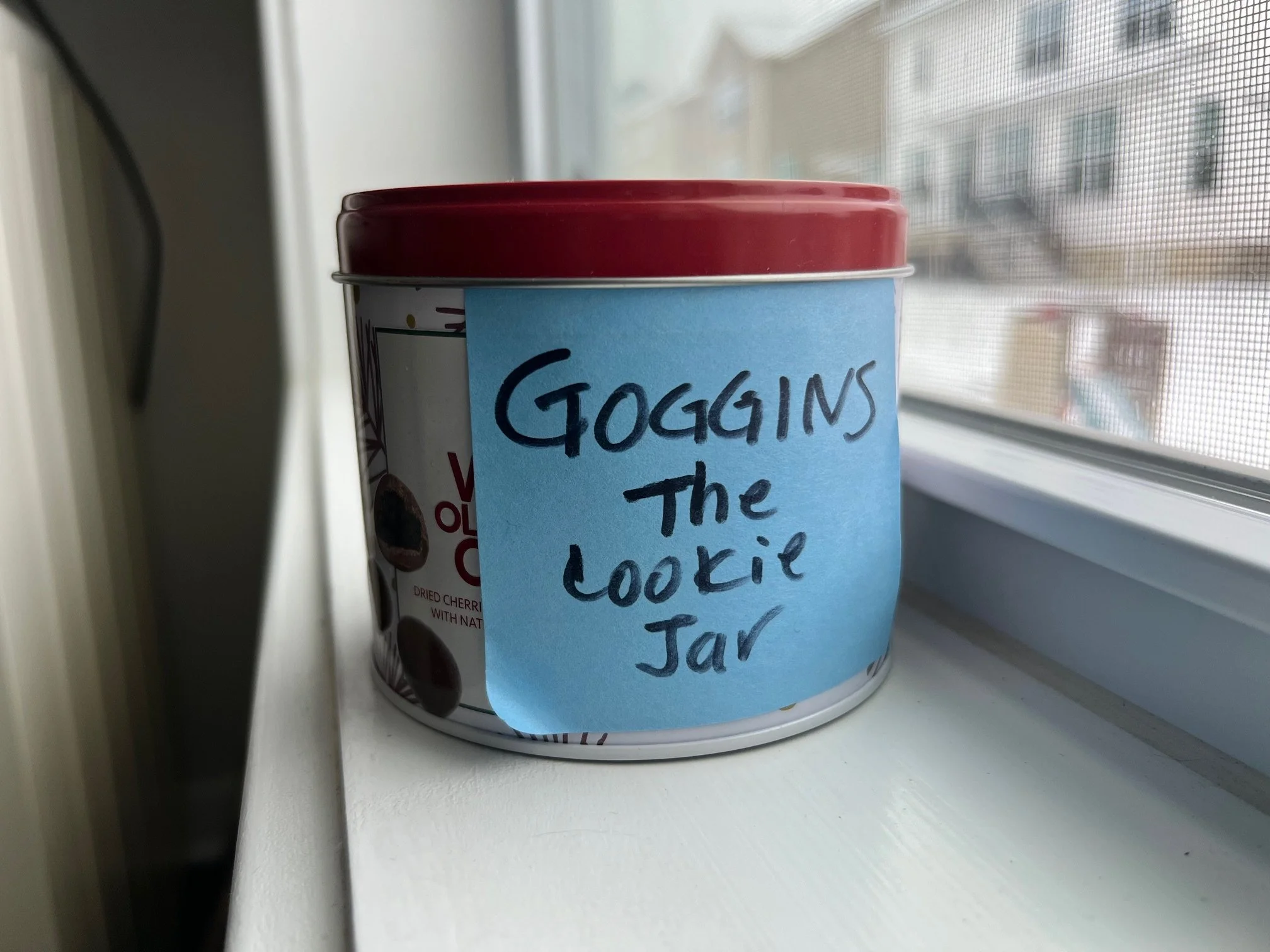
I even created my own Cookie Jar. The Goggins Cookie Jar is a means to remind ourselves of all the things we overcame, suffered through, and accomplished amidst obstacles, notably mental obstacles like stress or bouts of weakness that inevitably creeps in. You write something down and put it in the jar, and you build a pile of reminders for when times get hard and you need to remember that you are still a tough badass. So I got an old nuts canister and started writing down the sessions I completed even when I didn’t want to and was searching for excuses to compromise, to do less. I wrote down when I played the piano instead of watching TV at night before bed (need to do more of that!).
For most of us trying to test oneself with a very tough hobby like triathlon, at some point in a person’s evolution, the daily physical strain will reveal where one’s habits, relationships, handling of life, is helping or hurting one’s physical, mental and emotional body and promoting happiness or misery. This is why I stick with triathlon training and racing – it prevents me from hiding. Leading into the tail end of my season, the reset started working. If I missed a session, it was for a legitimate reason like no childcare, and the misses became less and less. If I had the time to do the session, I did the whole thing… almost always. I still faltered some days, in the grey areas, but progress counts. Luckily the temps were leveling out after the height of the summer heat. Over Labor Day weekend, I had a last long brick and was up north. I was riding fine but didn’t know the roads that well and got back to my car 7 minutes early. So I tacked 7 minutes onto the run. It was important that I did the full time, and overcoming the temptation to just let those 7 minutes go was a personal win, a building block.
“Not only that, but we rejoice in our sufferings, knowing that suffering produces endurance, and endurance produces character.”
Right around this time (about two weeks prior to the race), the texts started to fly about the water temperature – mid 50s. There were the reports then questioning of the reports then on and on about booties and ear covers. No one really had a good read on the water temp now or later, so there was no real expectation; however, I had a tool that I’d been avoiding because it absolutely sucks: the cold plunge. My husband had done a great job at a DIY cold plunge earlier this summer, but I’d only done my 3 minutes (48°) intermittently. Not only did I need to work on my cold shock response, just in case, I also had this thing sitting here that was the perfect apparatus for strengthening my mind in that Goggins way. It was the essence of “you know what to do, it just sucks doing it.” I committed to 4 minutes daily in this freezing cold water. Time to hone that mammalian dive reflex.
Taper week came, and I was on my own with my daughter while my husband traveled for work all week. I welcomed it, because I wanted that extra one on one time with her. We had a pretty good childcare routine, and taper week was minimal training hours, so it would work out perfectly. And then it was September 10.
Charlie Kirk (1993-2025)
When Charlie Kirk was shot, I went into a daze. I’ve never scrolled and refreshed social media that feverishly. I was praying and hoping he would survive. And then I saw the video. He was murdered in public, in front of fans, his staff, his friends, and before the eyes of people who were curious or undecided about him and his message. He was also killed in front of people that hated him. Footage of Charlie’s gruesome assasination was replayed for hundreds of millions scrolling on social media, as I was, trying to get the facts around the event and updates on his condition. He was not even pronounced dead yet, and I felt like I was transported to a corner of the dark web. When I saw what I wish I had never seen, I knew. He was murdered.
I won’t go on too much about who Charlie was, since most people know and have their own opinions. I must say, however, that I continue to admire him. He believed in taking the hard road if it was the right road. He had his priorities straight, that of faith and family, and he used his material success to spread values. He was one of the winners, an example for me, as a parent, citizen, employee, Christian, and athlete. In the hours and days that followed his death, my sadness turned to disgust. This event in our history is not defined only by the assasination; it’s defined by the response, which continues today. It was the response that changed my energy. I felt like a moral baseline had been dismantled at some point and this was the starkest show of it. I probably wouldn’t write as much about this topic if it hadn’t bled into the triathlon world as it did.
Credit: Talbot Cox
A few select pros reposted things when Charlie was killed and on the day of the memorial, in reverence to and sadness for him and his family. But there was one person that faced a seemingly unceasing amount of public criticism, and he is not a pro, not a coach, not a face talking on camera. He is, in my opinion, the most important person in our sport holding a camera.
Talbot Cox has been a trailblazer for triathlon media. He has created what I think is some of the best triathlon photo and video content we have ever seen, turning our sport into cinema. He is self-taught and self-made, driven by a passion he let free and a work ethic that resulted in a career that has taken him around the world, connected him with our most prominent athletes and legends, and led to friendships with these people including my favorite pro, Lionel Sanders. His Errol Morris format for Sanders’ videos is the perfect approach to that personality, which has been elevated by Talbot’s work. This year he gave away every single photo, the hi res files, he took at Eagleman (added some here). I believe he has many of Charlie Kirk’s characteristics, including a maturity held in the hands of an unrelenting faith, which he has been transparent about. Amongst the powerful photos of the best athletes in the world populating his Instagram account, Talbot has spoken of his devout faith, as a follower of Christ. Like Charlie, he was unafraid when it came to his faith, so when he posted in memory of Charlie and things like Erika Kirk’s memorial speech, encouraging people to listen to it, he faced what I would describe as hatred.
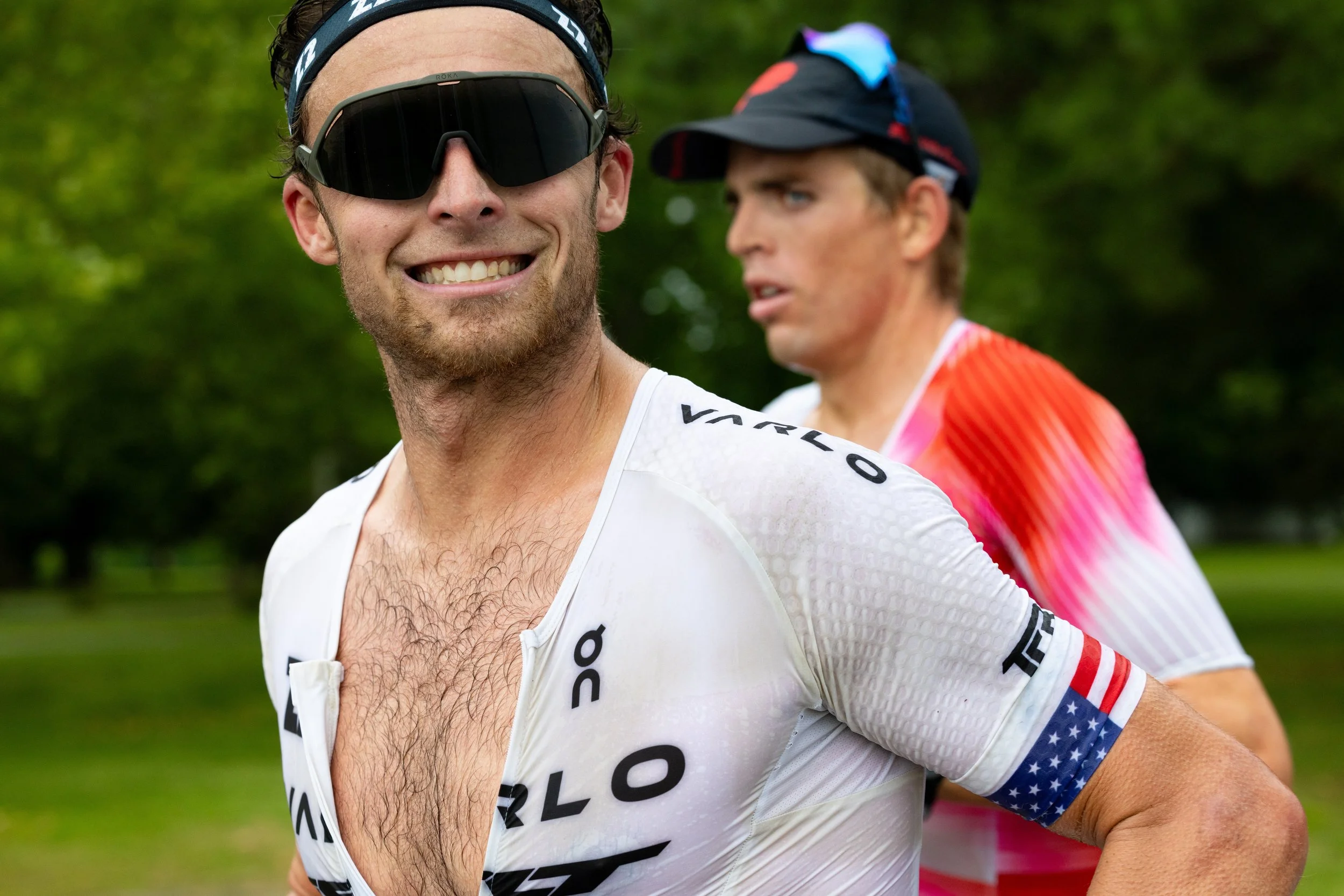
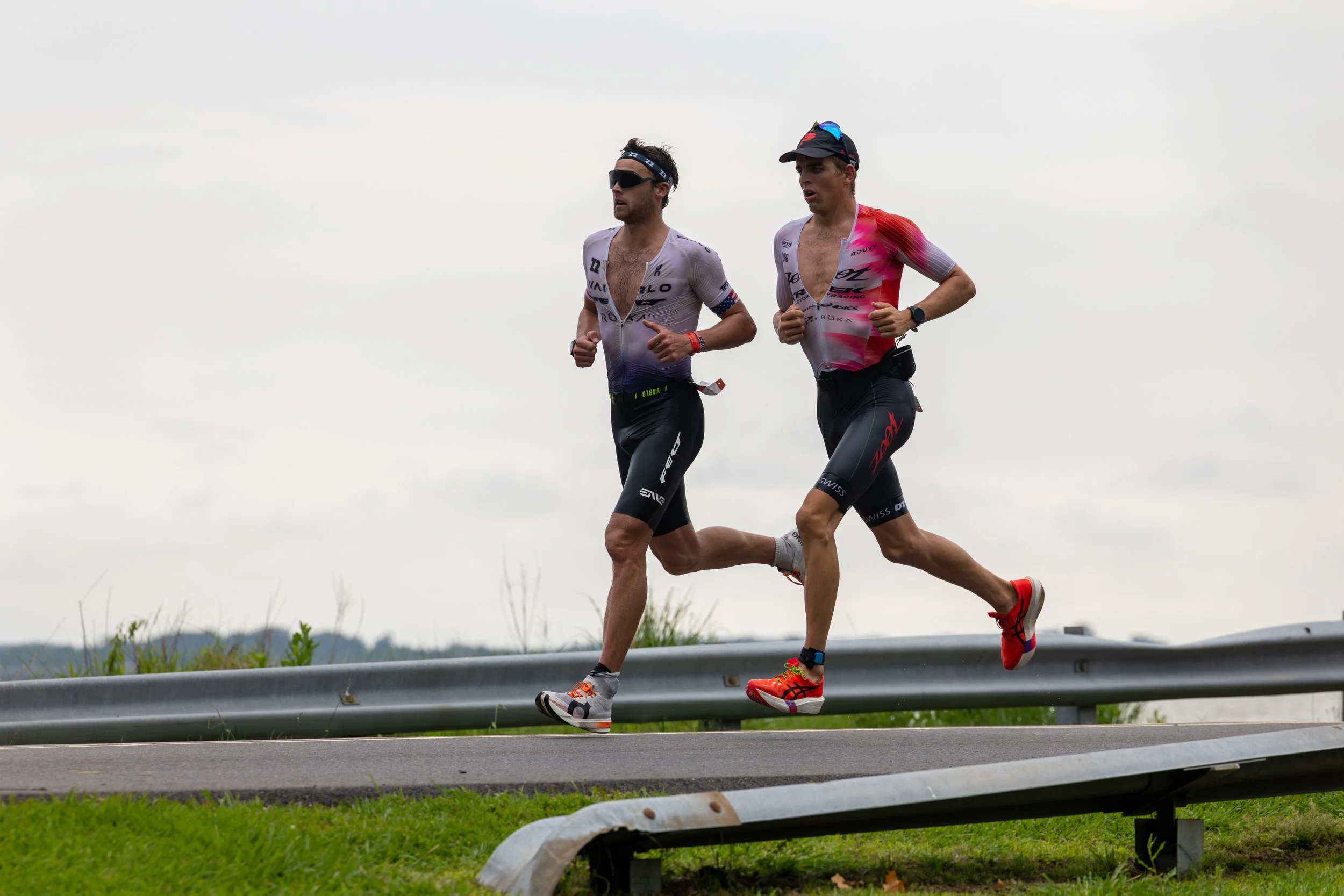
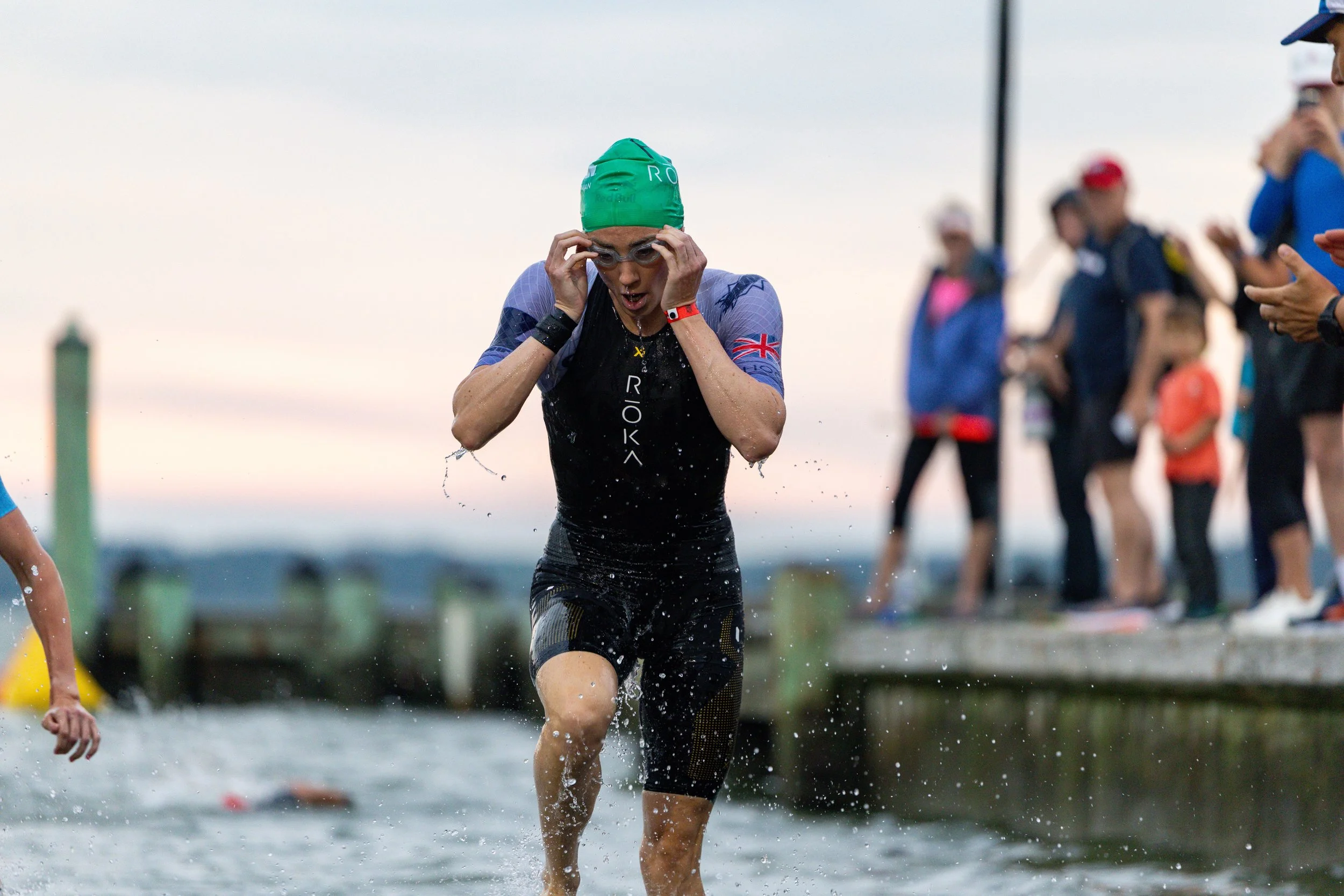
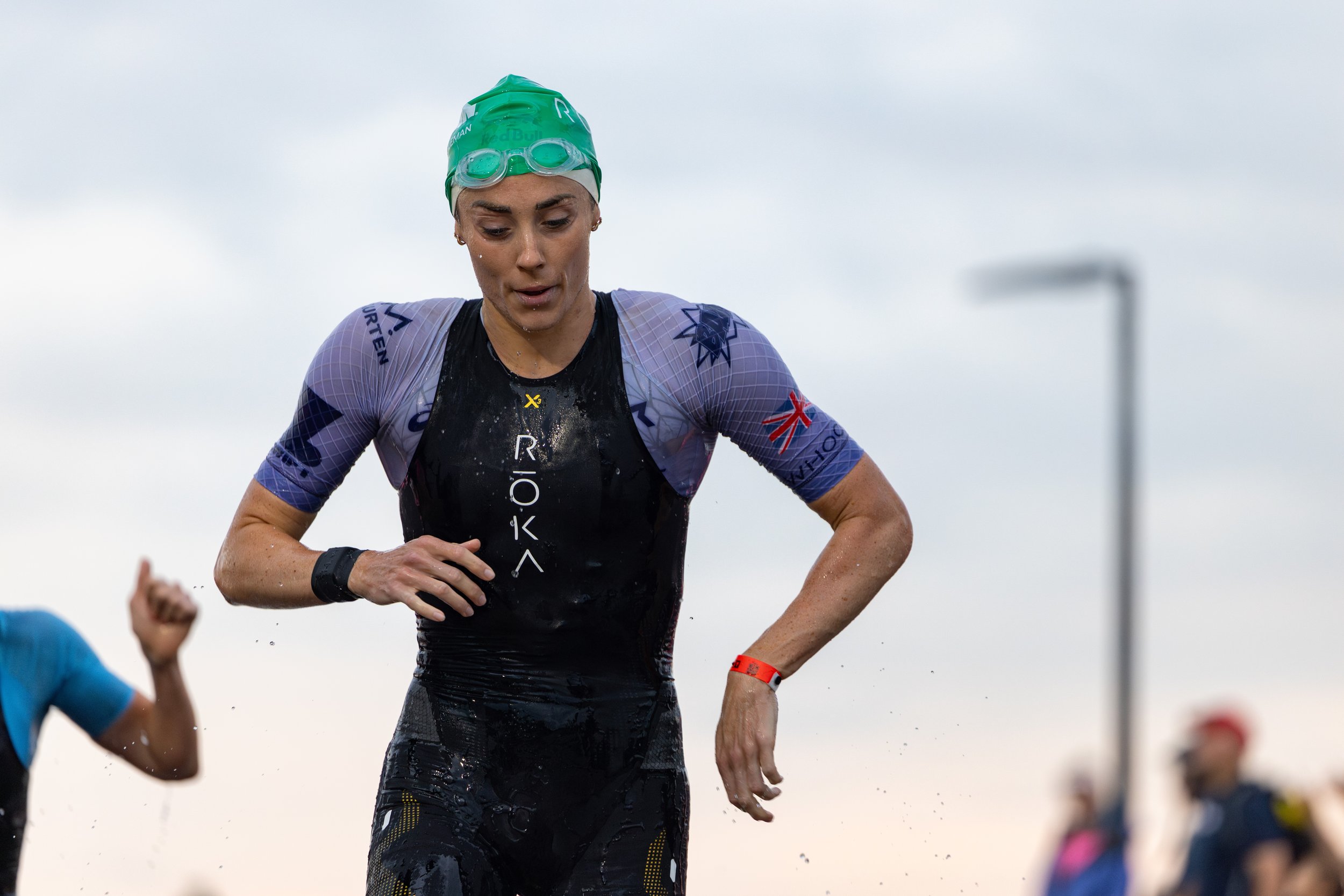
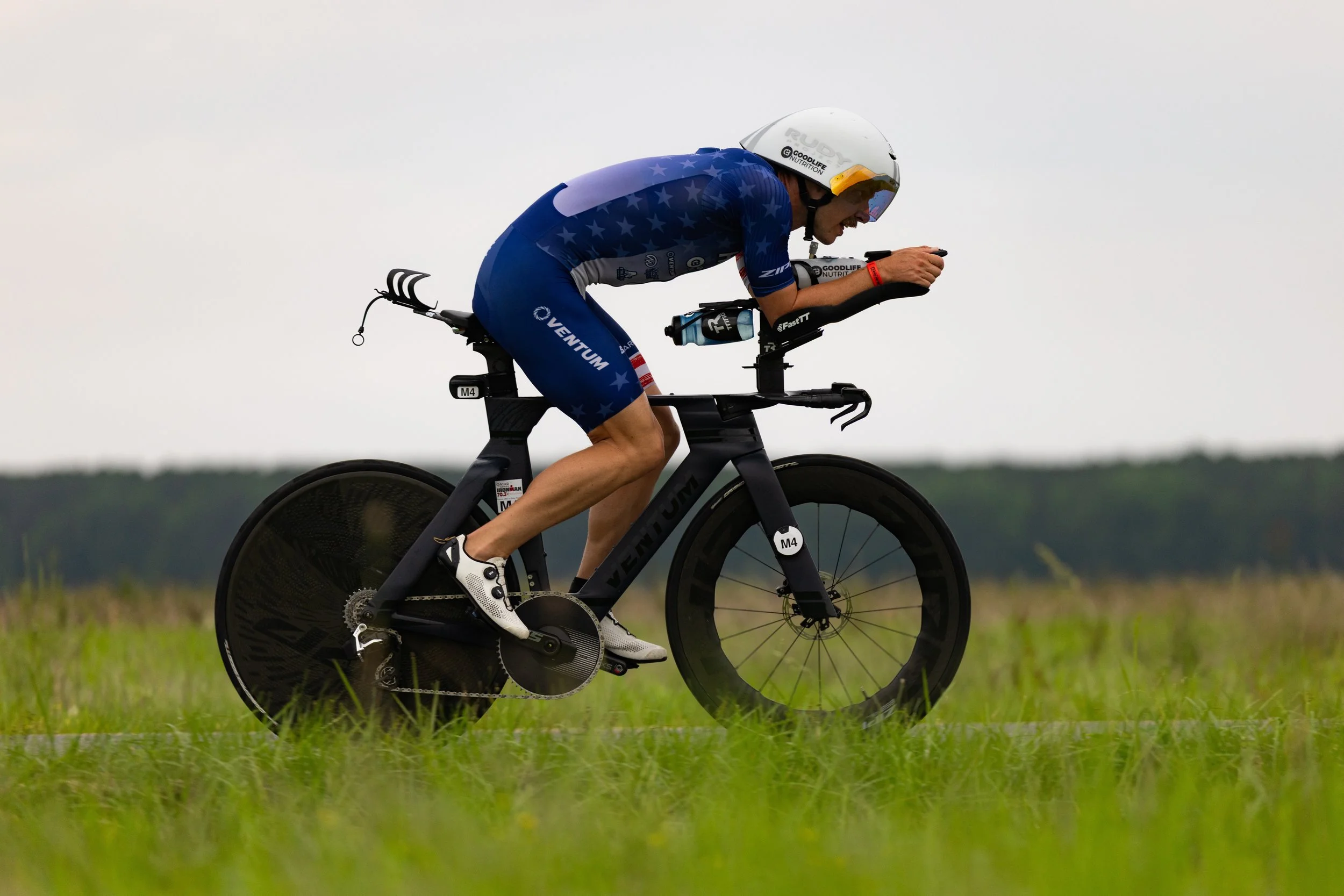
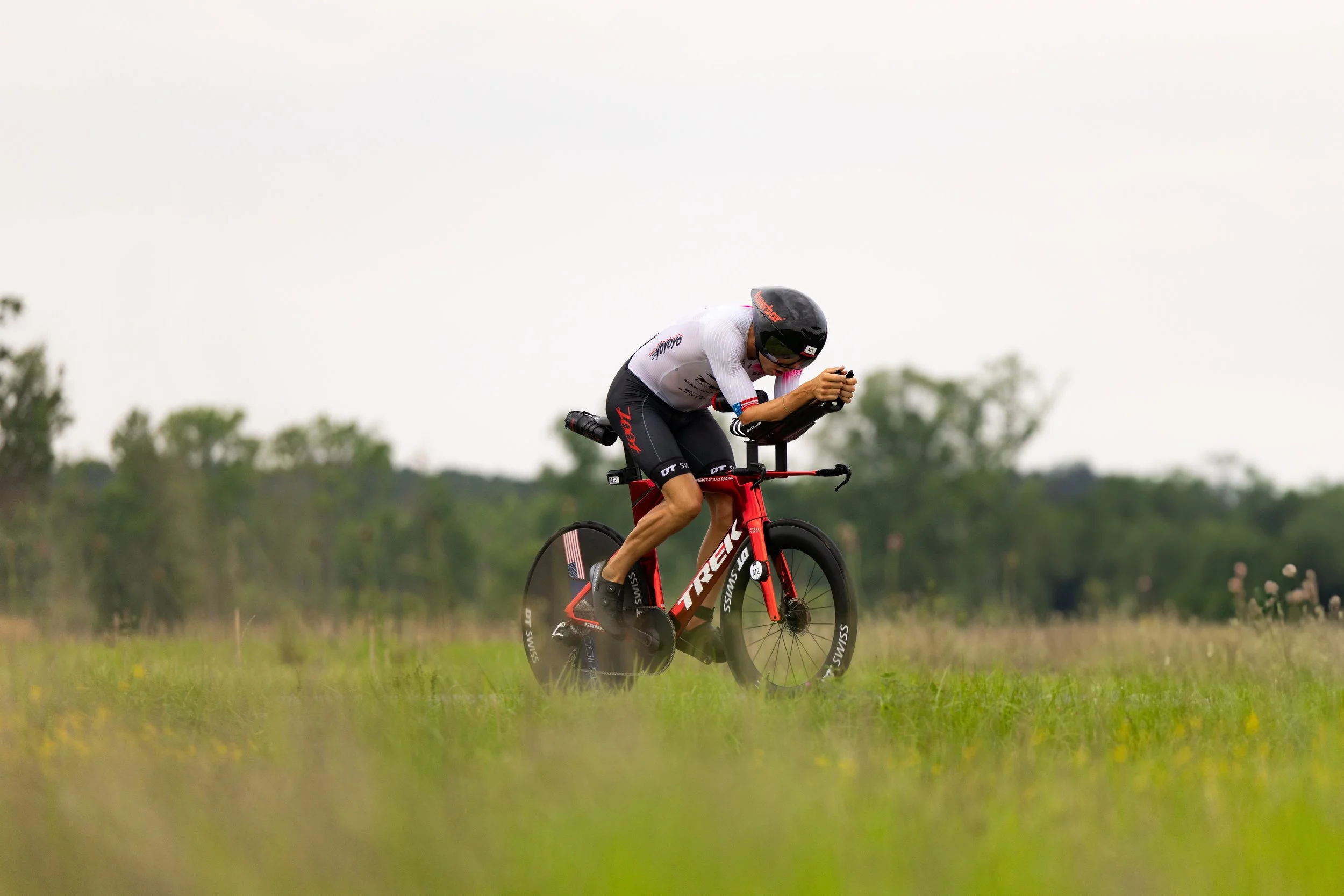
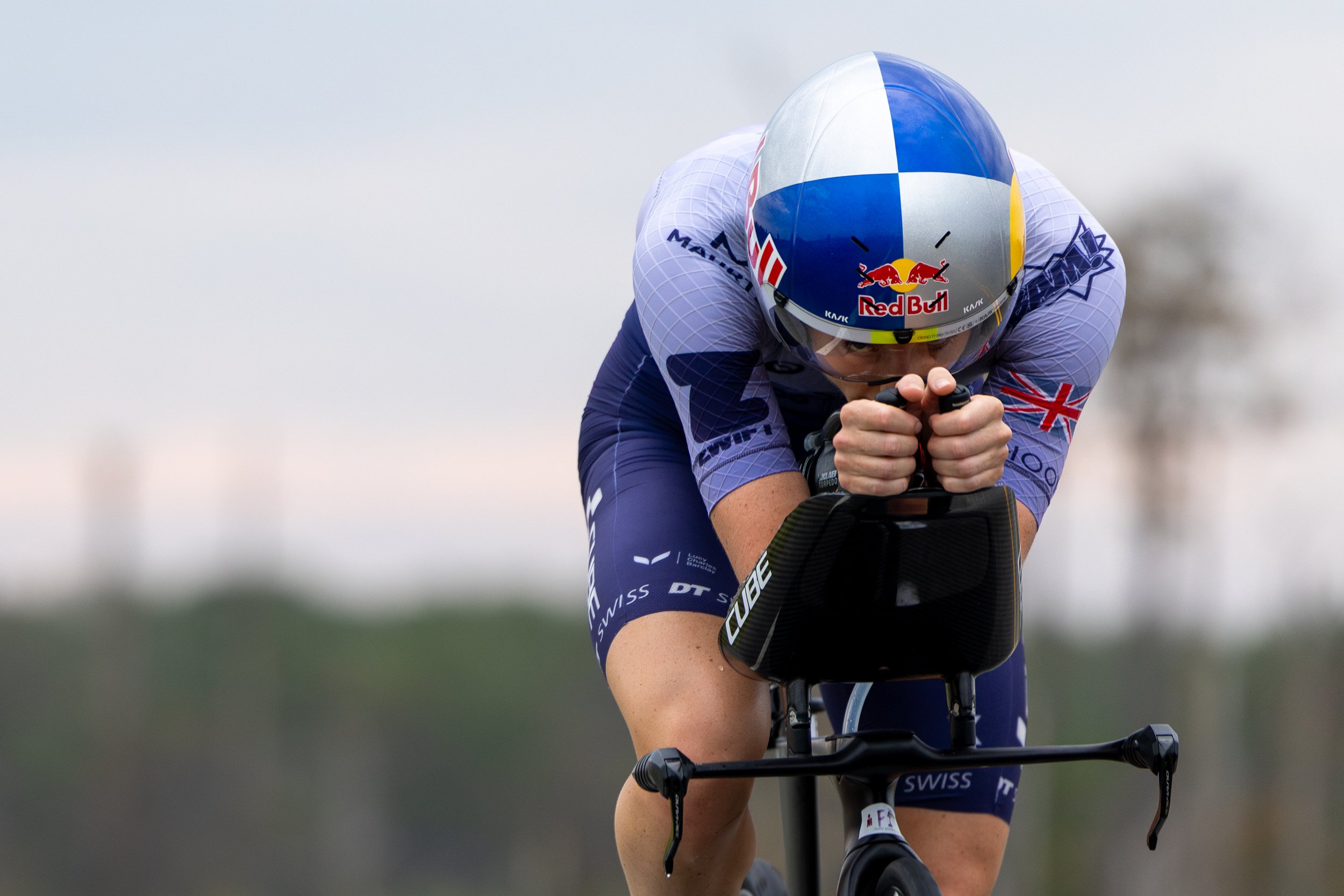
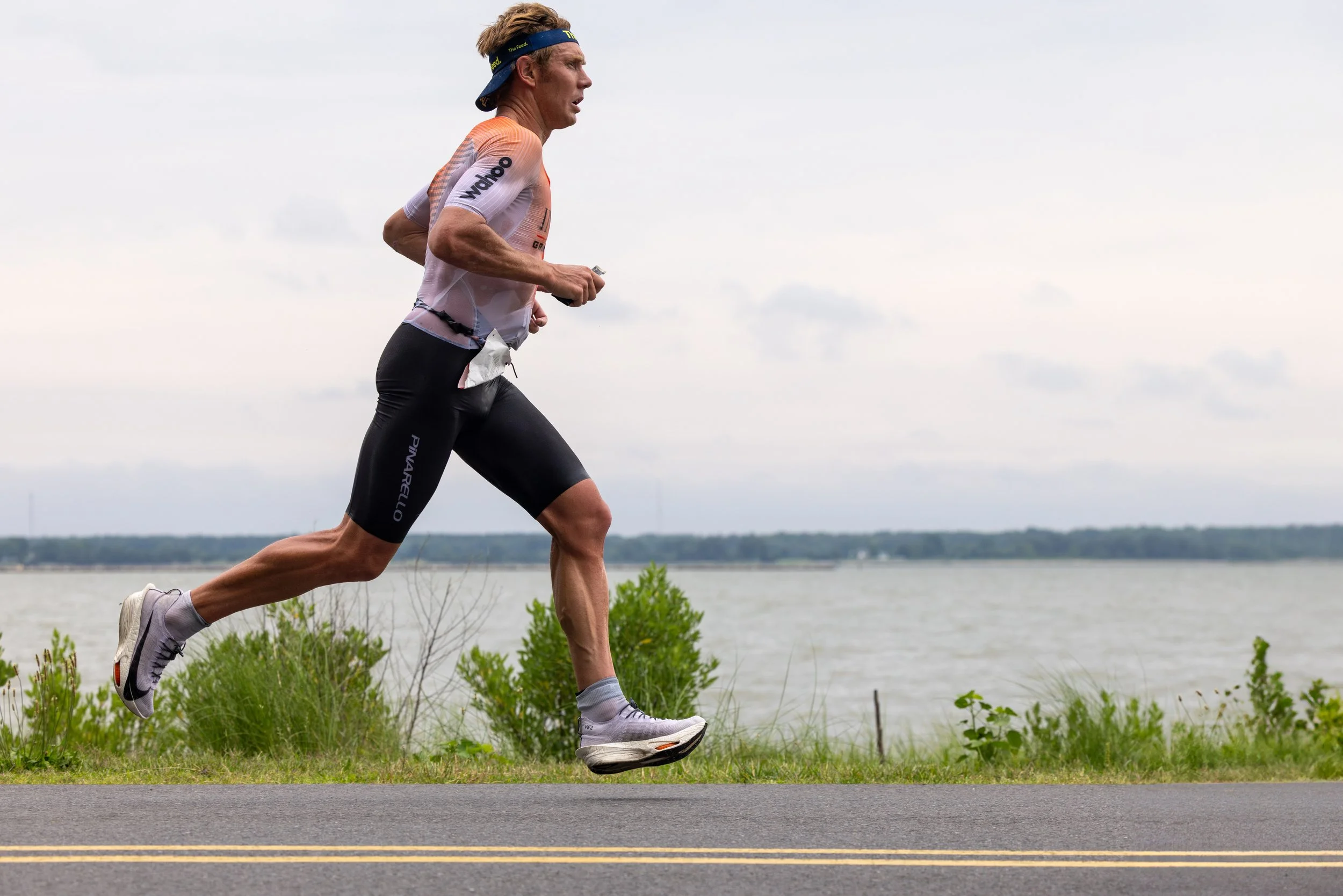
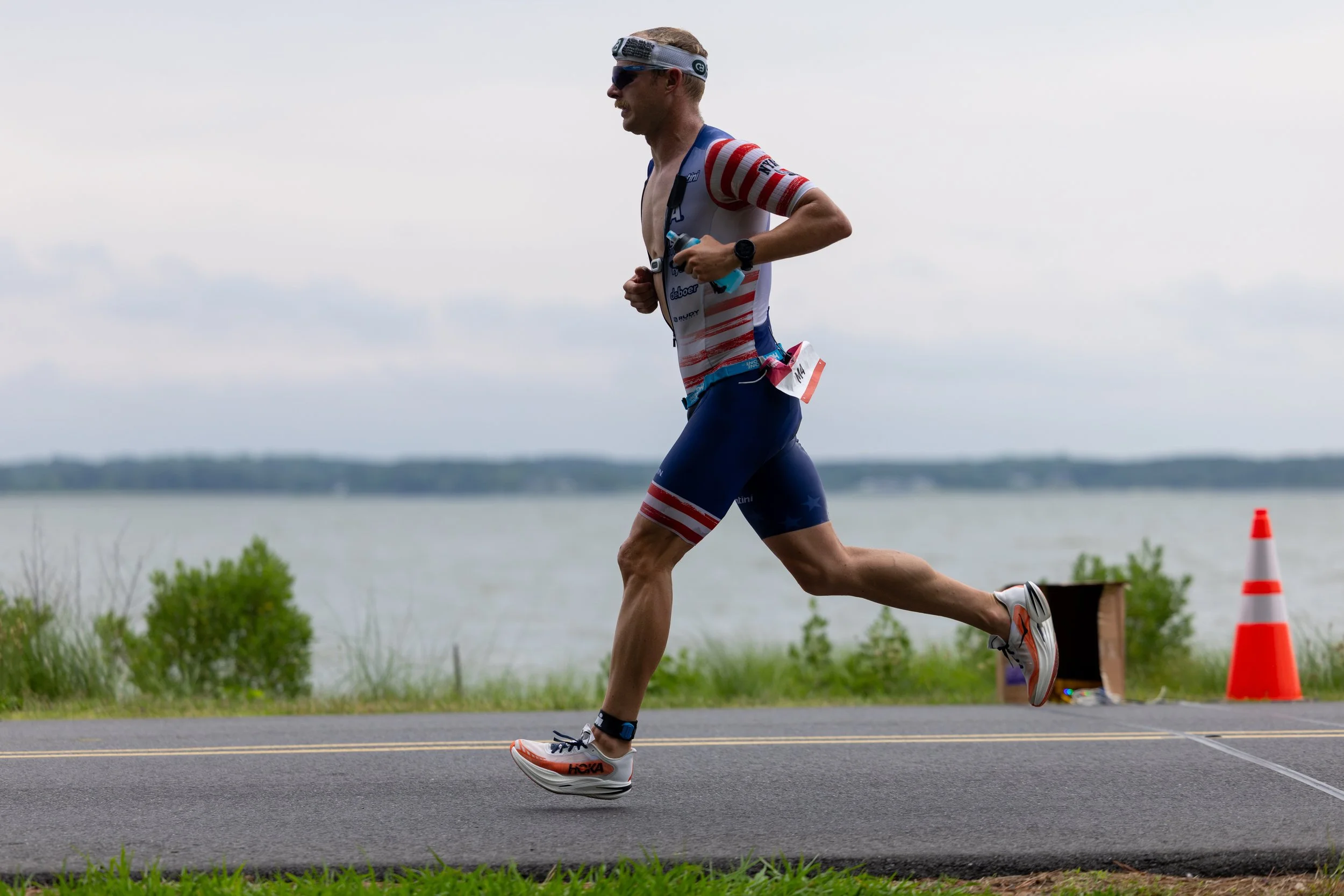
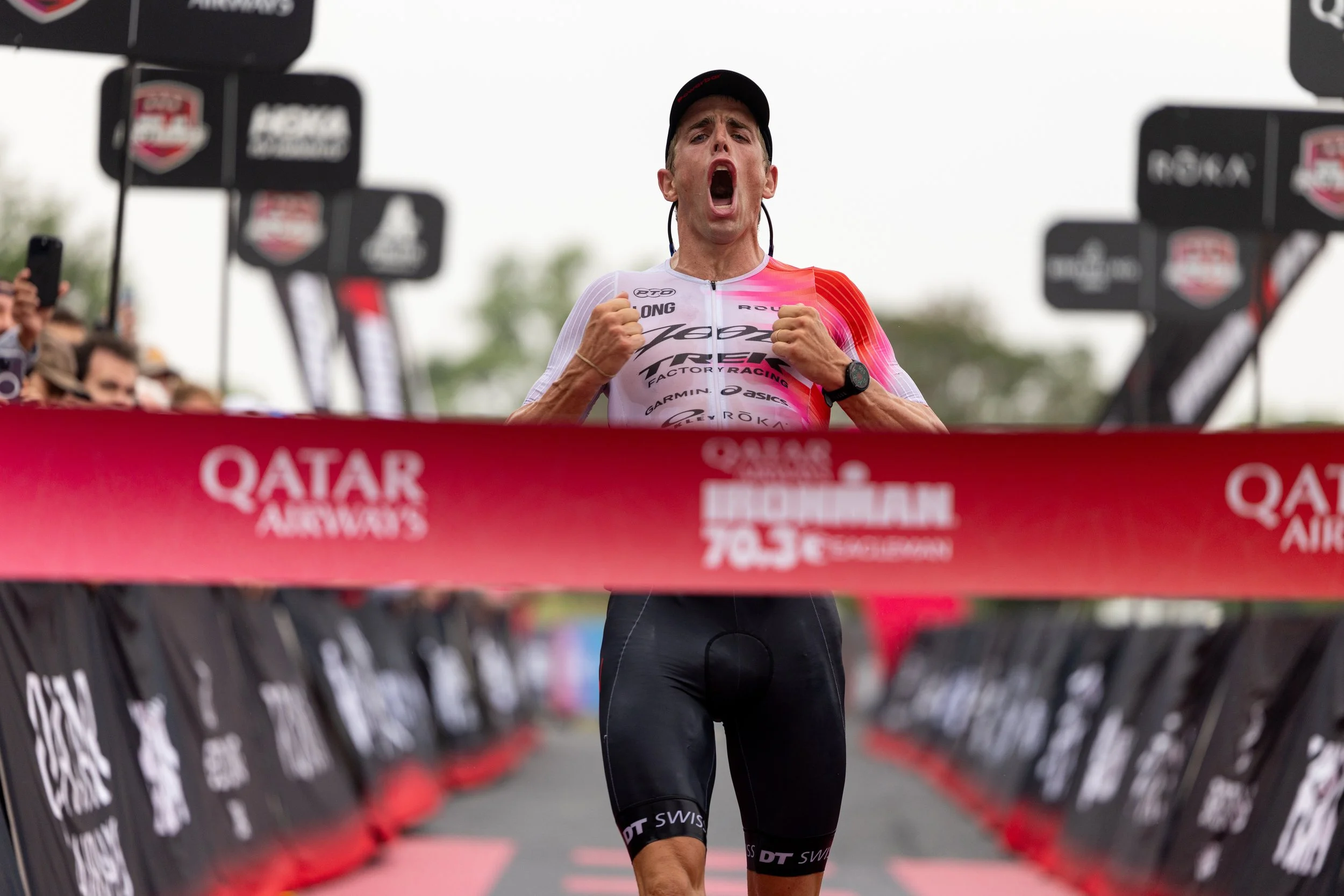
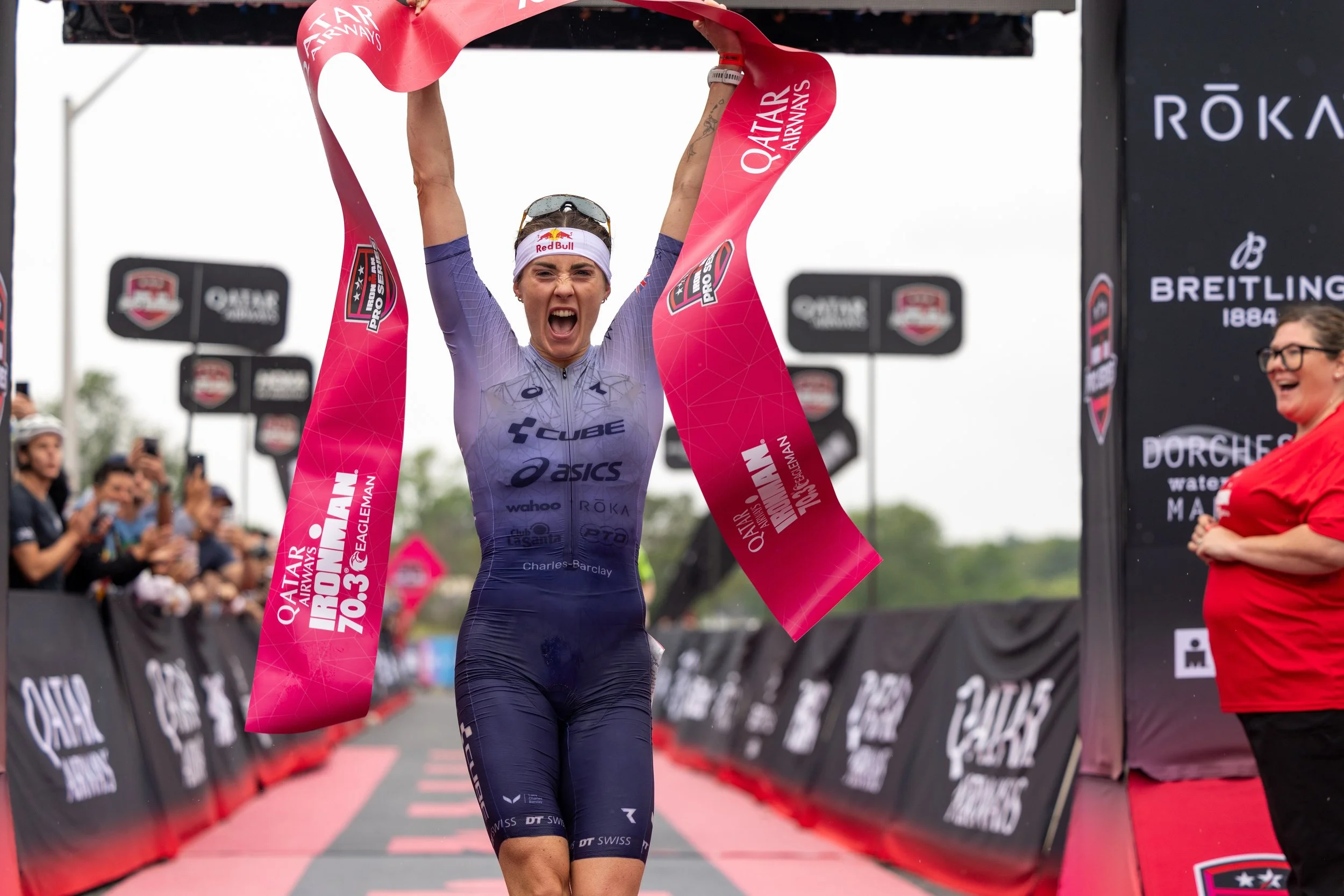
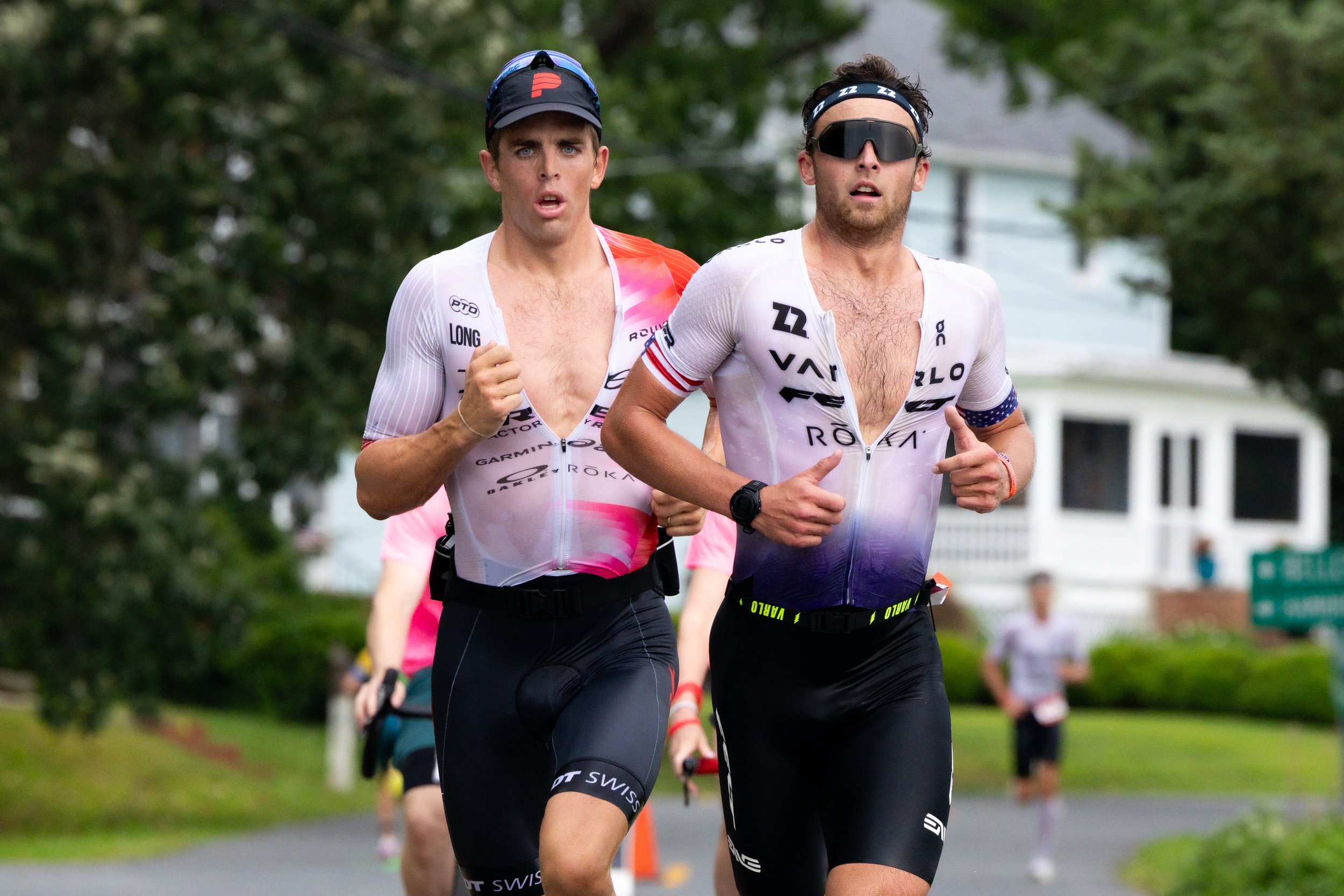
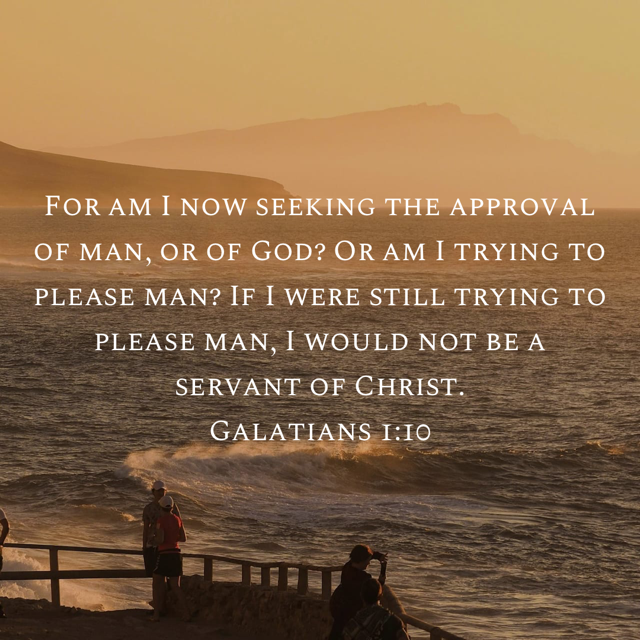
Talbot lost a good chunk of Instagram followers as he took sling after sling of vitriolic comments and messages, some of which he shared on his account. One of the DMs he shared a screenshot of showed a name I recognized. I won’t share any more details on that, but that example just added to what I was feeling, and also what I felt calling this entire year: not to pinpoint some noble mission on my own and ask God to support me, but to pray on and ask what God is doing and join Him in that process. Such a realization leads us to express the faith and in doing so we incur criticism and rejection or worse.
Roger that.
Michigan 70.3 - September 14, 2025
Charlie was murdered on September 10, and I had my last half Ironman of the season on September 14. I was excited to do a new race, but everything from that Wednesday on through and beyond the race was tempered. This time I wasn’t doing the solo mission, I was staying with a couple friends, and, fortuitously, individuals with whom I could share my thoughts and emotions openly. I needed the support. While my feelings were on rotation at this time, I cared less about my performance than my effort. In thinking about the wisdom of Goggins, this was a thing I said I was going to do, so I was going to do it, and that’s all that mattered. Of course, in one sense, I had a chance to see if MiTi was a fluke or if my body wasn’t all I wanted it to be. While I was nervous, while I felt pressure to perform, I could process the anxiety more easily than in years past. I had perspective and a lot of gratitude, once again, in the wake of Charlie’s murder, to simply be alive.
Heading up a couple days before the race, the water chatter subsided. We were looking at temps at least in the low 60s. But we also had to worry about the air temp. Getting out of 65 degree water in 50 degree air can cause muscles to seize and cramps to creep in early on the bike. It all depends on the body’s response, which I had been working on. I felt like I had a great taper week. My body felt solid, and I knew the cold plunge was helping bloodflow so my body felt recovered and immune to normal stimuli that may cause muscle fatigue like foam rolling and the short speed work notorious during taper week. I was doing ok until I got there, and the nerves started.
My friend who’s also a triathlon coach was up with some athletes and asked what my goal was. I did a double take in my mind, because I just then realized I knew what he was asking and I had no answer. I had no goal time or place. So I said: “I want to swim hard, I want zero cramping on the bike, and I want to bury myself on the run.” Goal: set.
My nerves race morning felt like a week’s worth in an hour. Perhaps I’d put off my usual stress over my race. “I’m f-d up.” I said to my buddy, walking there. The fear of the X factor was there, I certainly had not trained that out of my brain. But it was go-time which means no time. I took way too long in T1 getting my stuff set up and had to push through hundreds of people to get in a good swim start position. It was an ok spot but not ideal. The water was 66 degrees, and, with my confidence that the cold plunge had helped, I decided to go with the sleeveless wetsuit. Definitely the right choice in shaving off some seconds in T1, but I still took nearly 4 minutes before I started riding.
I started that ride feeling as strong as I did at Grand Rapids in June, with no cramping. As I pressed on, I felt a PR ride taking form. This bike course is fast, no curve balls, no insidious hazards, and I was able to sustain a solid effort the whole time and start off with speed on the run. The run was hotter than we expected, but I felt – again – solid. I truly think all the cold plunge time helped my body react much better to the physical stress of the race, physically and mentally.
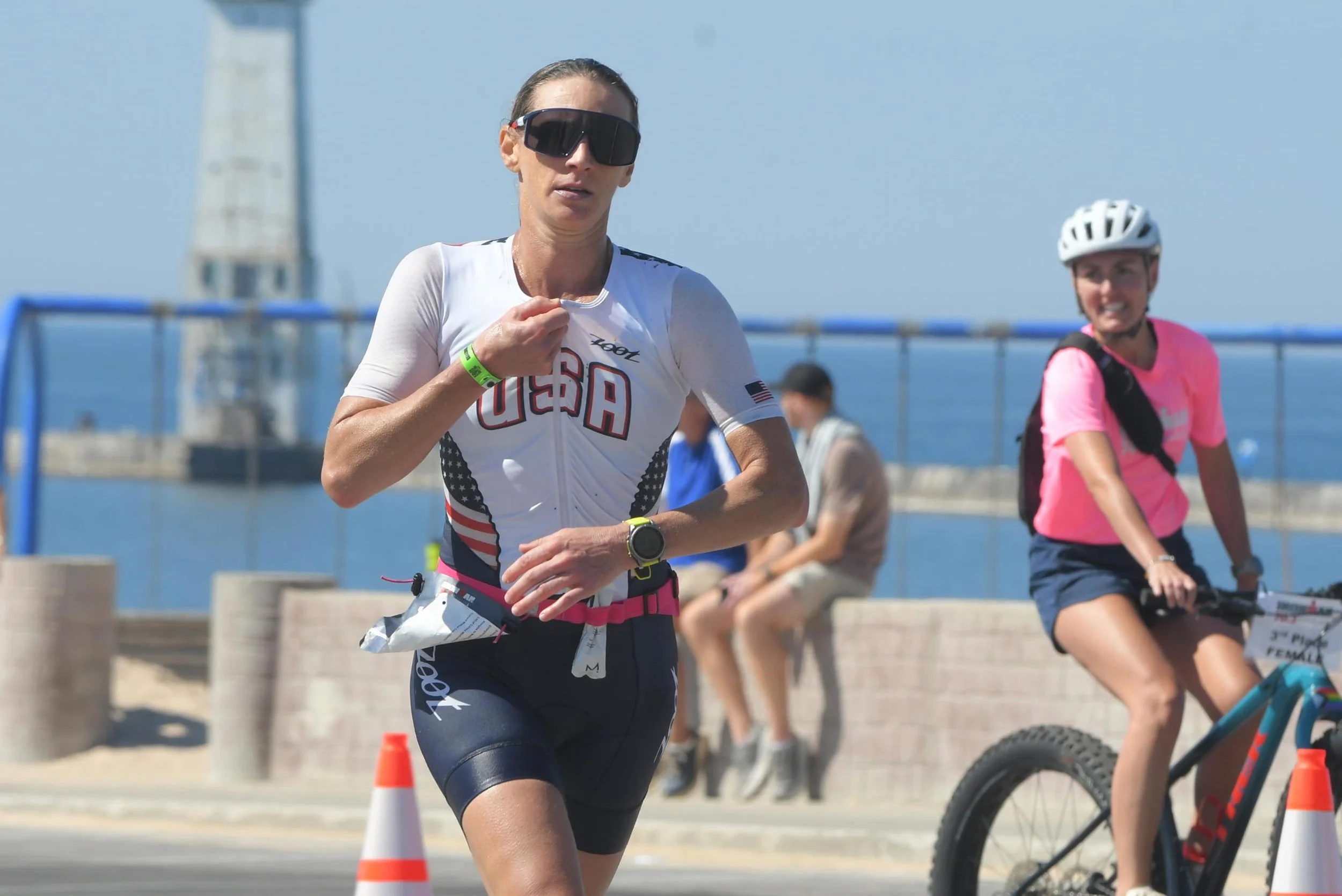
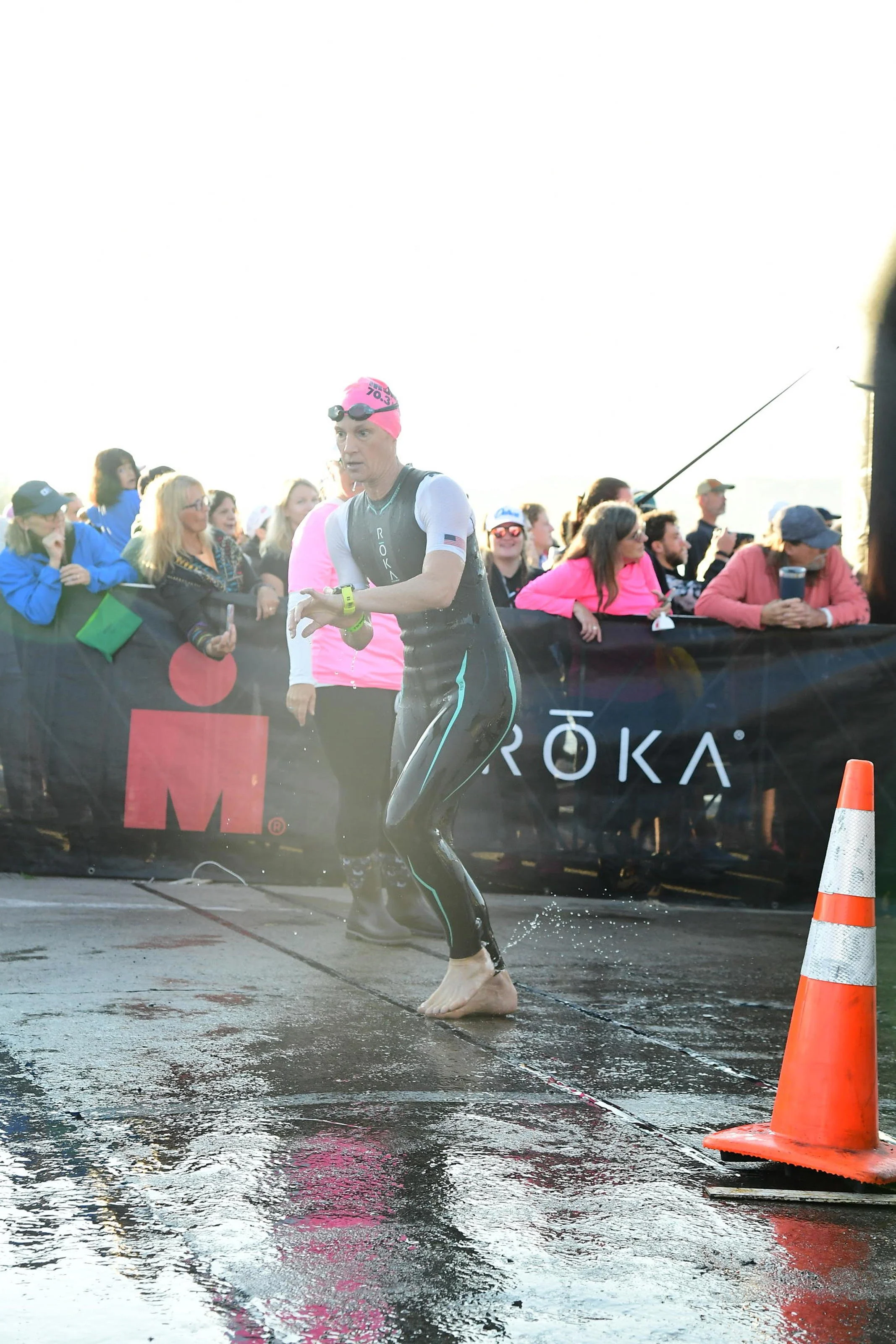
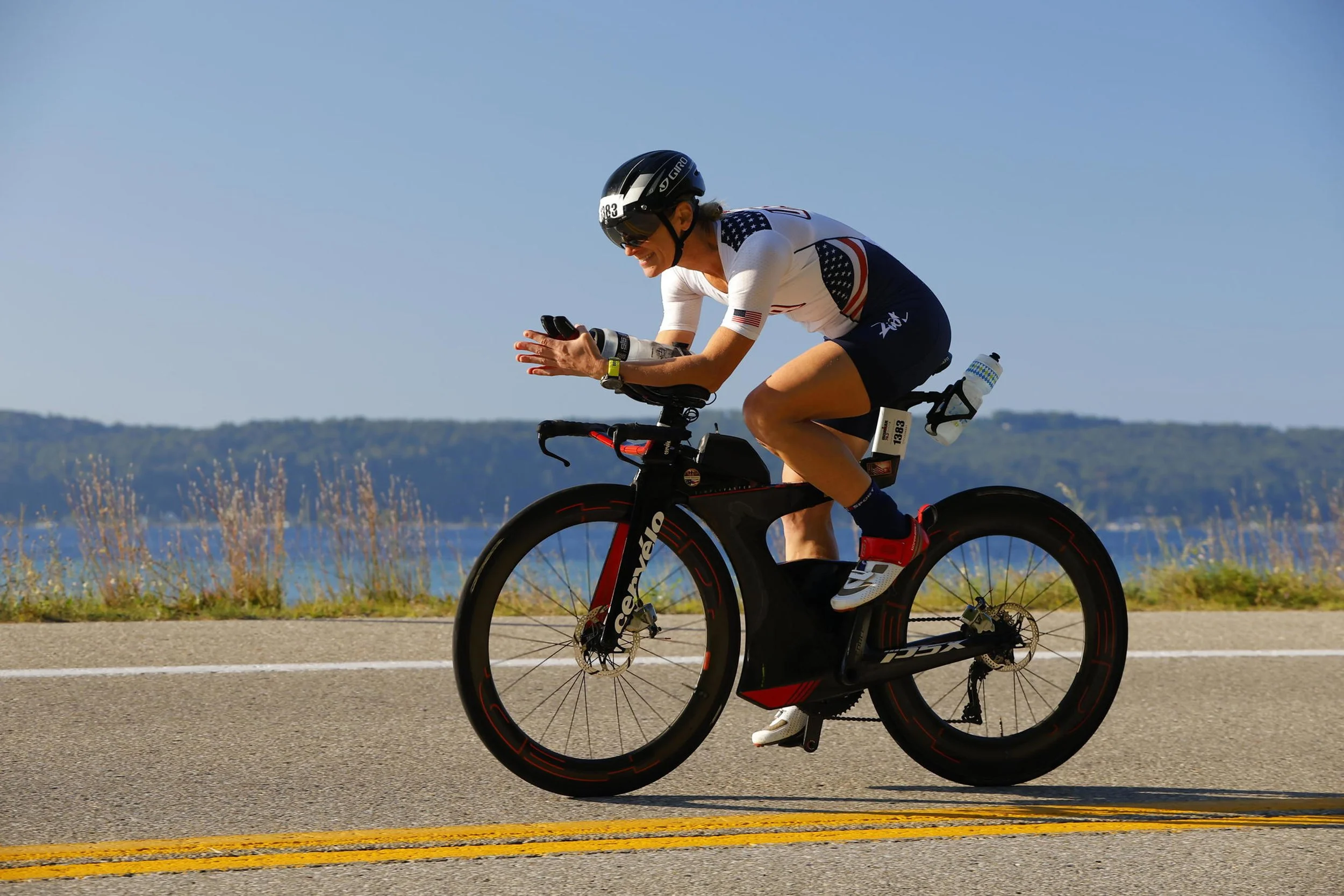
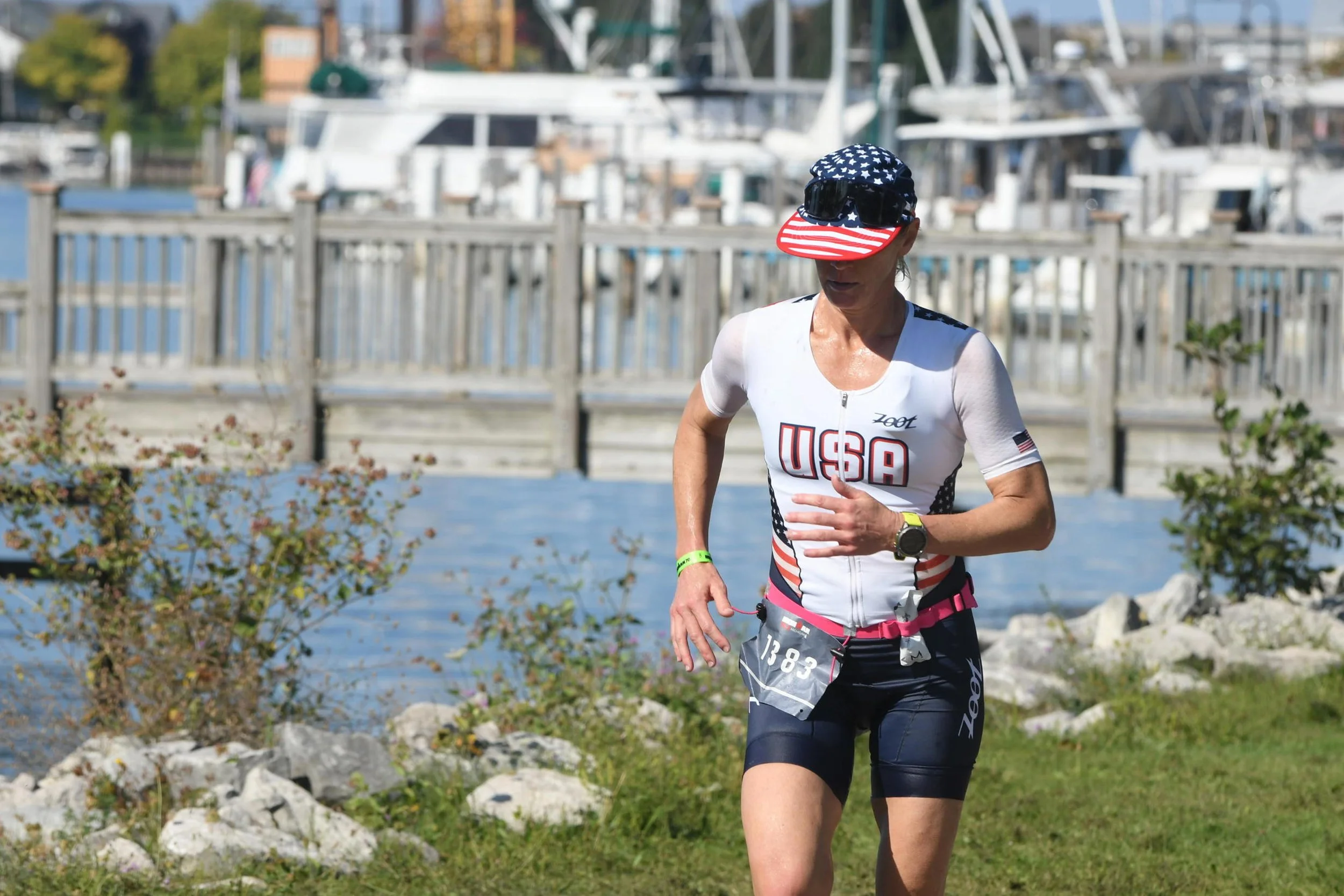
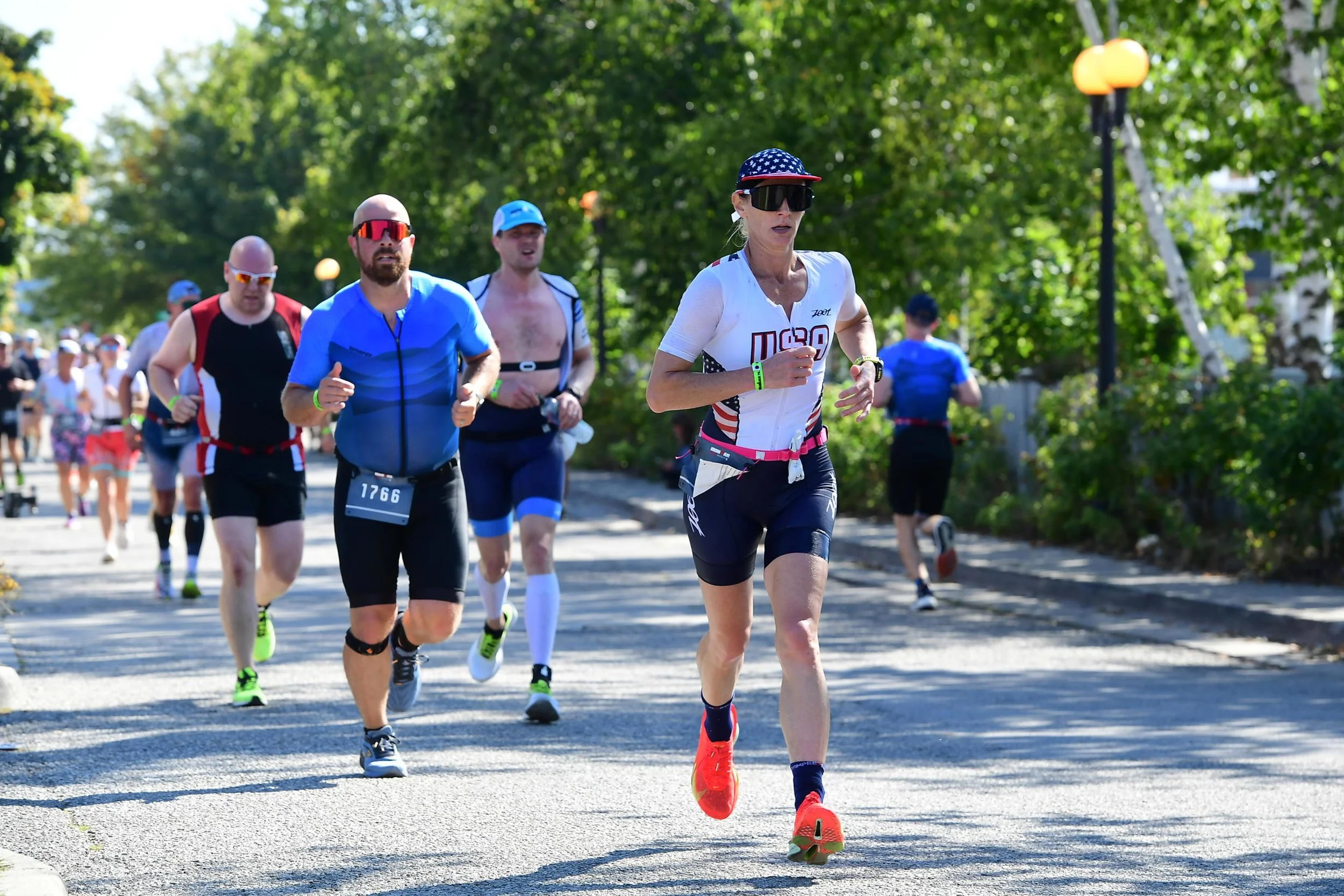
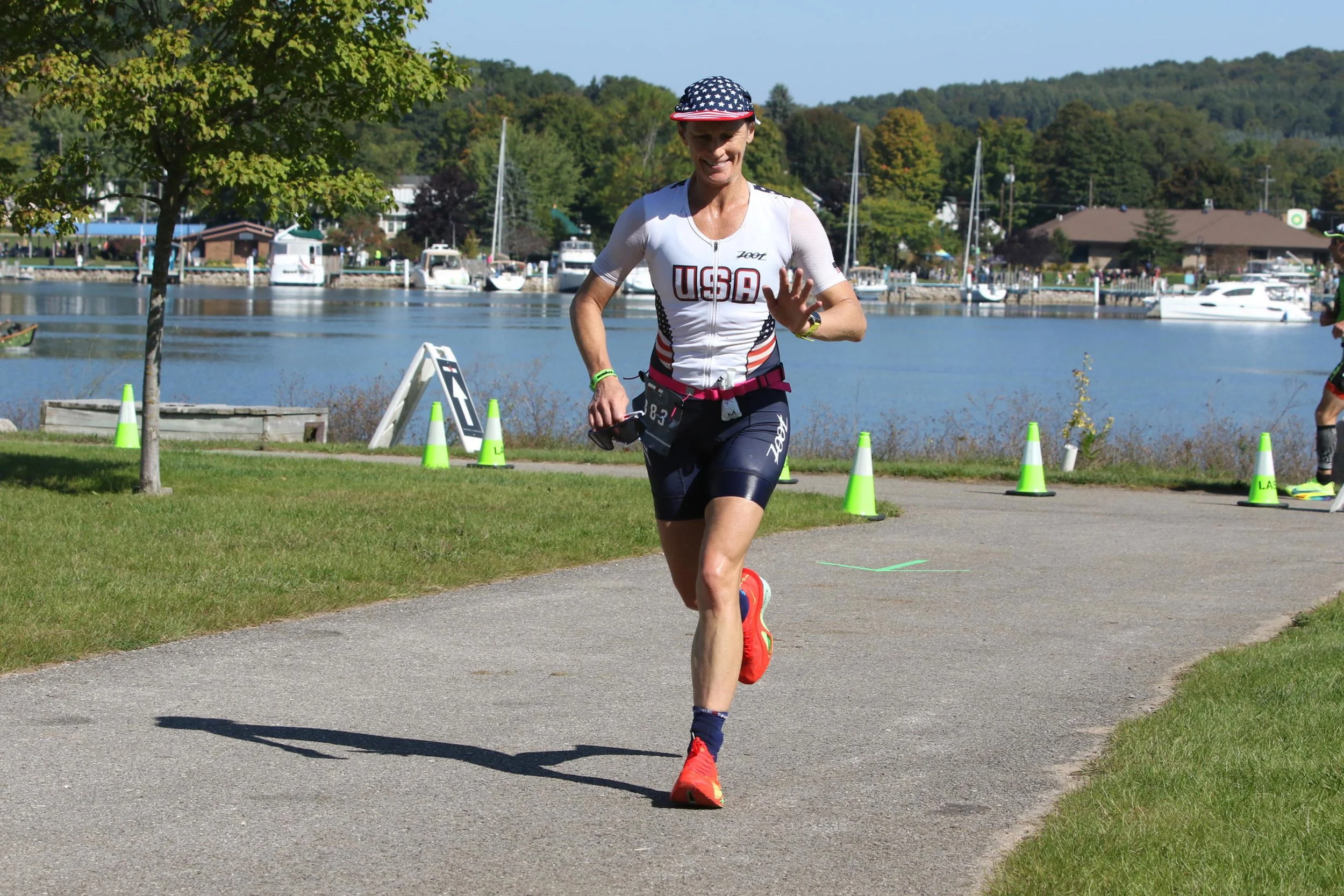
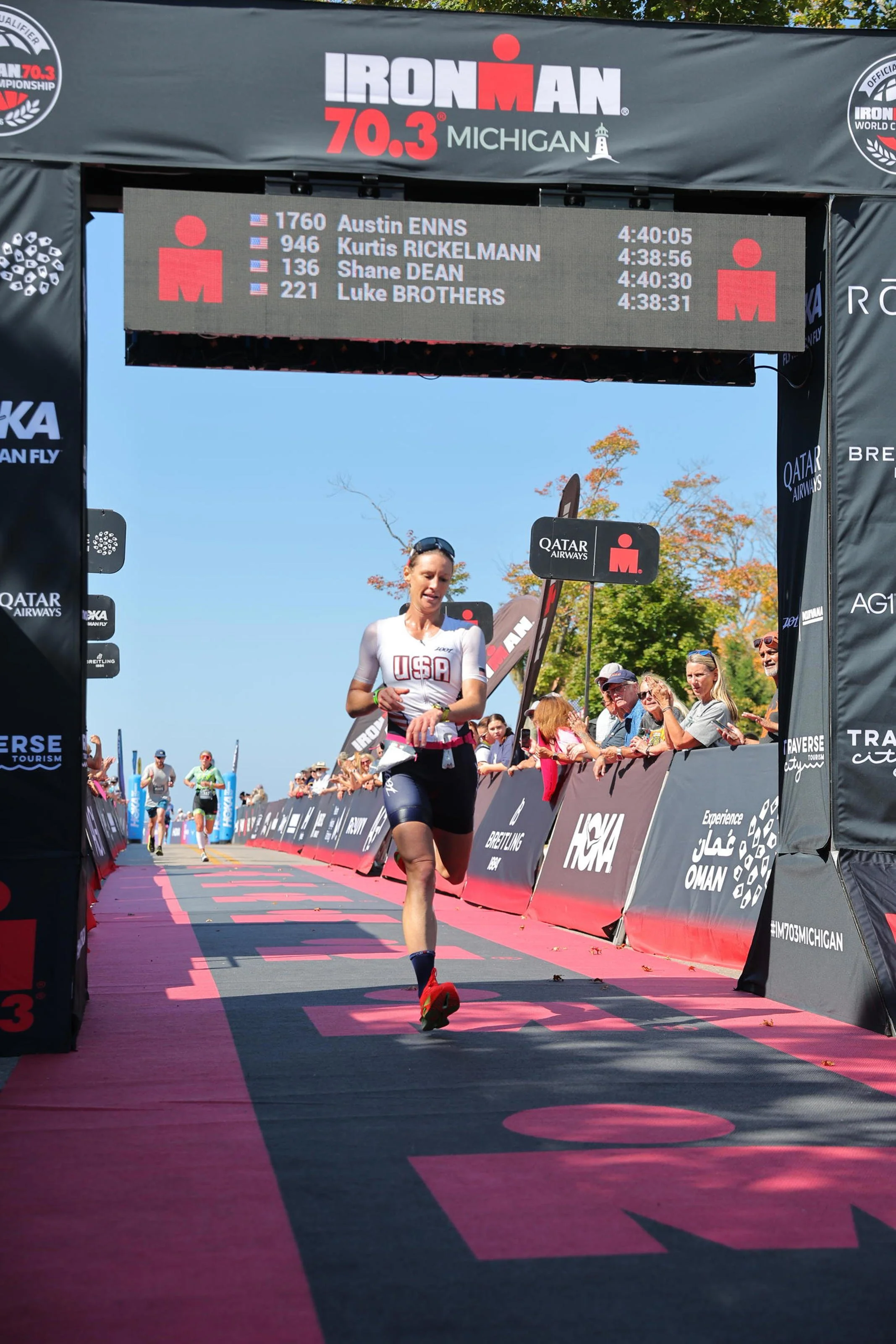
This was an Ironman Corp race, very different from the local races I’d done where I was racing another person. Because of the sheer number of people in the race and no one giving me tracker updates, I had to just push and hope things were adding up. I hit mile 10 and tried to surge, but nothing was there. I hit mile 11. Couldn't do it. My body hit a line – not a wall but a line. I couldn’t turn my legs over faster, I couldn’t push my muscles harder. I sprinted the last 400m or so, and when I hit the watch for the last time and checked my overall time, I was ecstatic. Here’s the breakdown:
Swim: 28:43 | 1:26 / 100 yd avg | 2,000 yd
T1: 3:55 | 0.27 mi
Bike: 2:31:52 | 22.2 mph avg | 56.08 mi
T2: 2.18 | 0.17 mi
Run: 1:35:55 | 7:18 / mi avg | 13.13 mi
TOTAL: 4:42:44 | 70.78 mi
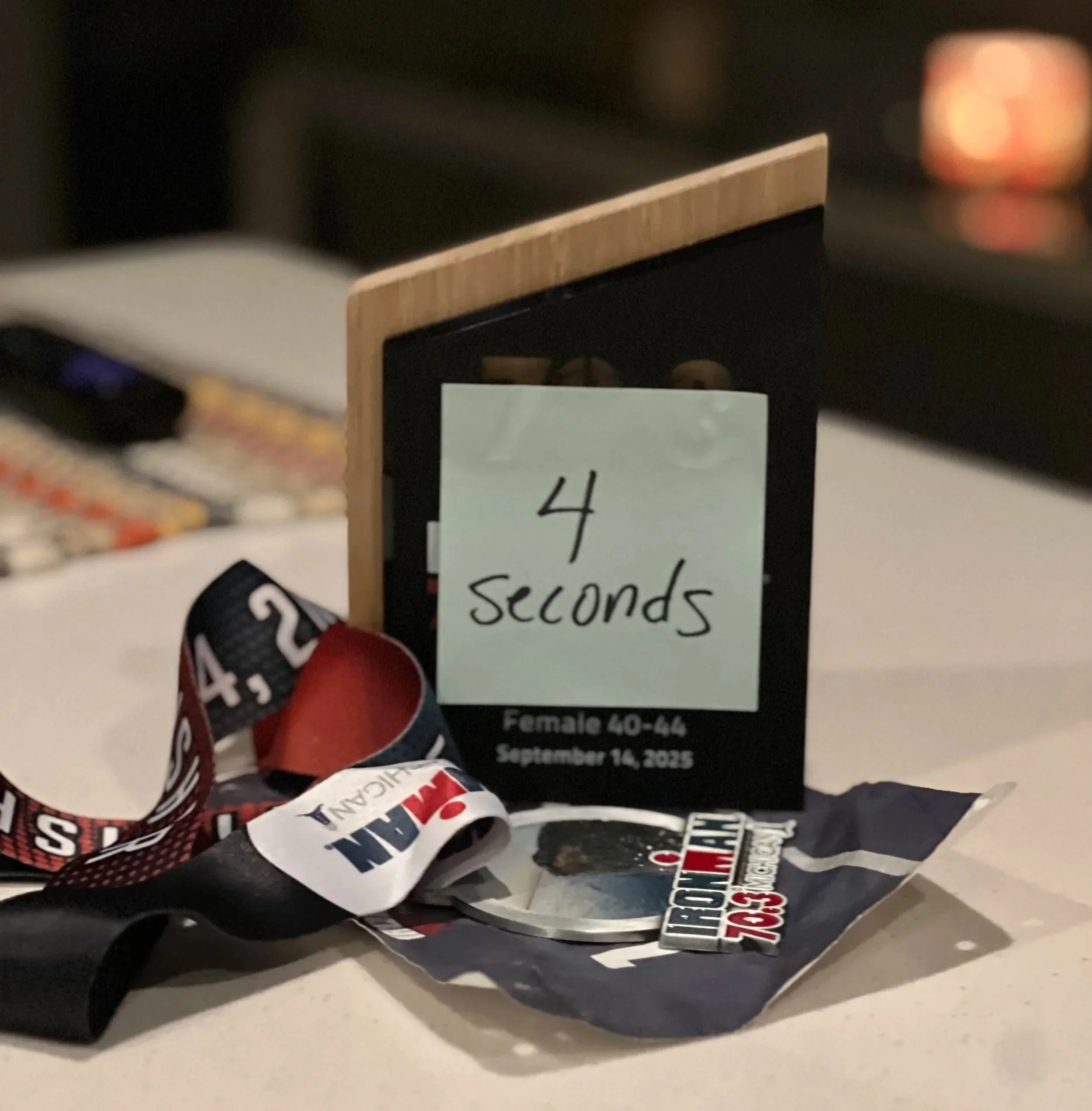
The post-it stays.
I was curious what place I wound up in, and my friend told me that for the longest time I was going on first in my age group (40-44), but then…nope. Someone who started after me clocked in. I lost by 4 seconds. I lost first in my age group and missed top 3…by 4 seconds. How about that. At mile 10, did I have 4 seconds in my legs? Yes, I had 60 seconds. But just because I didn’t know how close I was I didn’t push that limit that my mind told me I had hit; I did not bury myself like I said I wanted to. And I really did not push myself in both T1 and T2. I wasn’t mad or sad about it, but I had to rather roll my eyes at myself. Really, dude? So, some new questions arose, new decisions had to be made, but I wouldn’t even know what they were until weeks later. Even after blowing my PR by 11 minutes, I gathered more information about my deficiencies in this sport. I may have lost to someone by seconds, but that same person clocked a bike split 9 minutes faster than mine. As much as I’d reconciled the interpersonal competitiveness of triathlon training and racing, 4 seconds would eat at me. I put a “4 seconds” post-it over my trophy, where it remains today. There's work to be done, and I want to do it. So we'll see.
Getting Reps In and Going Home
I had a few more races to go, and I fully intended on remembering those 4 seconds at the painful end of each one of them. I visited my sister and her family for the Fort DeSoto Triathlon, another local where my brother in law did his first triathlon ever. I remember a couple key friends years ago helping me with all the insane logistics of triathlon that I was ignorant to, having trained and raced solo for far too long. So it was great to share that know-how with both of them. The race was a good opportunity to get some reps in – trying to speed it up in transition and pushing past the muscle-cracking limit at the end of the run. I was able to pass a youngster in first place, which was a bit of reassurance that I can push past that line, I just have to figure out what kind of room I have, how much I can actually push in those final miles. Gotta keep experimenting.
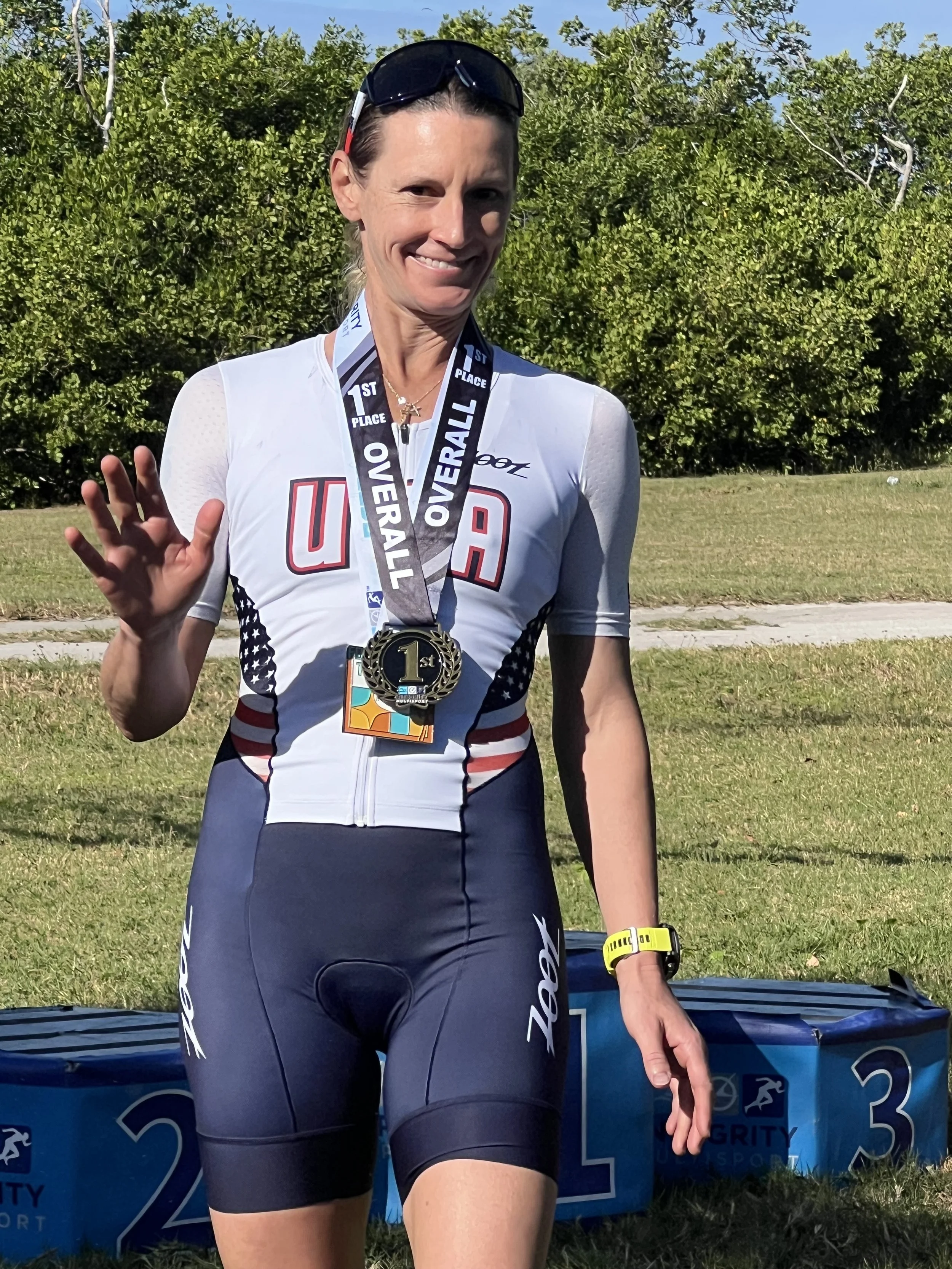
Getting in some more reps in St. Pete, FL
Back up north, I visited my Ohio hometown area for a 5K / 10K combo at an apple orchard we used to go to as kids. But the real mission was getting the legendary apple fritters for my family’s visit over Thanksgiving. In early November, I repeated what’s become a tradition: Churchill’s Half Marathon + visiting the gravesites of my grandparents on both sides. My paternal grandfather is a WWII veteran and buried at Fort Meigs next to my grandmother. My maternal grandfather is also a WWII veteran, buried with my granny at the cemetery of my old church, down the street from the house I grew up in. The Churchill’s starts at my dad’s old high school and ends in Maumee, where 96-year old Walt Churchill, who started this race in 1967, hands out medals to every finisher from his wheelchair. He is a living legend and extremely generous person.
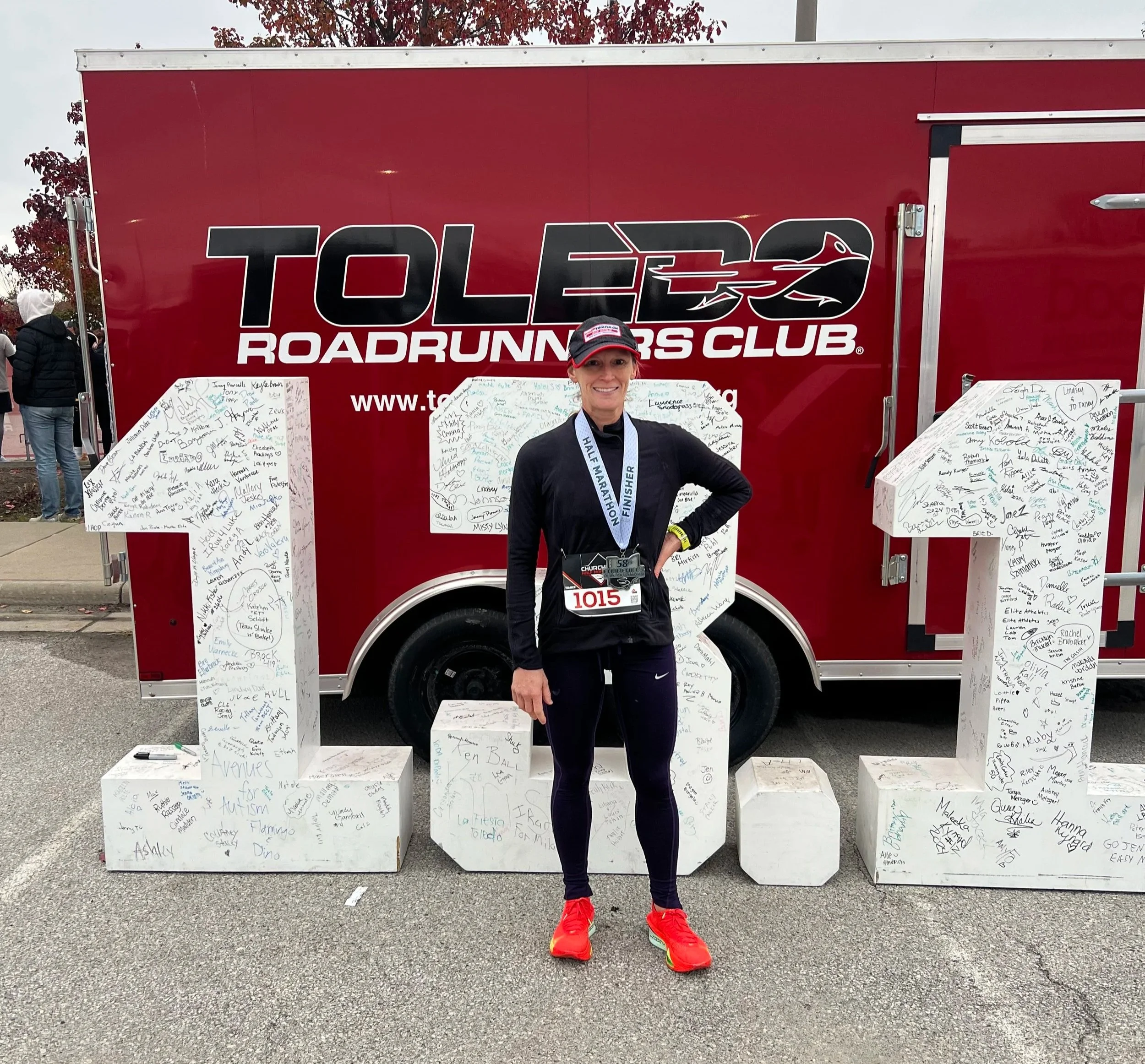
Churchill’s Half Marathon | November 8
This was my favorite solo mission of the year: crushing my legs then taking a break to be home, honor my grandparents, the Church where I first began learning about Jesus, the quiet streets I would run at all hours, and the community in which all this began. Despite some rough patches growing up, and we all have them, I’m very lucky to come from a family with parents that were there and a home I could always come back to. Of course I want to provide all that for my daughter, but my life and our society today is totally different, and this year felt like a condensed course in looking critically at what I was prioritizing vs what I needed and heeding the push to seek growth over achievement. In light of that, I managed PRs in all three run distances, which was a nice bonus to those road trips.
MacQueen’s 5K: 19:26 | 6:20 / mi avg | 3:07 mi* (*Garmin showed 0.03 mi short, course showed 3.1 mi. So…)
MacQueen’s 10K: 40.17 | 6:24 / mi avg | 6.24 mi
Churchill’s Half Marathon: 1:29:24 | 6:47 / mi avg | 3.17 mi
A couple weeks ago, I went to a funeral, my first since my grandmother’s in 2017. My husband’s grandma passed away at 94. I looked around the church, tried to guess the meaning of the stained glass images, smelled the incense, and listened to a Catholic priest talk about the long life of this person and her going home to Jesus. There was no talk of death, only new life, a reunion, with the Lord. If there is one outstanding facet of the Christian faith and the Bible that I grasped most deeply this year, through the devastating losses of Michael, Roseann, Charlie, my friend’s newborn baby, and so many more through the endless news cycles, it’s that even when there is death, there is hope for their life in heaven and comfort on Earth for the mourning.
If I believe in that, that God can help individuals and families get through that kind of pain, then I have to believe that God can help anyone get through anything. Whether it’s an injury, heat exhaustion, bad habits, discord at home, my baby having a 103° temperature over Christmas, or crippling anxiety when answers to problems elude me, I have to remember what I know: that with God there is always a way through. Prayer can be that powerful.
“You do not grieve like the rest of mankind, who have no hope. For we believe that Jesus died and rose again, and so we believe that God will bring with Jesus those who have fallen asleep in him.”
I had to let go of triathlon twice in two different ways this year, so at the end, when I swam, biked, and ran faster than I ever have, I was able to embrace it with humility, with an attitude that I started building well before even picturing a race like Frankfort. So the daily work becomes the most important work; if the results follow, great. As Goggins would say, “Merry Christmas”. I will always be insanely competitive, especially when in a race. That will never leave me, but competition and winning/losing just doesn't take up as much room in my brain as it used to. If the accountability mirror is clear, then things will fall into place, sometimes when I least expect it. Not every day is 100% disciplined, but mental toughness has to be replenished every day. God willing, I will always get back on track.
2026
I love triathlon. As long as I can physically do it, I will be racing. With any luck, my daughter is absorbing some of the swim lessons we’re teaching her right now, and maybe we’ll get out on a course together way down the road. As for next season, well, what can I say – 4 seconds. I think 80/20 Level 3 is a great plan, it's worked ok for over 7 years, but I need to breathe some fresh air into my training, practice pushing that upper limit, and I think now is an optimal time. So next season I'll be working with a coach, someone who really walks the walk. My hope is to combine a mature approach to this sport with structured training that works on my weakness – the bike – extracts some hidden strengths and maximizes existing ones. I’m ready to trust a pro this upcoming season, honor his process by setting myself and my day up to give every session a fair shot, and, hopefully, come out of my snail shell and make some new connections. The schedule is still up for discussion, but I'm sticking with the 70.3 distance. I'm registered for Chattanooga on May 17, which will be a new race course for me. Beyond that are just a few ideas.
A year ago I was thinking about an August race. Now I feel zero pressure to even think about May. I have to approach triathlon unafraid to lose it. I would like to have fast times, measured improvements, solve my bike problem, but thank God I don't have to – and don't want to – hang my identity on it. The bigger God is in my life the less I make other things my God – the race, the appearance, the money, the identity, the adoration and the judgment of other people. I can't deny that when my faith gets stronger, good things happen, including failure. There is freedom in owning one's failures; it's how we turn them into “attempts” at success, as Goggins would put it. Pro triathletes put their attempts on display basically every weekend March-November. I follow a few pro triathletes, have my favorites, and watched a bunch of races this year. There were more broadcasts than ever thanks to T100 competing with Ironman Corp and the availability of and budgets for streaming.
The women's Ironman World Championship made history, but not by who won, rather by who had the greatest chance to but didn't.
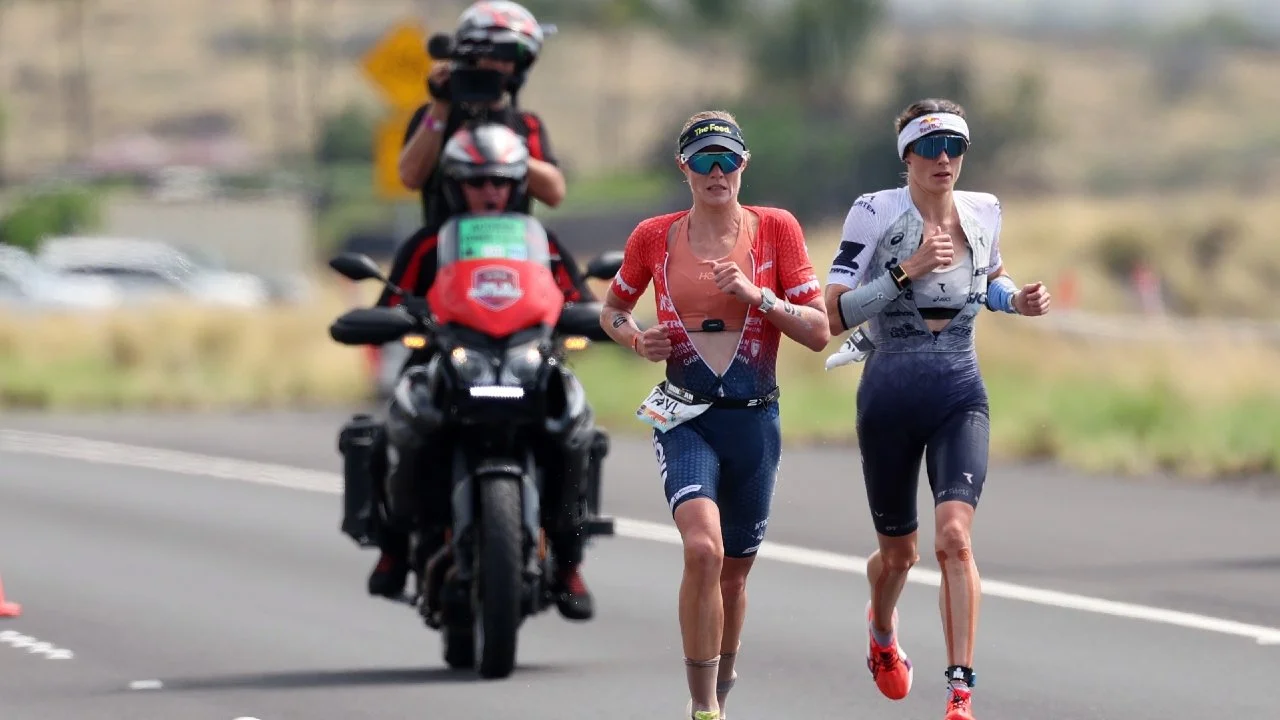
#1 and #2, do battle before they both would drop out of the World Championship (Getty)
“When we left the energy lab, I felt like the day was mine.” After #1-ranked Lucy Charles dropped out due to heat exhaustion, Taylor Knibb was leading in Kona and would almost get to the top of Pualani Hill, the point at which “history shows you normally win”. She collapsed before the top and just 1.8 miles before the finish line. In Talbot’s beautiful short for The Feed, from his series simply titled Triathlon, she says “People ask if it feels like failure. It doesn't. It feels like clarity…I’d rather know that I wasn't good enough on the day than wonder forever if I'd played it too safe.” Pretty grounded for a 27 year old.
Endurance racing is an odyssey, basically every sport is. J.J. Spaun won the U.S. Open after being on the TOUR for nine years and almost dropping out or losing his card multiple times. He is an overcomer, just like Taylor, like Lucy, like Lionel, like Goggins, like Erika Kirk, like so many parents, like you, like me. With the lows we recognize the highs, and none of us knows what the next proverbial season will entail or if we're in the middle of one right now.
I'll turn 45 in two weeks, and I feel like a toddler-aged Christian. My journey, wherever I am in it, persists by starting each morning with God, in which I'm more like the tax collector than the Pharisee (Luke 18:9-14), knowing I'm a sinner and humbly asking for God's grace and mercy and inviting Him in. I don't always remember that every day that I get to get up at 5, commune with God, put the coffee down and get to the pool early, is a gift not everyone has. But the days I do, I feel my life is God-given, and I have a good day. And truly all I can ask for is another good day.
So cheers to everything 2025 brought me, brought us, brought this gnarly sport. Not everyone is going to get it, why we put ourselves through certain things, pay money to suffer and fail. But I know I can't do it on my own. This sh*t ain't easy, thank God!